plus ça change, plus c’est la même chose
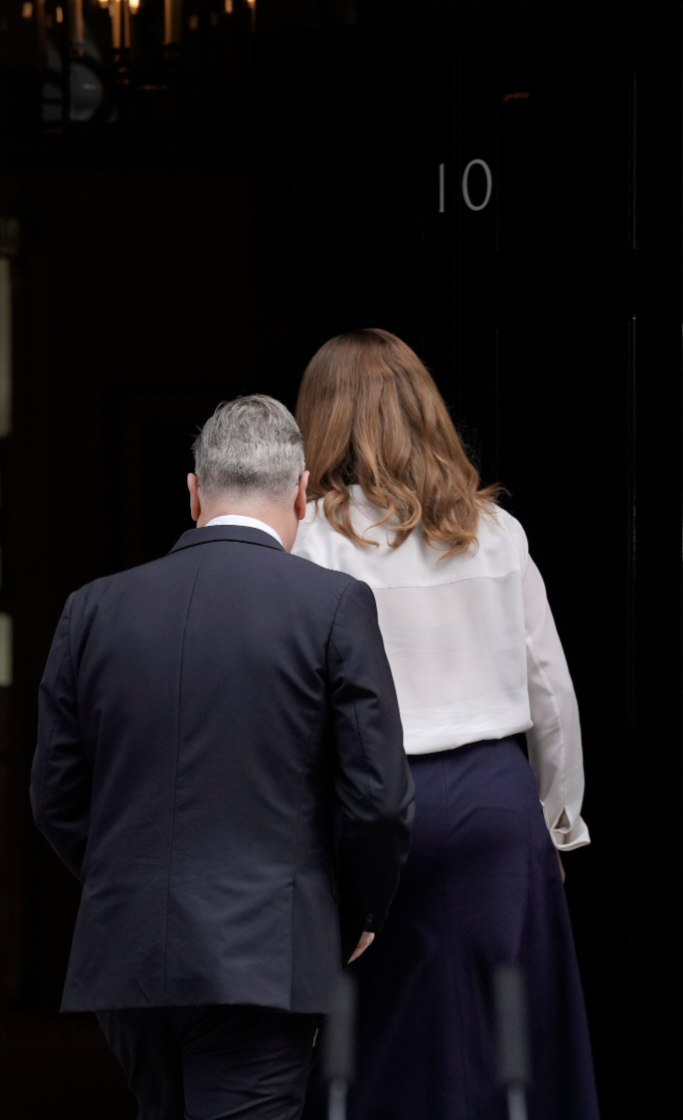
The political week started a lifetime ago with the appearance of “The Podium” in Downing Street on Monday morning as Sir Keir admitted what had become clear to just about everyone else, that the alea had been quite definitively iacta’d.
Starmer Exit Chronology
Monday 22nd June
10:30am: Outside 10 Downing Street, Sir Keir announces that he will resign as Labour leader and Prime Minister. As predicted by prescient commentators, when the time came, Sir Keir was all about process, saying:
“I will ask the National Executive Committee of the Labour Party to set out a timetable with nominations opening on 9 July and completed by the summer recess. In the case of a contest, this will ensure a new leader is in place before Parliament returns in September”
Nevertheless, the PM maintained that just about everything else had been pretty much hunky-dory on his watch. The delusion is strong in this one.
2:30pm: The King of the North is sworn in as the new Member for Makerfield in the House of Commons, sharing an overly long “moment” with Mr Speaker after the best heckle of the day from senior Tory Sir Desmond Swayne: “Rome is saved!”
4:00pm: Former Health Secretary Wes Streeting rules himself out of the leadership race and backs Andy Burnham to become the next Prime Minister, setting off conjecture about what position in the Cabinet of the North the Member for Ilford (North!) had accepted for his loyalty.
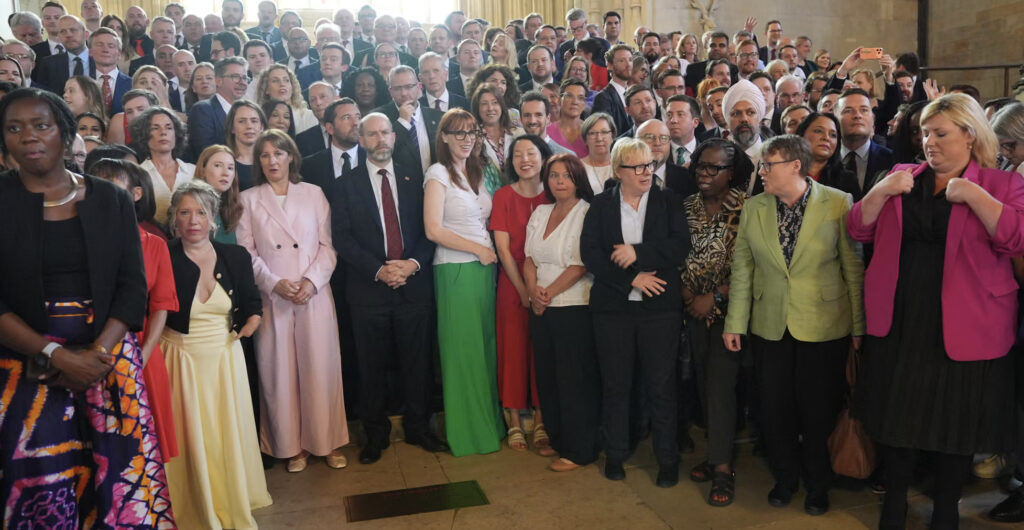
5:00pm: The King of the North is welcomed by the assembled ranks of Labour MPs in Westminster Hall. It is widely noticed that the still-just-about-Chancellor of the Exchequer features in Burnham’s Westminster Hall photos, but was absent from the Starmer leaving party outside No 11’s door earlier in the day. Subtlety is not Mrs Reeves’ thing.
Tuesday 23rd June
11:00am: Caretaker Prime Minister Keir Starmer and Andy Burnham hold their first formal meeting at No 10 since the Makerfield by-election to discuss the transition of power let the King of the North start making furniture selections.
2:00pm: Downing Street confirms that Andy Burnham has been officially granted access to civil service briefings as (the only) Labour leadership contender.
5:00pm: No.10 announces that there will be “no new major policy or spending commitments” until a new Prime Minister is appointed (Brian Wheeler, BBC News, 23rd June 2026 “No new ‘major policies’ or spending decisions while Starmer remains PM.”)
Wednesday 24th June
10:00am: Keir Starmer flies to Berlin for an E5 leaders meeting to discuss progress in providing support and next steps for Ukraine against the continuing but latterly stalled Russian invasion.
11:00am: The 10th anniversary of the Brexit vote is marked across Westminster amidst reflections on the UK’s subsequent political instability with Starmer the sixth PM to leave office in a decade.
12:00noon: A more exciting than expected PMQs defied the normal convention of being nice to recently announced departees, although Kemi Badenoch demonstrated how quickly Westminster moves on by “reaching though” the still-just-about Prime Minister to attack his most loyal ministers, including Ed “No 11 would suit me very well” Miliband, Rachel Reeves and “spiteful class warrior” Bridget Philipson. LotO has already moved on to attacking Burnham’s team (quite effectively.)
Thursday 25th June
9:00am: No. 10 reiterates that despite the policy freeze announced on Tuesday afternoon, the PM is nevertheless pressing ahead with publishing the revised DIP prior to the NATO summit in Turkey on 7th July, drawing quiet pushback from the Court of the King of the North. This starts to delineate the structural political tension of an outgoing Prime Minister rather laterally committing his successor to substantial long-term spending plans.
2:00pm: A public row between Home Secretary Shabana Mahmood and Immigration Minister Mike Tapp after Tapp wrote an article “A System Fit for Britain” setting out his preference on restricting Mahmood’s suggested increase in the qualifying period for Indefinite Leave to Remain for immigrants who had arrived in the UK legally to boost the social care sector. Mr Tapp’s position seems unaccountably closer to the opinion the King of the North expressed during the Makerfield by-election than to his own ministerial boss. Everyone is performatively perplexed about why the junior minister would publicly undermine the Home Secretary’s policy at this stage.
Friday 26th June
12:00noon: Speculation grows over Andy Burnham’s potential future Cabinet reshuffle. Sources at the Court of the King of the North hint that Chancellor Rache may be offered a transfer to a more junior ministerial post in the new Politburo so that the King can appoint a more Northern-focused Chancellor, which seems one of the weakest reasons to P45 the Member for Leeds West & Pudsey.
Sunday 28th June
11:00am: Public polling from Opinium revealed that 64% of voters agree that Starmer made the right decision to step down, but also suggested a more nuanced position on the succession for the Labour leadership and Prime Ministership, with 39% of voters saying that it is more important that the next Labour leader goes through a contested process. Predictably this is not the view of the majority of Labour supporters, amongst whom 57% say that it would be better to avoid a contest. The pollsters do not report on whether this opinion was delivered with an entirely straight face.
The Defence Investment Plan
As of Thursday 25th June (and 72 hours have now passed so who knows?) No 10 was briefing that the Defence Investment Plan that had caused the departure of the previous Defence Secretary because of HM Treasury’s unwillingness to fund Defence fully would still be published prior to the NATO summit in Ankara on 7th July.
Other sources suggested “for background” the new Defence Secretary, Major Dan Jarvis MBE, had succeeded in chiselling an additional £1bn out of HM Treasury. Still other sources, apparently if not formally connected to the Northern Court, quietly indicated that the new Member for Makerfield was being “read into” Cabinet documents and that the he might take a different view on defence spending to either the just-about-still-Prime Minister, or the current DefSec. Déjà vu?
This situation raised the embarrassing possibility that the outgoing Prime Minister can promise only what his successor chooses to honour. Even with the best of intentions, any spending plans outlined by Sir Keir in Ankara on 7th July could be speedily “reviewed”, altered and reversed by his successor as early as 17th July.
After such a painful journey to enable a rise in UK defence spending from 2.60% to the less-than-totally-inspiring 2.68% this year, it may not thrill the UK’s NATO allies to hear that even this commitment may be altered within the month.
On a more political than policy level, it is interesting to note that the new Defence Secretary has let it be known that he has obtained a further £1bn for the revised DIP (taking projected capital spending from £13bn to £14bn) by obtaining further capital expenditure reductions from other departments. While this is quite a high value week’s work for Mr Jarvis, it should be noted that the whip-round from other ministers’ capital budgets will make almost no dent in the baying demand for reductions in welfare to fund increases in defence spending.
Where Burnham lands on the welfare4warfare spectrum is currently unknown and provides a compelling reason to demand some sort of contested leadership election. The question will probably be resolved only by the King of the North confirming his position shortly after his appointment as First Lord of the Treasury. To cry “democratic deficit” would seem hopelessly old-fashioned at this point.
Immigration
Another internal Labour conflict broke out in to the open on Thursday 25th June (busy day) when Shabana Mahmood went nuclear on her junior Immigration Minister, Mike Tapp, after he published an article arguing for a softer approach to lengthening the qualifying period for Indefinite Leave to Remain for social care workers how had come to Britain through legal channels.

As well as the rather unsavoury, it entirely predictable prospect of a junior minister scrambling to express an opinion closer to the apparent if unclear position of the King of the North in order to gain preferment, this is only the starting gun on Labour’s internal disputes about future immigration policy before Burnham has even become Prime Minister. Troubled times ahead, it seems.
Iran
Although the King of the North has not opined on the subject of the US-Iran war as yet, he will soon need to take a view on the fragile ceasefire established by the Islamabad (or Versailles) MoU of 17th June. The ambiguities necessary to make this agreement palatable to both its signatories have frayed as military hostilities between the USA and Iran escalate – despite the apparent ceasefire commitment.
Escalation
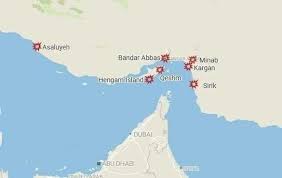
The relative calm in the Strait was shattered by an Iranian drone strike on a Singapore-flagged commercial vessel and an attack on an oil tanker that did not stick to the navigation route “suggested” by the IRGC.
In retaliation, US CENTCOM launched two nights of air strikes against Iranian military assets in Sirik, Bandar-e Lengeh, and Qeshm Island.
The US reported that the strikes destroyed Iranian military surveillance, air defence, drone storage and mine-laying capabilities, but the dispute reveals a critical difference of opinion over Iran’s ability to restrict and direct traffic through the Strait. The Iranians clearly see ways incorporated in the MoU to enforce their control and extract fees for facilitating passage through these waters. Opinions clearly differ and may only be resolved through further hostilities.
Political Brinkmanship
During talks in Bürgenstock, Switzerland, the US and Iran repeatedly clashed over nuclear inspection rights and transit sovereignty. Iranian Foreign Minister Abbas Araghchi subsequently asserted that Iran intends to maintain exclusive management over commercial traffic in the Strait and then announced that Iran was withdrawing from the technical talks scheduled for Sunday 28th June because of the American strikes. (Erika Solomon, New York Times [paywall] 28th June 2026 “Iran Risks Peace Talks With U.S. to Maintain Leverage Over Strait.”)
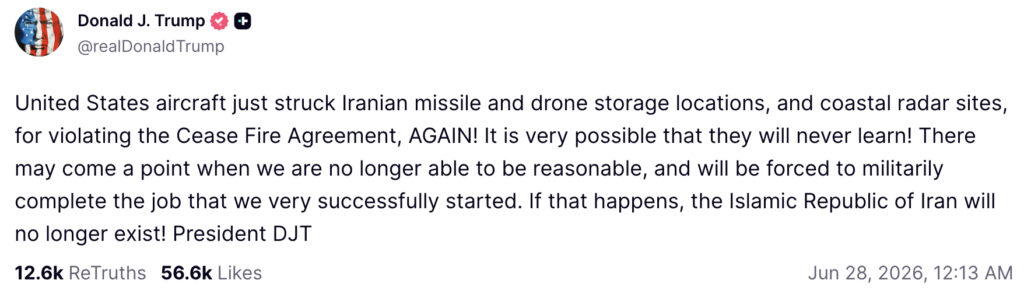
Back at home, President Trump issued a set of social media warnings redefining the word “nuance” by declaring that continued Iranian violations of the MoU would mean that the Iranian regime “will no longer exist.”
British politics has moved from one settled assumption to another in under a week.
Just a fortnight ago Labour insisted that Sir Keir Starmer would remain Prime Minister until the next General Election. Today Westminster has largely accepted that the King of the North’s arrival in Downing Street is now simply a matter of process.
Beyond the theatre of succession, the problems awaiting the incoming PM remain remarkably familiar. Defence funding, immigration, economic growth and Britain’s place in an increasingly unstable international environment have not paused while Labour changes leader. If anything, they have become more pressing.
Plus ça change, plus c’est la même chose
Check us out on insta @theworldofukpolitics
Leave a Reply
You must be logged in to post a comment.