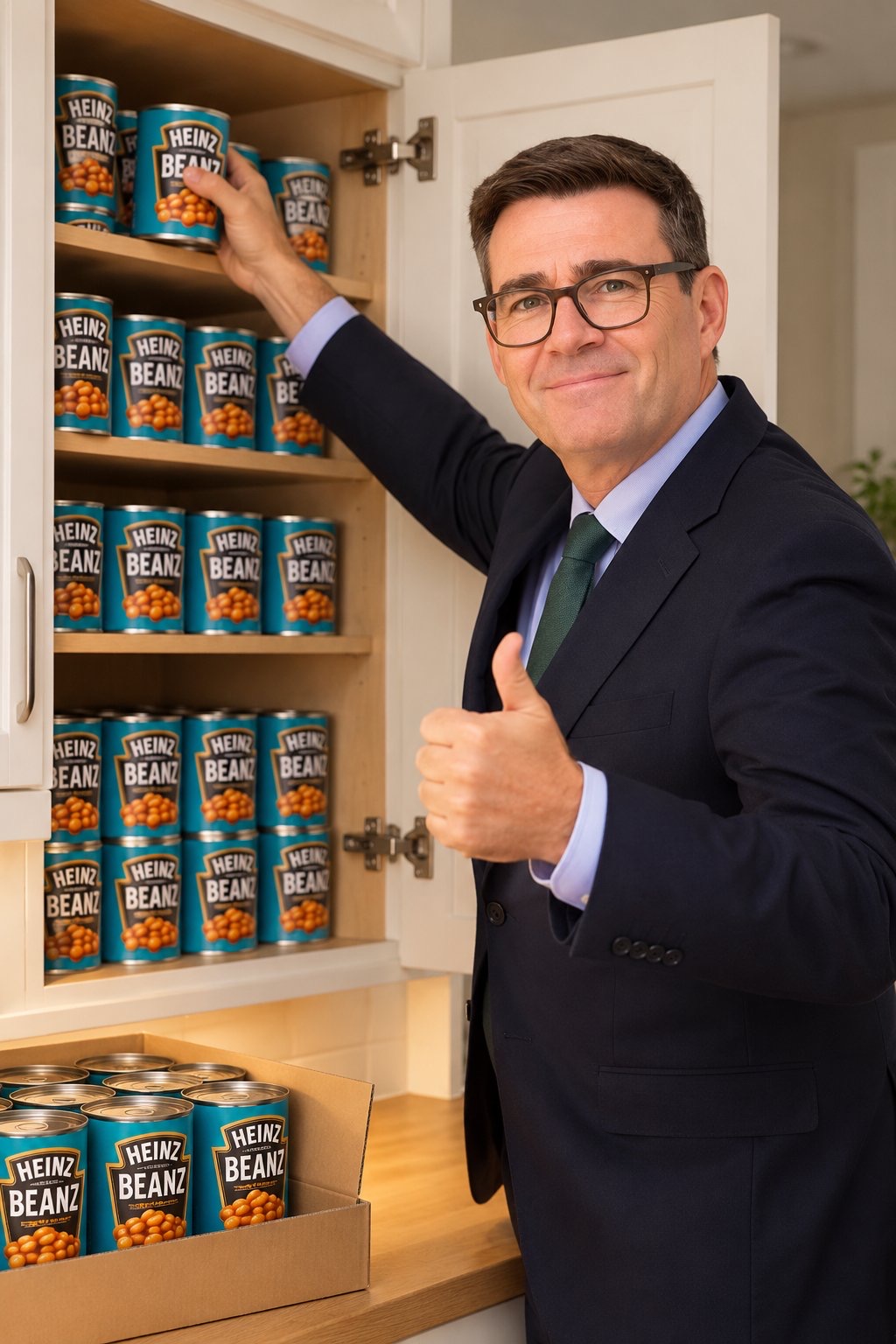
Budget26: crunchtime for Burnhamism.
Andy Burnham has tried to demonstrate that government can do things. On Tik-Tok at least. However, on Wednesday John Healey’s first Budget will demonstrate whether the government can deliver on anything that matters at scale.
So far, “Burnhamism” has been characterised by what might be called the politics of trying. Loud passengers on public transport are to be discouraged, private car park operators are to be restrained, potholes are to be filled and the possibility of an Olympic Games in the North in 2040 will be explored (presumably black pudding hurling could be added to the schedule.) There is something almost endearing about the enthusiasm with which Downing Street has embraced little fixes for the minor irritations of everyday life.
PM’s Tik-Tok review
https://www.tiktok.com/@andy.burnham
Monday: fines for loudspeaking on public transport.
Tuesday: grace periods for parking charges in private car parks.
Thursday: authorising Jackdaw gas field exploitation.
Thursday 2: flu jabs.
Friday: potholes.
Saturday: “little fixes” recap (with dominoes.)
Sunday: repeat on local mayors’ powers, but difficult to follow.
A-Level historians (ahem!) may recall Harold Wilson’s 1974 election campaign and his promise of “Little things that mean a lot.”
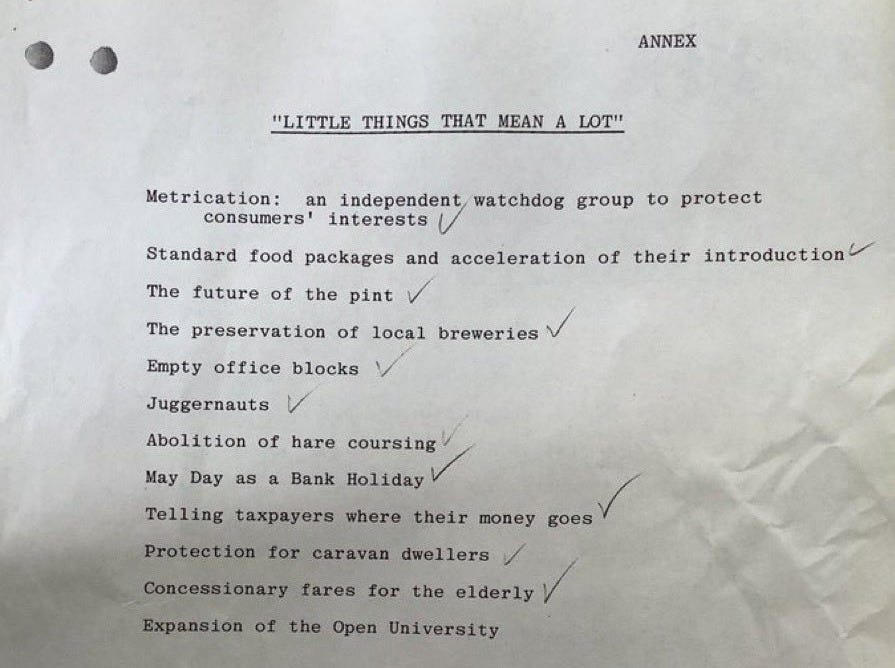
This is a respectable political tradition: voters notice the inconveniences that governments tend to overlook and addressing them can demonstrate a welcome interest in the practical business of governing.
Burnham’s approach has also had some political success. His arrival has improved Labour morale and produced a modest recovery in the party’s polling position. After the paralysis and internal warfare of the final months of the Starmer administration, even the appearance of purposeful government has been a novelty.
Nevertheless, there is a limit to how far a government can travel on the strength of regulating loudspeaker use on trains and buses. The Budget is where little things meet larger considerations. Head on.
The difficulty with pragmatism
The Chancellor faces a familiar collection of unpleasant choices, made more difficult by the increasingly difficult international circumstances in which they must be taken. (Helen Miller, Max Warner & Stuart Adam, IFS Podcast 22nd October 2026 “Budget 2026: what should we expect?”)
Public spending, taxation and debt are already at historically levels. Inflationary pressure, higher borrowing costs and the economic consequences of international instability have narrowed the Treasury’s room for manoeuvre. Meanwhile, the government’s ambitions for defence, social care, welfare and economic growth remain considerably larger than the resources immediately available to finance them. (Valentin Boboc, IEA, 19th October 2026 “Alternative Budget 2026: Simpler Taxes, Sound Finance.”)

There is also the small matter of Labour’s 2024 manifesto, which ruled out increases in the principal rates of income tax, VAT and employees’ National Insurance contributions. These promises were made in rather different political and economic circumstances, but they have not become any easier to accommodate. The temptation is to try to “do as little harm as possible.” (Sam Fleming, Chris Smyth, George Parker & Ian Smith, Financial Times 2nd October 2026 [PAYWALL] “Healey set to delay difficult choices with ‘breathing space’ UK Budget.”) This misunderstands the purpose of government, which is to make things better. Avoiding further damage is not the same thing as providing a route to recovery.
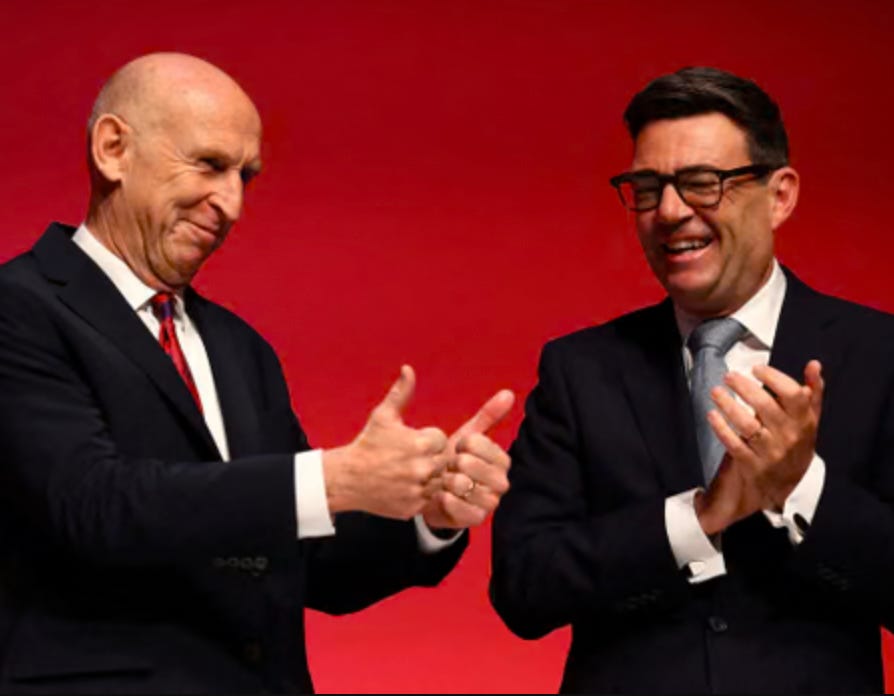
Business leaders have urged restraint (perhaps not surprisingly.) Banks appear to be bracing themselves for higher taxes (Simon Jack, BBC News 15th October 2026 “Banks expect to be hit with higher taxes in Budget.”) Labour MPs are divided between those demanding more immediate assistance for struggling households and those insisting that economic growth must come first (Damian Pudner, UnHerd, 24th October 2026 [PAYWALL] “Surprise! Labour’s Right-wing Budget. Are Burnham and Healey diverging?”)
The Treasury insists that the Budget will not be an exercise in avoidance and suggests (Budget purdah is so last year) targeted tax measures, regulatory simplification, new powers for local mayors and interventions to ease household energy costs are on the cards. (Heather Stewart, The Guardian, 6th September 2026 “Burnham talks of radical change, but Treasury mood music says otherwise.”) These are perfectly sensible ideas for consideration, but the government seems determined to encourage private enterprise while displaying a remarkable reluctance to make the larger decisions on which its prospects depend.
Burnham’s political achievement so far has been to persuade different wings of Labour that they are all travelling in roughly the same direction. The Budget may require him to explain where, precisely, that direction leads.
When “Yes” now means “Maybe not” tomorrow
There have been signs that Burnham’s pragmatism amounts to rather more than a determination to avoid upsetting anybody. His support for the development of the Jackdaw gas field disappointed environmental campaigners, the Greens and some of his own MPs.
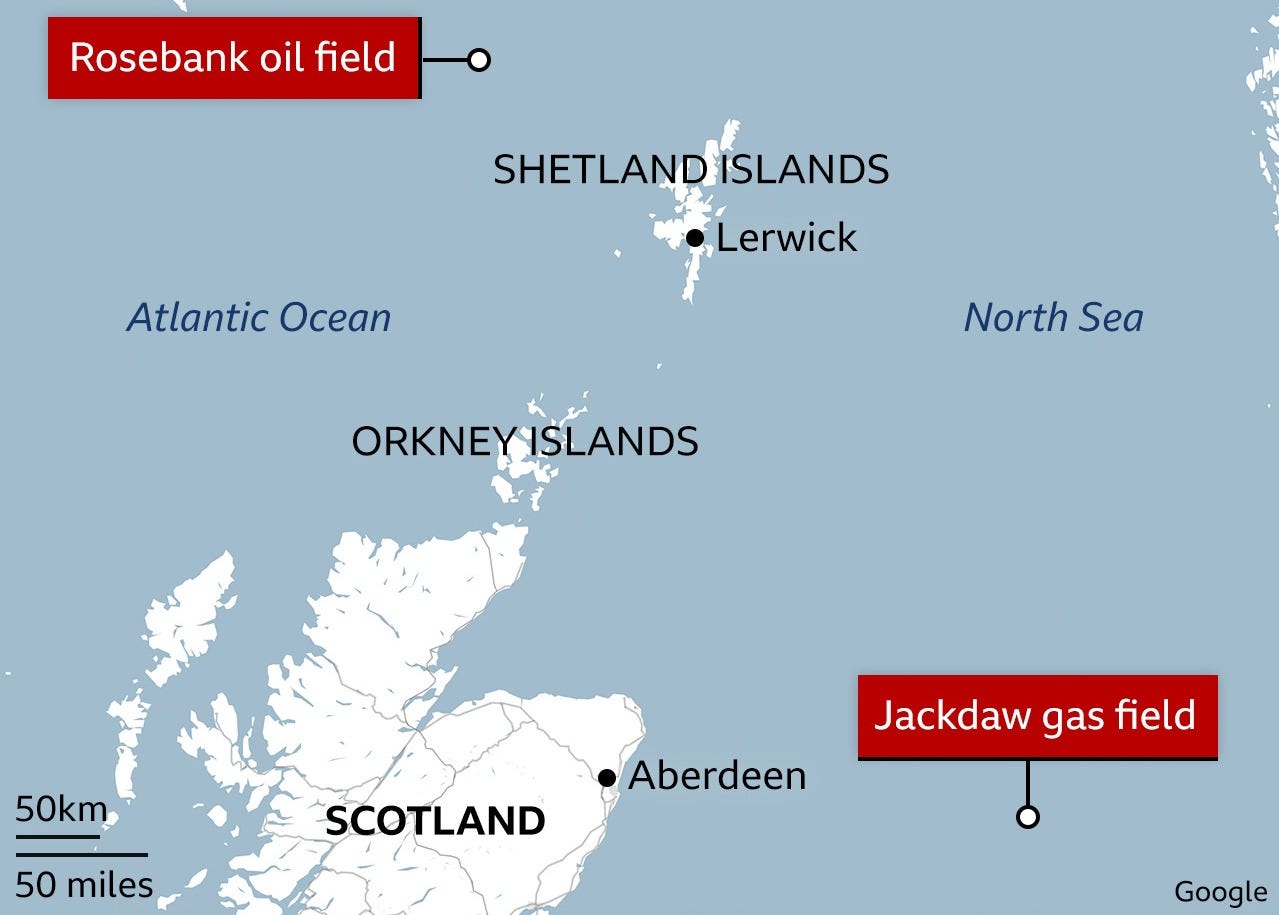
Burnham defended the decision as a “pragmatic response” to Britain’s energy requirements while maintaining the government’s longer-term commitment to net zero. (James Cook & Graeme Esson, BBC News, 21st October 2026 “Burnham defends Jackdaw decision as Badenoch urges PM to overturn ban on new oil and gas licences.”)
There are qualifications. Jackdaw already possessed a licence and approving its development did not necessarily indicate willingness to authorise new exploration. (Miatta Fahnbulleh seems to be positioning herself for a “No” to Rosebank in an effort to appease her previous climate credentials.) Nevertheless, the decision mattered politically, demonstrating that Burnham can, on occasion, disappoint part of his own followership, in pursuit of what he considers to be the national interest. The question is whether the same principle will survive contact with the Treasury.
Consider, by contrast, the Prime Minister’s announcement that ministers would look at the removal of standing charges from household gas bills. (Dominic Penna & Emma Taggart, Daily Telegraph, 21st October 2026 [PAYWALL} “Burnham prepares to axe standing charges on gas bills.”) Standing charges are unpopular, not least because consumers pay them regardless of how much energy they use. Removing them therefore sounds like a splendid way of helping households. Unfortunately, the infrastructure they finance does not disappear when the charge does.
Unless the government intends to subsidise the network directly, those costs will have to be recovered elsewhere, probably through higher unit prices. This could benefit some households with the very lowest usage amounts while leaving higher users worse off. (PS – Why just gas? Why not electricity too?)
This announcement provided a neat illustration of the distinction between addressing a problem and solving it. Jackdaw suggests a government prepared to confront uncomfortable realities. The Standing charge initiative suggests the PM is still tempted to focus on presentation to seem empathetic rather than delivery. The Budget should tell us which of these instincts is stronger.
Freedom of thinking
This “could do” type of position was pointedly demonstrated with additional political weight by the King of the Mid-North’s decision to extemporise a reopening of the debate about freedom of movement with the EU. Commenting in an interview on 19th October, but only publicised on 26th October, the Sage of Downing Street In his interview with the Sunday Times, conducted on October 19, Burnham said the issue of freedom of movement should be considered as part of a broader reset of Britain’s relationship with the EU: “You’ve got to see it in the round, rather than just looking at freedom of movement on its own” (Ben Riley-Smith, The Sunday Times, 26th October 2026 [PAYWALL] “Andy Burnham is open to adopting EU free movement.”)
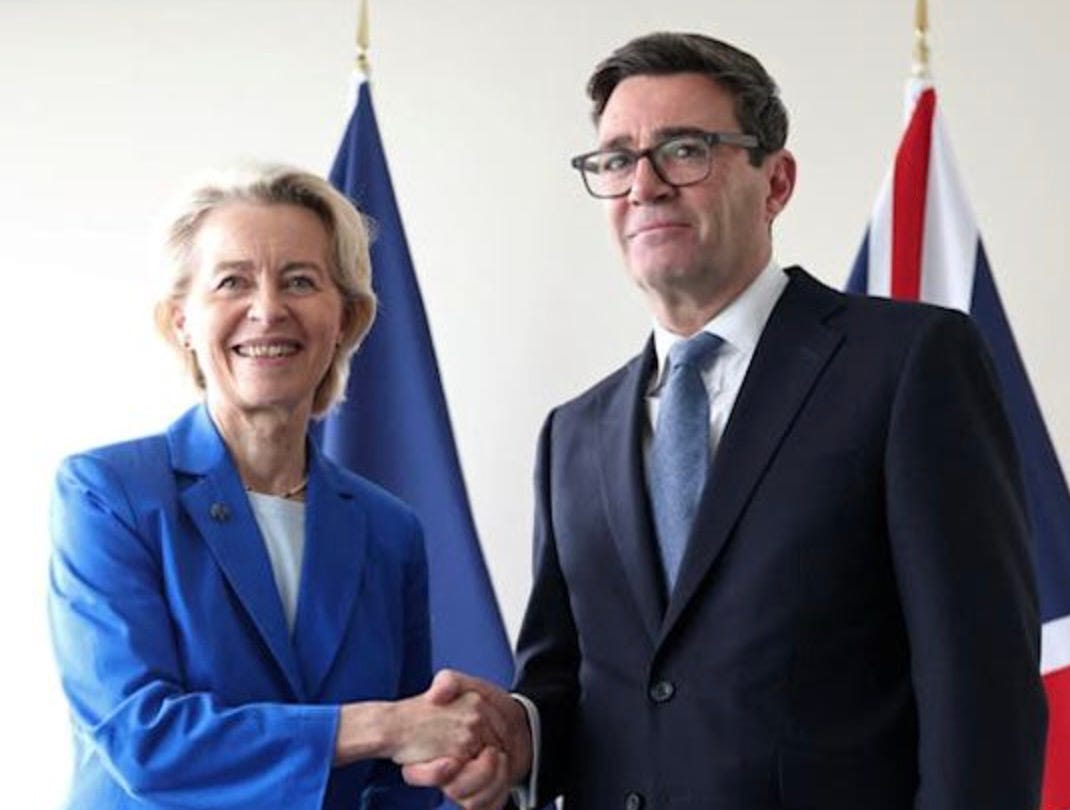
It would be easy to write this off as another example of a “Burnhamesque” approach to opening up debate without offering definitive or realistic solutions. However, the concerted push behind Our Ange (who it has to be said, represents a “Leave” voting constituency) being sent out on the studio round in defence of The Boss’s “brainwave” on Sunday morning, suggests to the hard-bitten cynics of TWOP Towers, that this is a thought-through political initiative with almost no commitment to implementation.
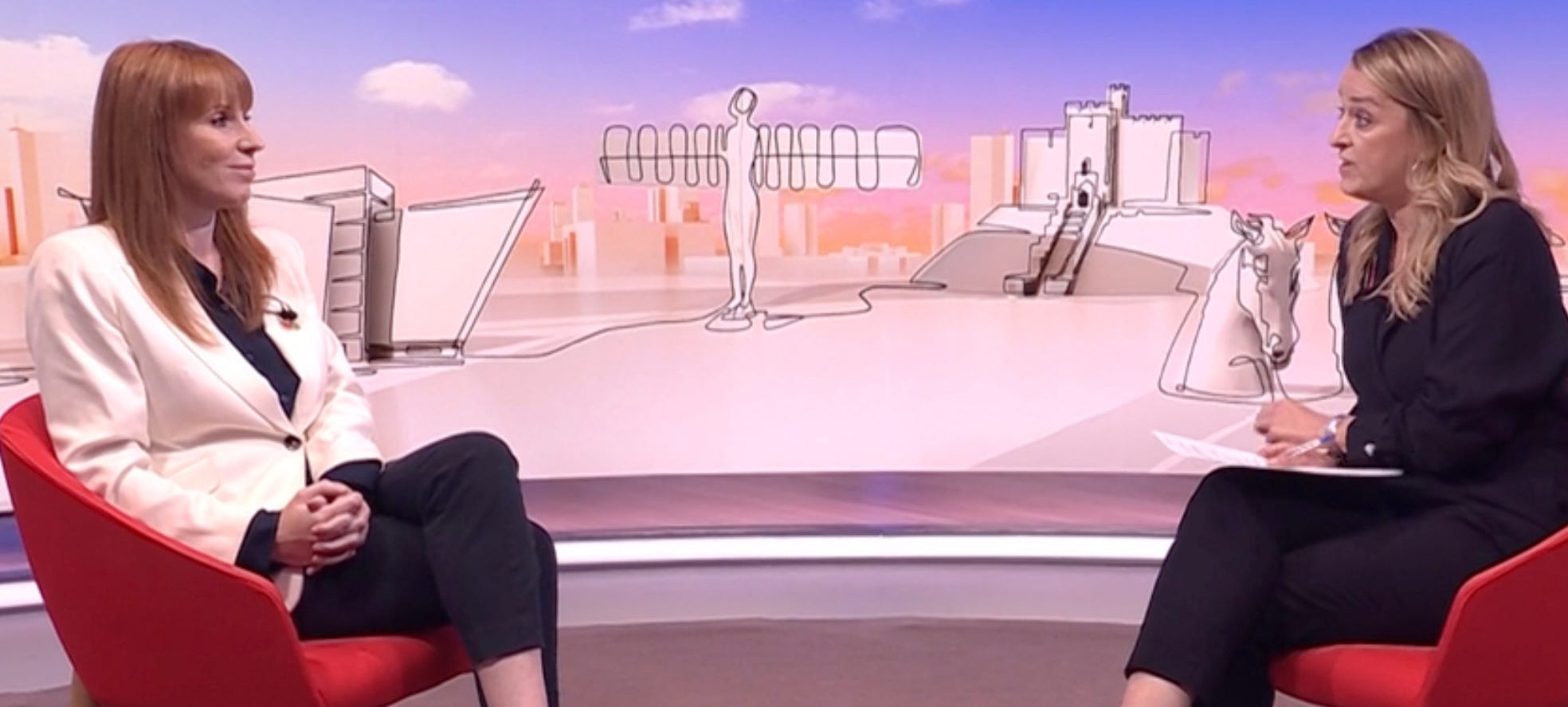
The fact that Ms Rayner’s logic-free defence of reopening Brexit questions was toe-curlingly unimpressive only serves to emphasise the political imperative that this initiative has behind it (Sunday with Laura Kuensberg, BBC iPlayer, 26th October 2026 from 6m25s.) If it reopens the Brexit debate (otherwise as suicidal internecine conflict) in the Conservative party then that might knock a couple of points off the polling numbers. This represents the clearest evidence yet that an early General Election is actually on the way. No real prospect of freedom of movement restoration was demonstrated, but it’s a good giggle Andy! Grudging respect from one cynic to another…
The mañana Budget?
Former Bank of England Chief Economist Andy Haldane and opposition politicians have raised concerns about the prospect of a “mañana Budget” that simply postpones difficult decisions until after the 2027 Spending Review. (Steven Swinford, The Times, 23rd October 2026 [PAYWALL} “Andy Haldane: PM risks Truss-style crisis if he dodges tough choices.”) Although Downing Street (North or South) will point to the politically difficult decision to adjust the pension triple lock to help fund social care reform, which was not the easy path, but the problems extend well beyond welfare spending.
Defence provides a particularly uncomfortable example. A parliamentary question from Ben Obese-Jecty (Huntingdon, Conservative) produced confirmation from junior Defence Minister Luke Pollard that nearly £1.9 billion has been removed from the Army’s Mechanised Infantry Vehicle programme by cancelling previously planned Boxer armoured vehicle capabilities, including armoured mortar, repair and recovery and mounted close combat overwatch capabilities.

Britain is discussing increased defence expenditure while abandoning elements of a major equipment programme, without identifying how the resulting capability requirements can be satisfied. (Genevieve Holl-Alle, Daily Telegraph, 19th October 2026 [PAYWALL} “Labour cuts £2bn from Army front line.”) Props to Ben Obese-Jecty for determined and detailed questioning.
Meanwhile, the government announced £100million for a new AI biosecurity laboratory. Typically, this was announced as £300million, but on closer inspection that is £100million from HMG and £200million commitment from industry. The contrast is revealing: ministers are announcing new defence initiatives while cancelling elements of an existing equipment programme without explaining how the resulting gaps can be filled. It is impossible to assess the coherence of a strategy when its additions are publicised while its omissions are obscured. (Liv McMahon, BBC News, 24th October 2026 “UK to invest £100m in ‘world first’ AI Biosecurity Lab.”)
Growth by reducing paperwork?
In another demonstration of small-scale ministerial activity, Downing Street announced plans to reduce unnecessary paperwork and extend tariff suspensions, with potential savings to British businesses estimated at “up to” £800million. Britain’s regulatory and administrative burdens are hardly imaginary, particularly for smaller enterprises. Hopefully, businesses will not have to complete an extensive online application to qualify for relief from unnecessary form-filling. (Danielle de Wolfe, LBC News “Chancellor pledges to cut ‘pointless paperwork’ and red tape in £800 million cost-cutting drive for UK businesses.”)
The question this leaves, however, is one of scale. Regulatory simplification may be useful. It cannot, by itself, resolve weak investment, high energy costs, persistent productivity problems, or the fiscal pressures that constrain the government’s ability to respond to them.
Burnham’s central challenge is not simply to allow his Chancellor to deliver a Budget that avoids economic damage, but how he can show that a collection of pragmatic interventions could add up to an actual economic strategy. However, although a government can survive for a while by demonstrating that it understands the frustrations of ordinary life, it cannot substitute sympathy for delivery until a General Election gives likely rein to both cynicism and frustration.
Budget26 has to begin to bring at least some of the delivery into the present. Fake it until you make it is not a strategy that wins elections. Currently, “Burnhamism” risks being seen as a list of small achievements and large aspirations, separated by a Spending Review that is always just over the horizon.
Meanwhile, elsewhere in Westminster…
Lords abolition
Baroness (Carmen) Smith of Llanfaes, Plaid Cymru’s remarkably young peer, secured a second reading for her private member’s House of Lords (Alternative Second Chamber) Bill, proposing consultation on an alternative second chamber.
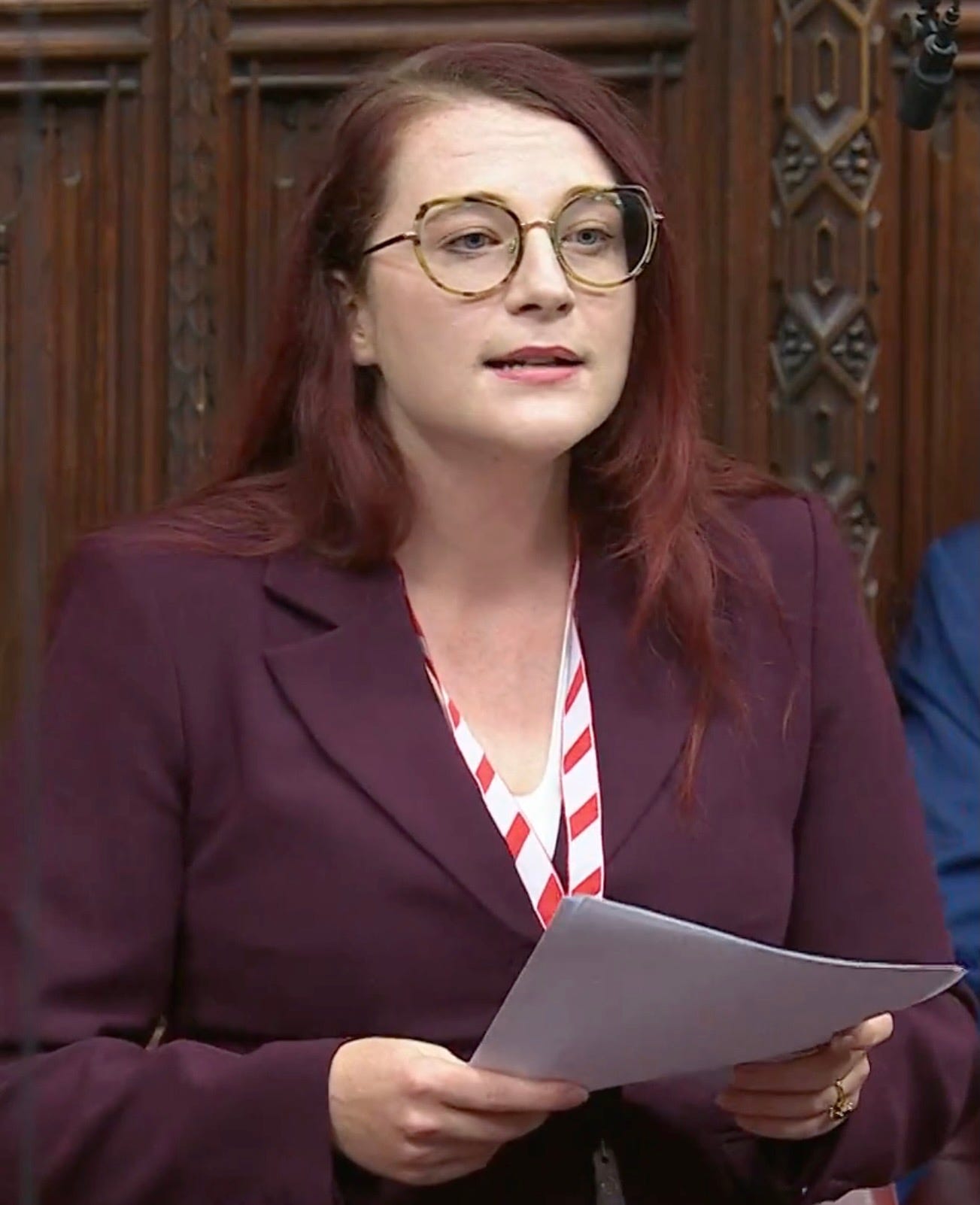
While opposing abolition, Lord Blunkett contributed an interesting suggestion for a Constitutional Commission to examine the question more broadly. There is something rather pleasing about the House of Lords devoting Friday morning to discussing whether it should be abolished. Whether this represents constitutional progress, or an unusually elaborate form of procrastination remains to be seen.
TWOP says: ELECTED SENATE NOW!
Ukraine’s satellite difficulties
Following reports of restrictions affecting Ukrainian use of Starshield services, there were indications by Saturday that the limitations had been eased.
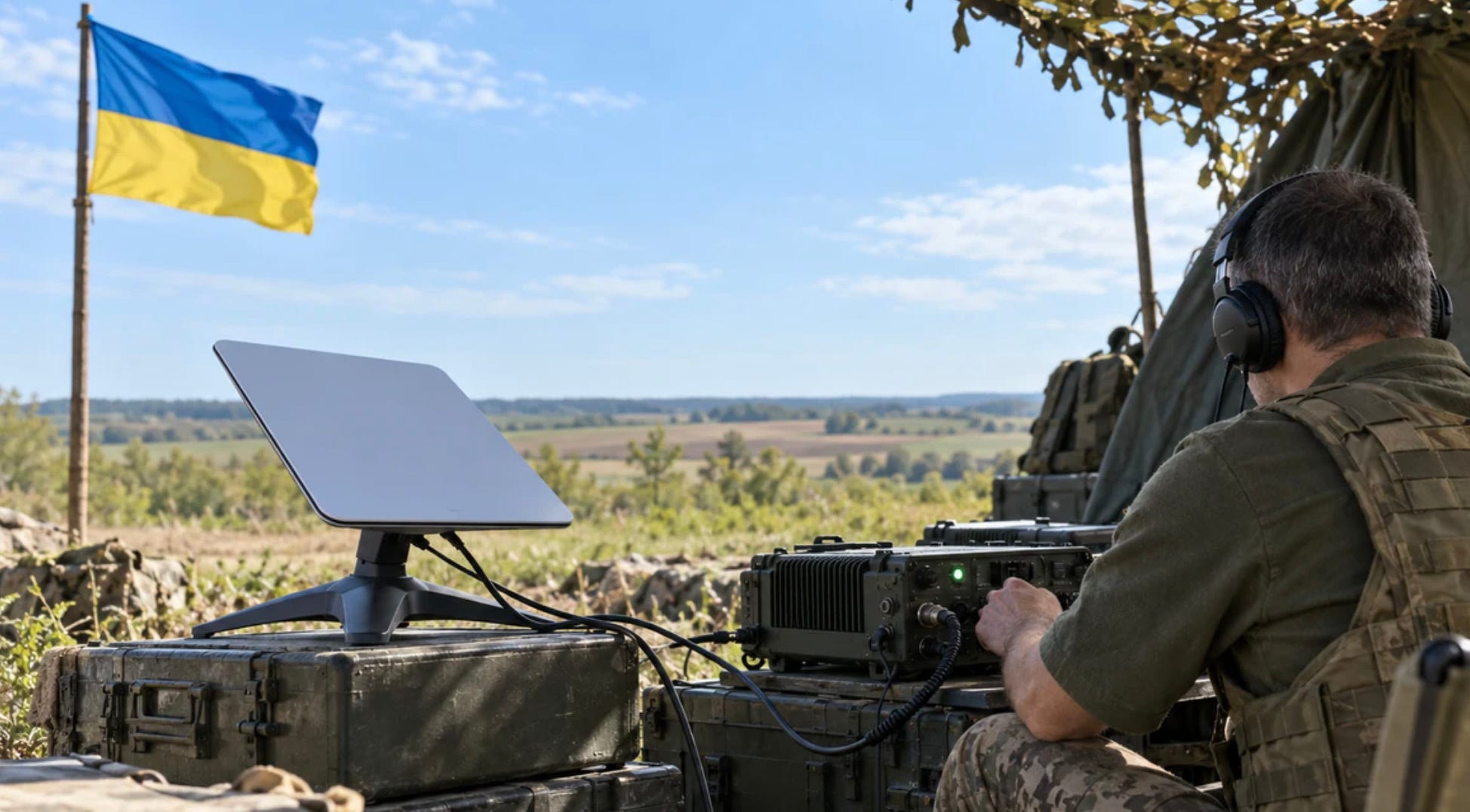
The circumstances surrounding both their introduction and their apparent removal remain unclear with both Donald Trump and Elon Musk conspiring in a “little green men” chapter of deeply unconvincing “it’s not me” exchanges without the Putinesque message discipline. (Yulia Dysa, Reuters, 24th October 2026 [PAYWALL] “Ukraine says Starshield back to normal, Musk says Kyiv violated terms.“)
Military injustice
Reporting in The Sunday Times (Sunday Times Insight, 18th October 2026 [PAYWALL] “SAS commander criminally investigated after five soldiers accused of murder”) raised troubling questions about the investigation of SAS soldiers suspected in connection with the deaths of two teenagers who were working for Islamic State in Syria. The soldiers were reportedly returned to operations shortly after questioning, but the investigation continued for three years before a decision was taken not to bring charges.

Questions about the length and conduct of such investigations deserve serious attention, particularly as Parliament has reintroduced legislation relating to the legacy of the Troubles. Neither justice for victims, nor fairness to service personnel is well served by a system that takes years to establish whether there is a case to answer. The SAS should be given blanket immunity from prosecution on the proviso that their clandestine operations always receive clear legal clearance from military lawyers.
…and finally: baked beans.
Ministerial advice about household emergency supplies has generated another round of headlines about tinned food, bottled water and the apparent need to prepare for disruption. (Peter Walker, The Guardian, 23rd October 2026 “Andy Burnham says he has emergency stockpile of beans, soup and Twiglets.”)
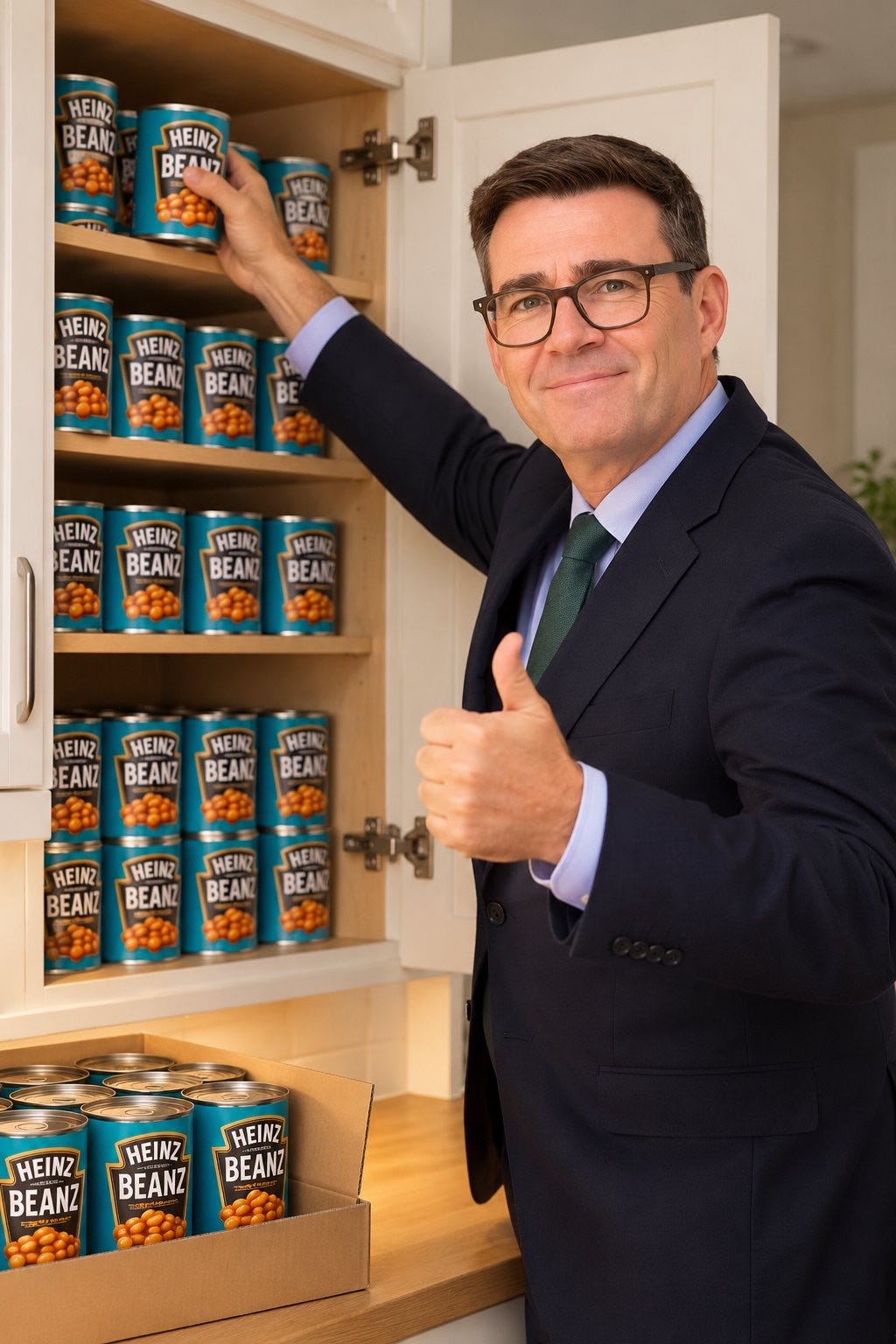
It may be perfectly sensible advice, but when the government spends one week promising to make everyday life easier and the next encouraging everyone to stockpile baked beans and batteries, one begins to wonder quite what ministers know about what is coming the week after next.
The Prime Minister’s programme of small improvements has been politically effective. It has also been relatively inexpensive. The Budget will require decisions that are neither small, nor inexpensive. The question is not now whether Burnham can find things to do, but whether he can decide which things are worth paying for. Not after the next election. Now.’s political leaders can demonstrate the determination to ensure that Russian aggression does not succeed simply by exhausting the patience of Ukraine’s allies.
Leave a Reply
You must be logged in to post a comment.