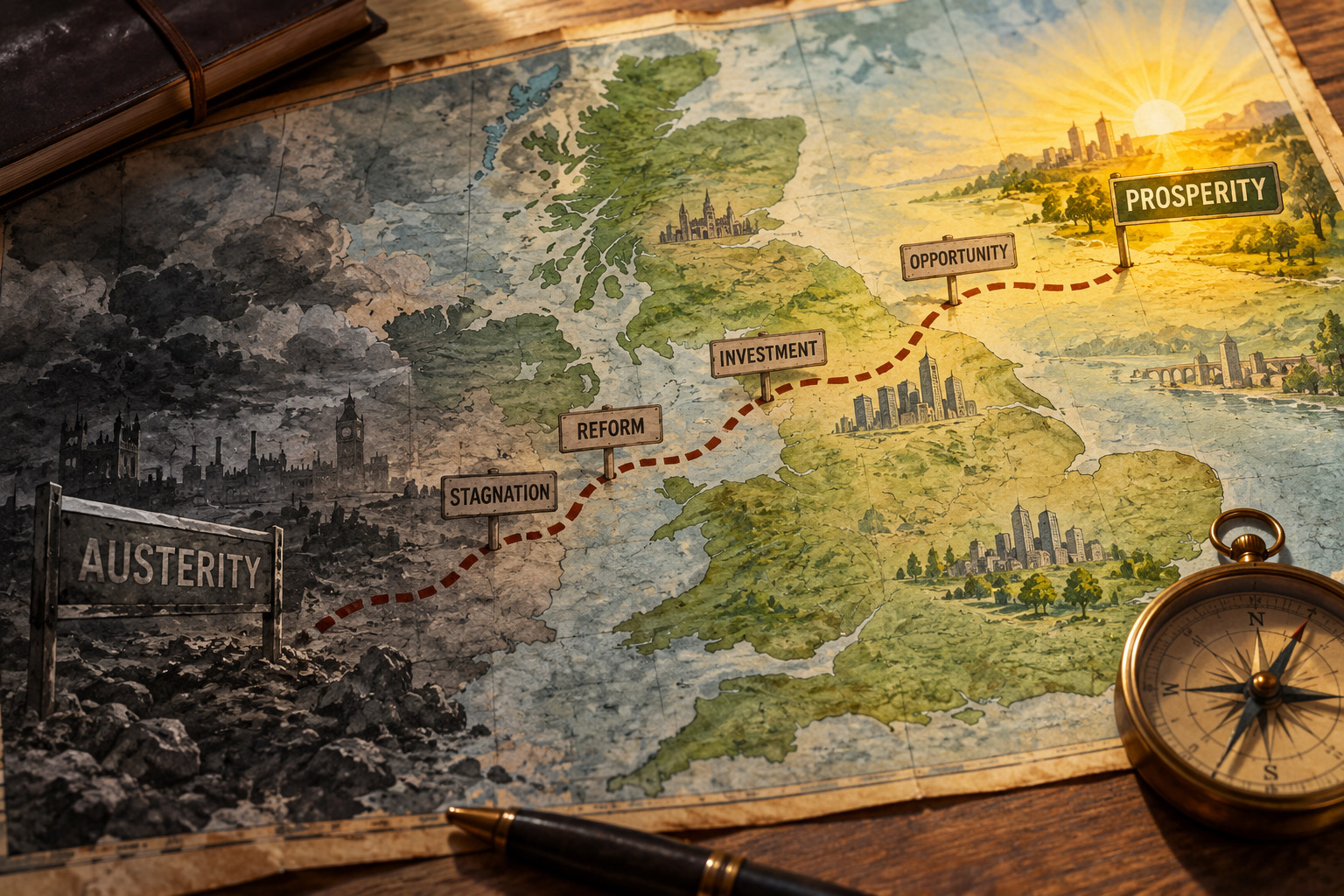
Hope but no map.
Burnham has sketched a destination. The next stage is harder: he needs a map.
There has been an unmistakable change of mood in Downing Street. Unlike his predecessor, Andy Burnham has given the Labour government a clear sense of purpose and a set of apparently genuine priorities. Social care, electoral reform, devolution, social housing, technical education and greater public control of utilities are not merely items on a government grid. Rather, they fit together into a recognisable view of what Britain could look like.
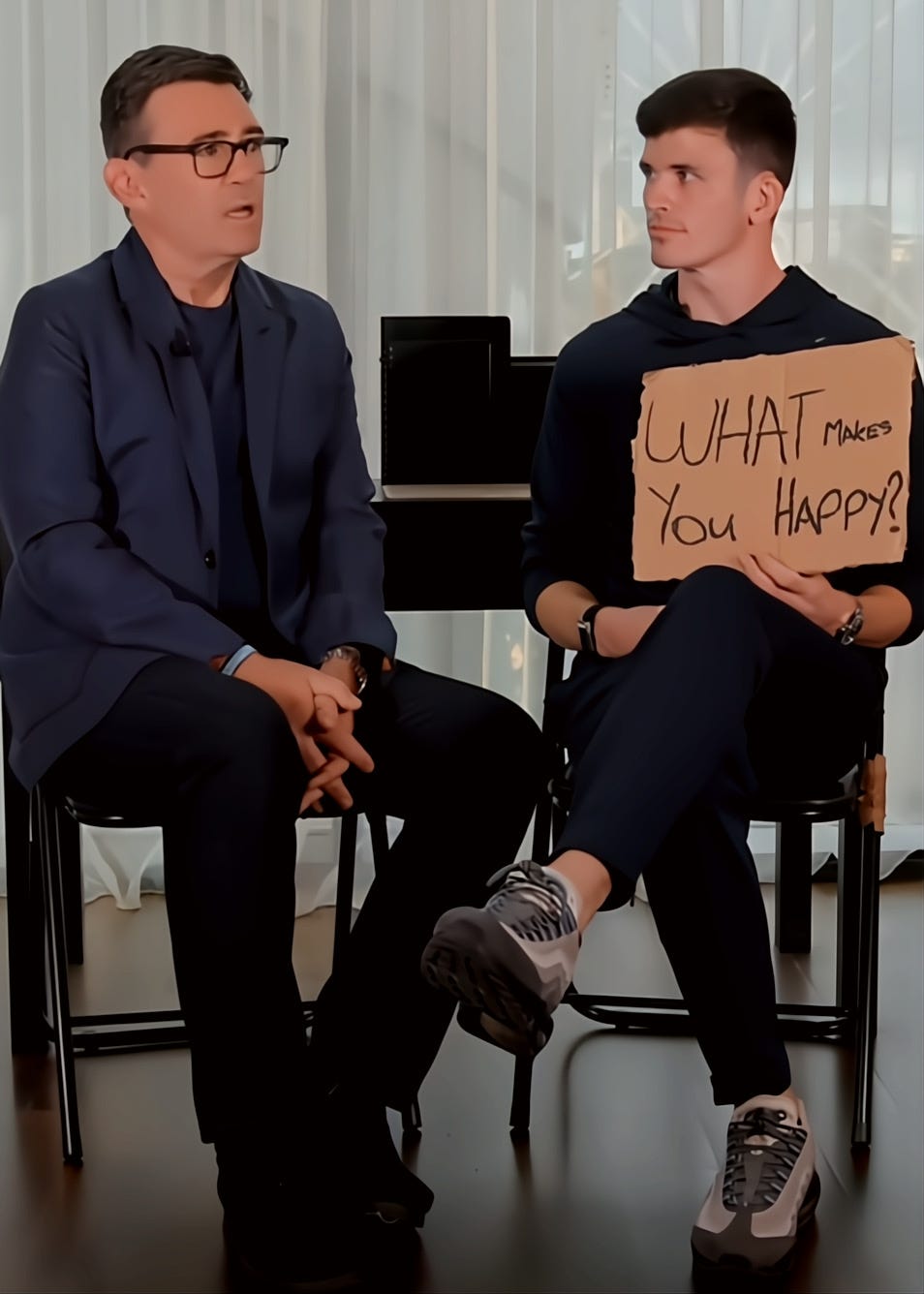
After governments that seemed principally concerned with explaining why things could not be done, there is something refreshing about a Prime Minister prepared to describe where he actually wants to go. Sadly, however, a destination is not a map.
That distinction may become increasingly important over the next three years because Burnham’s political optimism is about to collide with some decidedly unoptimistic arithmetic.
The October Budget now less than four weeks away, once expected to provide the first great test of the new government, is now being trailed as a smaller affair. Chancellor John Healey appears determined to avoid drama, with some combination of property taxation and a surcharge on banks among the measures being considered to maintain the Treasury’s precious headroom against OBR forecasts.
That is probably sensible, but it also serves as a reminder that there is not much money lying around to help build the promised land.
Burnham’s surprise announcement at Labour conference that the pensions triple lock would be altered from 2030 (Rowena Mason, The Guardian, 2nd October 2026 “Burnham plans to pass law scrapping pension triple lock before next election”) appears to recognise the surrounding fiscal context. Under the proposed change, pensions would no longer automatically rise faster than inflation simply because earnings had done so. Those pension “savings” are supposed to help finance Burnham’s proposed National Care Service, although it is worth noting that constraining a possible future increase in spending is not an actual “saving” anyone can bank (Jonathan Cribb, Institute for Fiscal Studies, 29th September 2026 “New triple lock much improved but not perfect, and not enough to fund universal social care.”)
Politically, however, this proposal is astute. It identifies a saving, demonstrates that Burnham is prepared to contemplate an unpopular choice and gives substance to his insistence that social care is one of his main priorities.
There are, however, two rather conspicuous problems. The first is whether the sums come remotely close to matching the ambition. The second is the date: 2030.
By pushing both the savings and much of the serious expenditure on social care beyond the 2029 election, Burnham has demonstrated the problem confronting the rest of his programme. The government has ambitions for the next three years, but much of the fiscal room in which to realise them appears to exist (rather ephemerally) beyond that timescale. That position may get worse before it gets better.

Rachel Reeves left behind plans which implied departmental cuts of around 4.4% in 2029–‘31 (see her evidence to the Commons Treasury Committee in answer to John Glen MP’s question and following on 26th March 2026.) Add higher defence spending, instability in the Middle East and the continuing nervousness of bond markets and the next Spending Review begins to look less like the mechanism for delivering Burnham’s ambitions than an elaborate exercise in deciding which parts of it can survive.
The same problem appears when individual policies are examined.
Burnham has spoken repeatedly about restoring public control over essential utilities, but outright nationalisation is extraordinarily expensive under the existing fiscal rules. The immediate result is therefore something rather less dramatic: stronger regulation, greater powers for mayors and regional oversight of water companies that remain privately owned. Even putting Thames Water into administration carries substantial financial and legal costs.
There is nothing inherently wrong with any of this. Greater public control without the enormous cost of nationalisation may prove a perfectly sensible policy. It is simply not yet obvious how it leads from the regulated private system Britain has today to the substantially different model Burnham describes when he talks about reversing the failures of privatisation.
Housing presents much the same difficulty. The government can change rules. It can restrict Right to Buy on newly built council homes and alter the incentives facing local authorities. What it cannot cheaply do is build hundreds of thousands of houses.
The existing target of 1.5 million new homes over the lifetime of this government already appears to be off course by ~400,000 new starts. Burnham can make social housing a central political priority, but without considerably more public money the mechanism by which that priority produces houses will remain elusive.
This is the wider difficulty with Burnham’s promised break from the politics of the past 40 years. His rhetoric is expansive. Privatisation, deregulation, austerity and Brexit are increasingly presented as parts of a failed settlement from which Britain must escape. He talks about re-industrialisation, public ownership and a more interventionist state. But some key components seem to have fallen off the landscape entirely: anyone for immigration or defence? Anyone at all?”
The economic machinery available to Burnham’s government is remarkably familiar.
Britain still depends heavily on financial, legal and business services. The Business Department and Cabinet Office are simultaneously pursuing deregulation. Utilities remain largely privately owned regulated monopolies. Brexit may eventually be reconsidered, but even that would hardly provide an immediate answer to the domestic constraints on housing, social care, defence, or welfare spending.
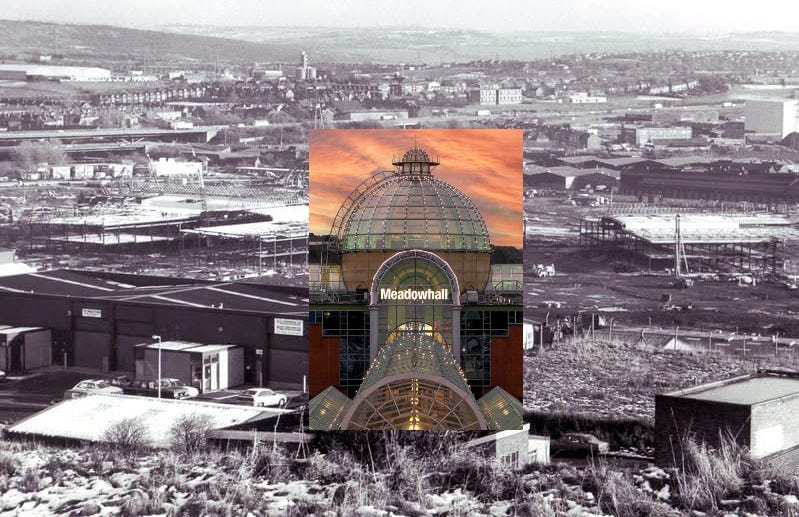
There is no credible basis for believing that a “re-industrialisation” objective is even vaguely aligned to Britain’s now post-industrial, knowledge economy. The shipbuilding might of the Clyde has sunk: it will not be resurrected as anything more “industrial” than a retail park.
There is, in other words, a yawning gap between the scale of the political change being described and the scale of the policy changes available to deliver that change.
That does not make Burnham’s optimism fraudulent. Quite the opposite: one of his political strengths is that he appears to believe that Britain can work rather better than it currently does. That sense of possibility has energised ministers, officials and a Labour Party that had grown accustomed to governing in various shades of grey.
Optimism is not itself a programme of government.
Between Burnham and his promised land lie three years of fiscal desert: a painful Spending Review, increasing defence commitments, strained public services, limited investment capital and an economy still largely operating according to the model he says he wants to leave behind. Some of those constraints are domestic. Others will be determined by events in Washington, Moscow and Tehran over which Downing Street has remarkably little control. And still the small boats will arrive as an emotive practical reminder of Britain’s state failure.
The danger is therefore not simply that Burnham has promised too much. It is that expectations may rise considerably faster than the government’s capacity to meet them.
If Britain reaches the 2029 election having heard three years of ambitious language about social care, housing, utilities, manufacturing and education without seeing much tangible improvement in any of them, the result may not be renewed hope but deeper disillusionment.
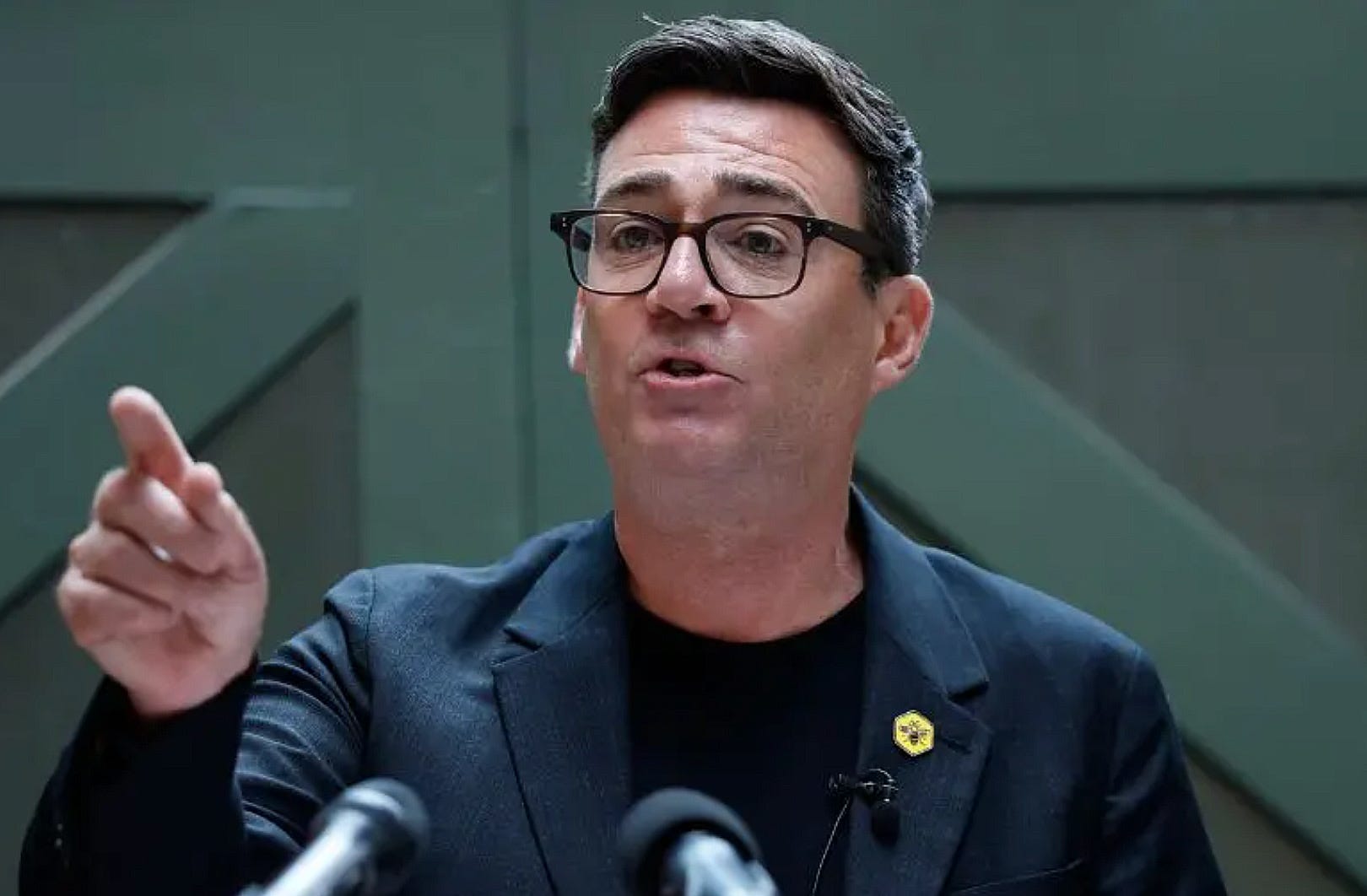
Burnham has done something politically significant: he sketched a destination.
The next stage is harder: he needs to share a map and a timetable.
Check us out on insta @theworldofukpolitics and now at theworldofpolitics.substack.com too!
Leave a Reply
You must be logged in to post a comment.