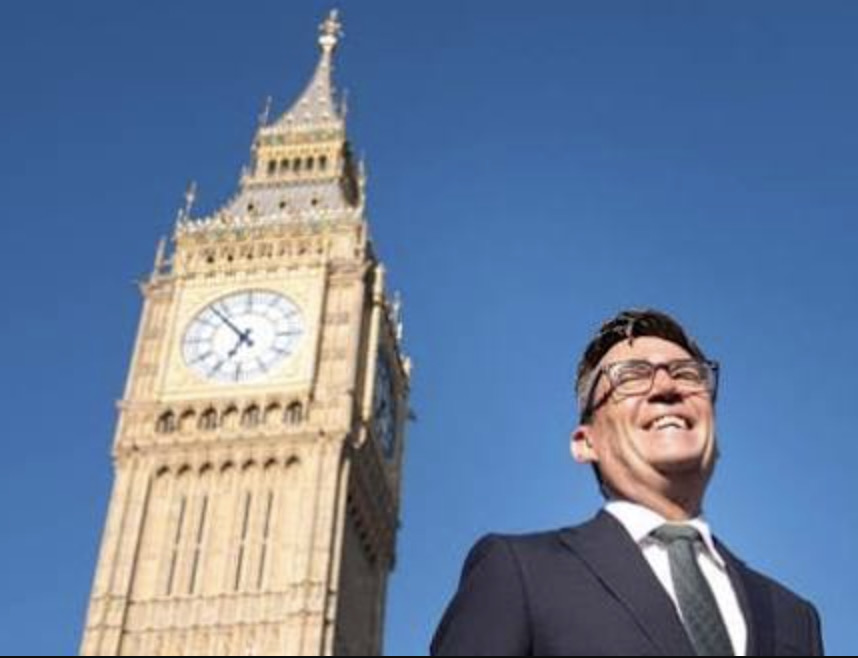
ALL IN GOOD TIME
Governments are always short of something. Money, parliamentary time, civil servants, public patience and, occasionally, ideas. This week Andy Burnham appeared to be particularly interested in acquiring another scarce commodity: time.
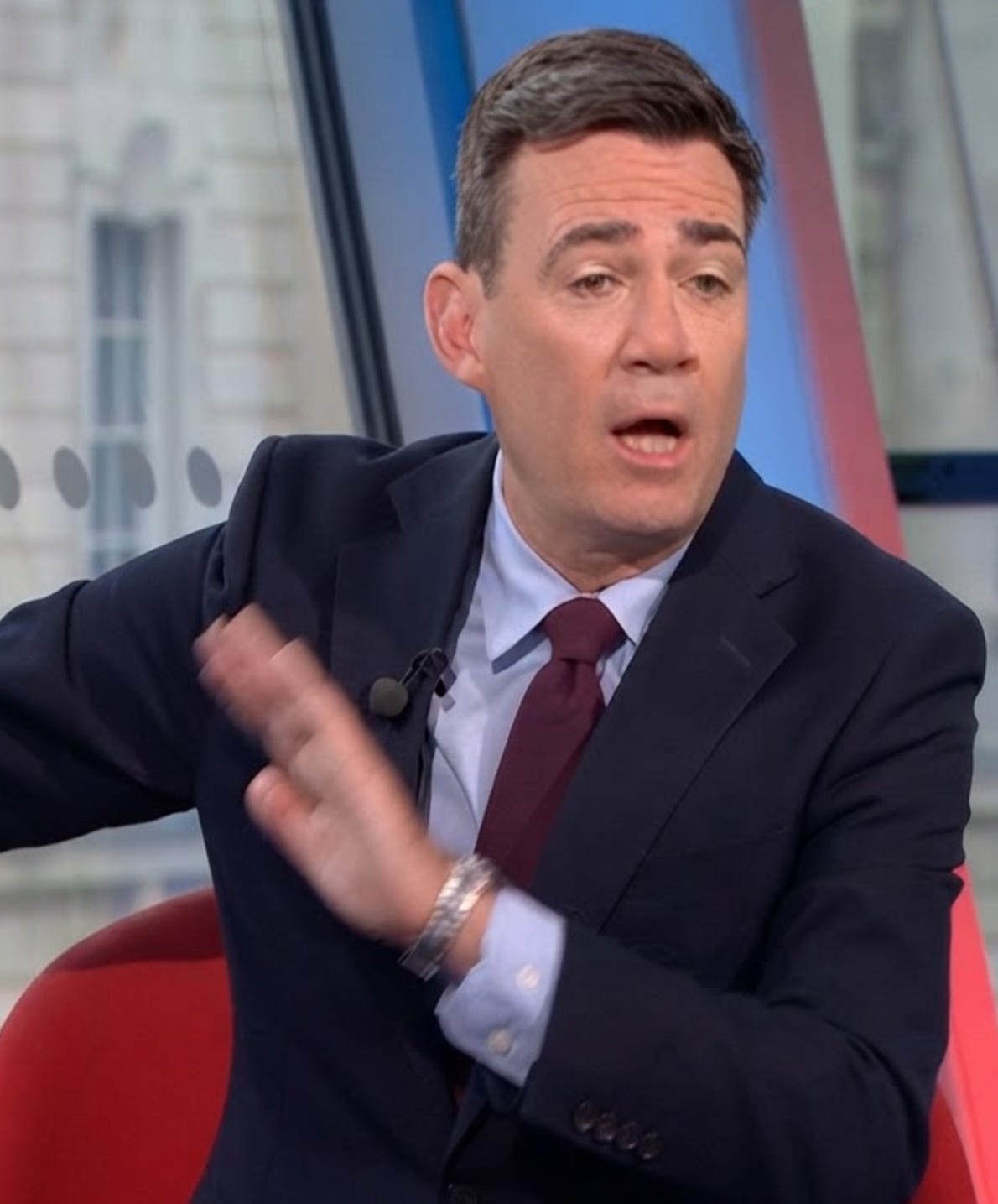
In the traditional pre-conference Sunday morning interview (with Laura Kuenssberg) the PM announced the most ambitious domestic policy of his new premiership: a National Care Service for England, providing social care on the NHS model of being “free at the point of use” and funded through general taxation (Richard Wheeler, BC News, 27th September 2026 “Burnham proposes NHS-style social care system for England.”)
This is a large idea. Less ambitious “solutions” including Burnham’s own last attempt have come a cropper. This initiative comes with the personal heft derived from Burnham’s recent family experience (his father died only two short weeks ago.) It is also not going to happen for a while, as Burnham said that the details would be developed with Baroness Casey as she completes her current review of social care.
Burnham again said that he will seek political consensus in the hope of avoiding the fate of previous attempts at reform, which have tended to expire shortly after somebody discovers an electorally useful phrase such as “death tax.” The ever-charming Robert Jenrick has entered his immediate bid for “universal death tax”, reinforcing my instinctive hatred for his nit-wittery. The resulting proposal would then be taken to the next General Election, with implementation only coming in the following Parliament. There is an obvious temptation to be cynical: social care has spent much of the past half century being reviewed, considered, consulted upon and returned to the shelf marked TOO DIFFICULT.
However, Burnham has now at least done something slightly differently: he has identified the destination before commissioning the route. The question is whether he is buying time in which to solve the problem, or merely buying time before having to confront it electorally.
Buying Time
There is nothing inherently wrong with buying time in government. Some problems are difficult because they actually are difficult. Social care involves taxation, welfare, healthcare, local government, housing, family responsibility and wildly different inheritance levels. A policy intended to survive for decades probably should not be knocked together between breakfast TV interviews and PMQs.
Burnham’s instinct to seek consensus is therefore more interesting than it at first appears. Politically, consensus can remove a dividing line that might otherwise be useful at an election. But governmenting is not merely the business of finding dividing lines, or Bill Clinton’s beloved “triangulation points.” If agreement prevents another social care settlement being destroyed the moment somebody discovers a frightening slogan for it, surrendering a little short-term political advantage might buy rather more durable policy, but the difficulty comes when process becomes policy.
Governments have an almost infinite vocabulary for not deciding something today. Review. Consultation. Commission. Working group. Green Paper. Independent report. Further consideration. Burnham’s government is beginning to acquire a few examples of its own.
The Review Button
In New York this week, the King of the North encountered the World Emperor. Burnham’s first meeting with Trump, on the margins of the UN General Assembly, passed without the diplomatic fireworks that many of his advisors feared (Pippa Crerar, The Guardian, 23rd September 2026 “Burnham navigates diplomatic rapids in first Trump meeting, but turbulent waters lie ahead.”)
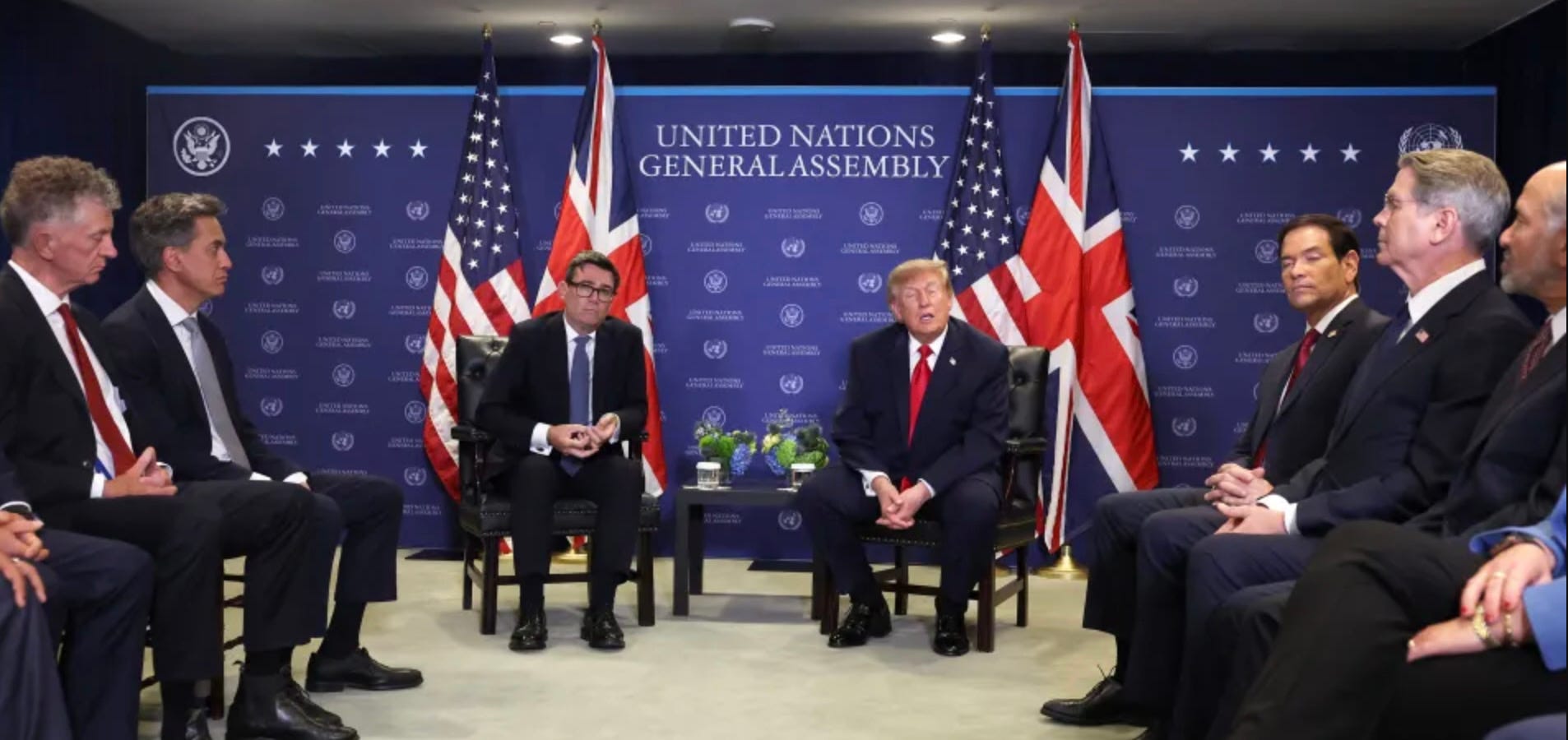
Ukraine and trade were discussed and Trump was broadly positive. There was, however, of course, a price: Trump described the proposed Chagos Islands agreement with Mauritius as “terrible” and “ridiculous.” New Defence Secretary Wes Streeting announced that the proposed deal would be “reviewed” as it could not proceed without US support. So that one is finally dead in the azure blue Indian Ocean waters. (Dominic Penna, Daily Telegraph, 23rd September 2026 [PAYWALL] “Chagos deal is not good enough, admits Streeting.”)
That may be entirely sensible. An agreement concerning an island containing a strategically important joint UK-US military base rather obviously has to take account of what the United States thinks, but it is another example of the usefulness of time.
A politically troublesome inherited policy does not have to be defended, reversed, or replaced immediately. It can be reviewed.
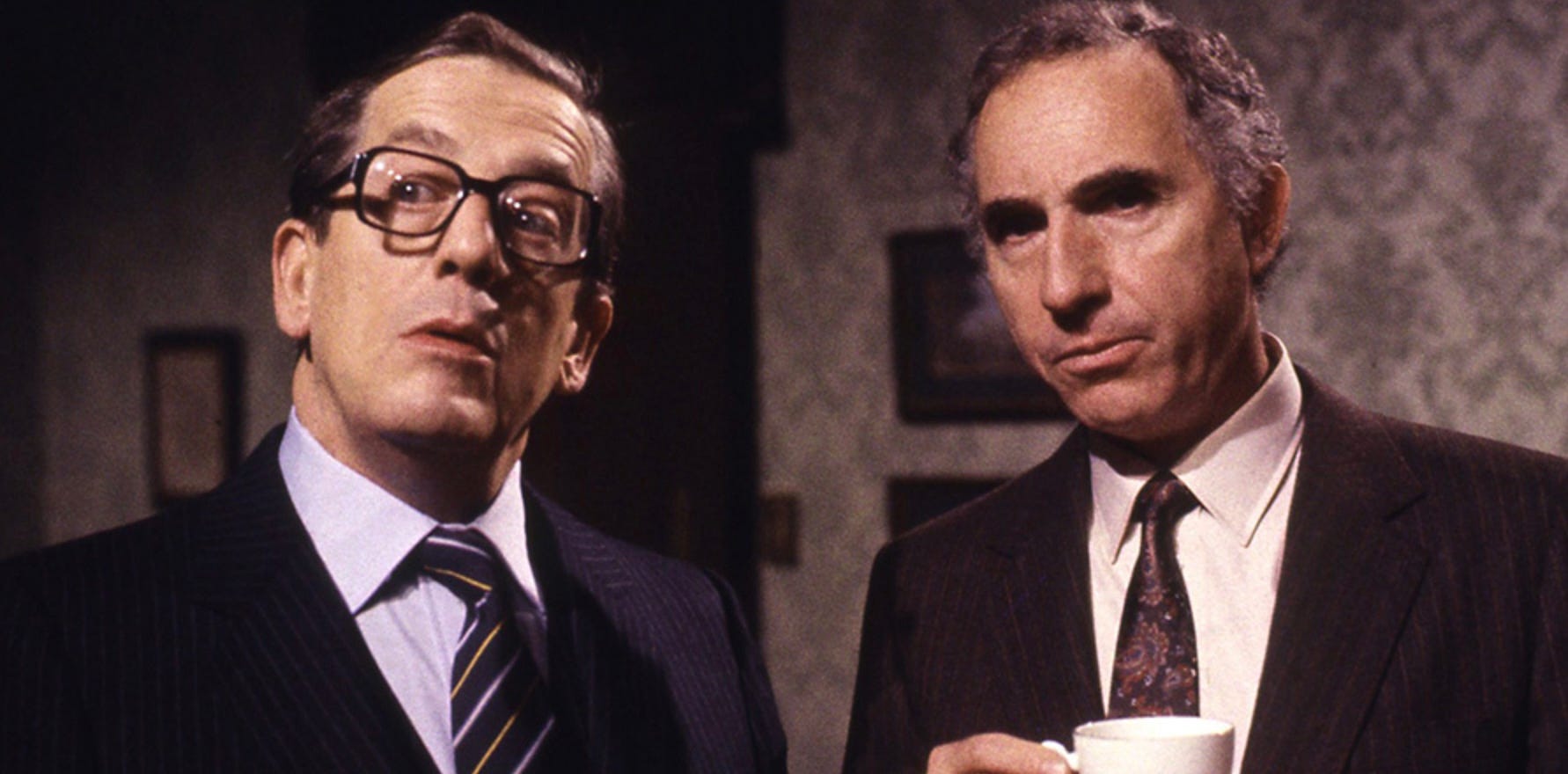
Nigel Hawthorne was a master of the strategic deployment of “The Review” in Yes, Minister and refined it to a specially hellish bureaucratic bulwark for indecisiveness in Yes, Prime Minister. Some things never really change.
Announce Today, Deliver Tomorrow
Elsewhere, the pre-conference announcement machine was whirring happily. Burnham unveiled a housing scheme intended to help first-time buyers onto the property ladder without relying on the Bank of Mum & Dad. (Pippa Crerar, The Guardian, 26th September 2026 “Andy Burnham announces new homes scheme for first-time buyers.”)
Meanwhile £210m was announced for High Street regeneration, although even the Government’s own press release acknowledged that the money came from MHCLG funding already earmarked for High Street support and regeneration.
Announcement confetti is not an innovation of this government. Indeed, governments of every colour have discovered that the same money can enjoy an unexpectedly productive public life if announced often enough. The problem is the larger clock ticking in the background.
The Government apparently remains committed to building 1,500,000 homes during this Parliament, but it is now expected to fall at least 400,000 homes short of that target (Melissa Lawford, Sunday Telegraph, 27th September 2026 [PAYWALL] “Healey facing £1.6bn hit from Labour’s failed housebuilding blitz.”) This is where buying time becomes more difficult. A review can postpone a decision. A consultation can postpone legislation. An announcement can temporarily substitute activity for delivery, but it cannot build a house.
The Prime Minister himself extemporised a variation on this theme during the Kuenssberg interview when asked about the planning process for Heathrow’s currently-hallucinated third runway, saying: “there are different views and you have to take those views seriously in coming to a decision.” This is ministerial code for “let’s kick that in to the jungle-length grass and hope everyone forgets.” (Dearbail Jordan, BBC News, 27th September 2026 “Andy Burnham refuses to back third runway at Heathrow.”) Surely it wouldn’t have had much of an impact on growth anyway, eh?
Not Yet, Chancellor
The Budget provides another reason to wait. Due on 28th October, the Budget process is already surrounded by the traditional cloud of Treasury possibilities, suggestions and mysteriously well-informed speculation. It is an irregular verb: I speculate, You leak, They make it up as they go along.
One proposal reportedly being considered would increase Capital Gains Tax to help fund an increase in the income tax personal allowance, an idea promoted by Labour mega-donor and Ecotricity founder, Dale Vince. (Harry Brennan, Daily Telegraph, 20th September 2026 [PAYWALL] “Burnham weighs £14bn capital gains tax raid.”) Perhaps it will happen. Perhaps it will not.

Pre-Budget kite-flying has several uses. It can prepare public opinion, test reaction, frighten opponents, or make the eventual announcement seem pleasantly moderate.
Above all, it means nobody has to decide publicly until Budget Day. For the moment, the Chancellor possesses the most valuable phrase in politics: “We do not comment on Budget speculation” but only for another month!
Europe, but Quietly
Time is also being bought over the EU. The Government has been cautiously exploring ways of reconnecting Britain with useful pieces of European economic architecture without reopening the entire Brexit argument. That balancing act became rather more visible this week when Labour’s Conference Arrangements Committee blocked a proposed debate on closer alignment with the EU single market. The motion was reportedly ruled insufficiently “contemporary”, a judgment one Labour MP translated rather more colourfully as meaning “too sensitive”. (Arj Singh, The i Paper, 25th September 2026 [PAYWALL] “Inside the new Labour row over Brexit.”)
There might be perfectly sensible reasons for approaching Britain’s relationship with the EU incrementally. Brexit has already demonstrated what happens when enormously complicated institutional questions are compressed into simple political choices. Nevertheless, avoiding the larger argument does not make it disappear.
Harold Macmillan Moment (Events, dear boy…)
The difficulty for any government hoping to proceed carefully is that events do not necessarily cooperate. This week two small boats reportedly reached the Kent coast without initially being intercepted by Border Force. (Daniel Sandford, Simon Jones & Tanya Gupta, BBC News, 23rd September 2026 “Home Secretary hits out at ‘unacceptable’ migrant landings.”)

The following day 781 people arrived in small boats, the highest single-day figure recorded in 2026 to date (Craig Buchan, BBC News, 24th September 2026 “781 migrants arrive in small boats in 2026 record.”) Immigration provides perhaps the clearest example of the mismatch between political time and real time. Governments can devise strategies, negotiate agreements, alter enforcement systems and promise future legislation, but small boats can leave Calais tomorrow morning.
The same problem exists elsewhere. Housing shortages continue while planning reforms work through the system. Social care bills arrive while Baroness Casey writes her report. Markets react while Chancellors prepare Budgets. Foreign governments make decisions while British policy is under review. Unfortunately, problems tend not to wait politely while governments make use of the time they have bought.
All in Good Time
Burnham himself appears conscious of the clock. Asked whether he was tempted to call an early General Election, he was emphatic: “No election anytime soon.” There are historical reasons why a Labour Prime Minister might wish to answer that particular question rather carefully. Gordon Brown could probably provide a seminar.
Burnham has another reason not to hurry. His government is still young, his personal ratings are relatively strong, some inherited policies can be reconsidered and new ones can be developed. Reviews can report and the Budget can establish priorities. Social care reform can be constructed rather than improvised.
Time may therefore be one of Burnham’s greatest political assets, but what matters is what he does with it. Last week’s politics suggested that voters are in no particular hurry to change their minds. This week suggested that the Government may be in no particular hurry to force them to. There is nothing wrong with that. Good government should sometimes resist the demand to produce an immediate answer simply because Westminster has decided that an answer is required by lunchtime.
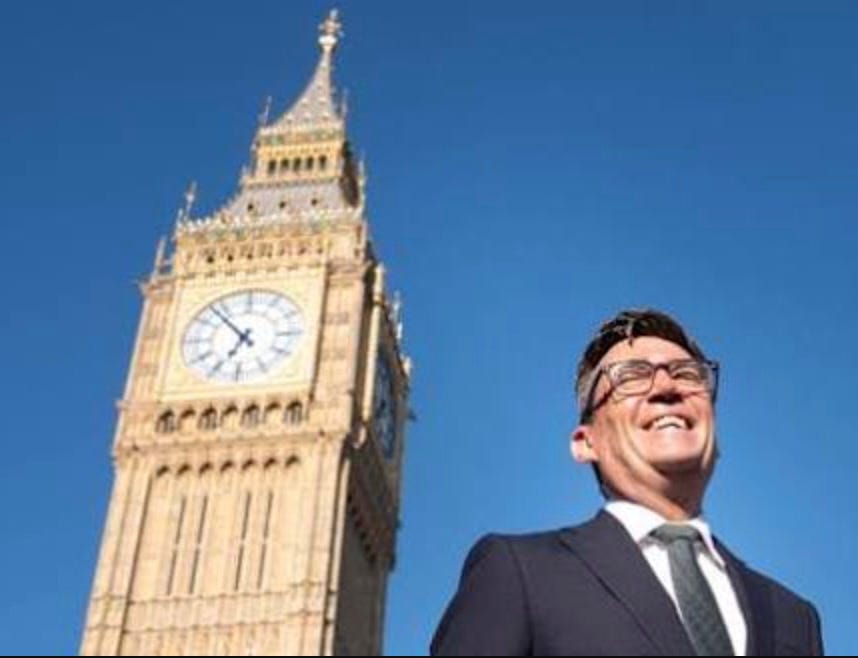
The danger comes when deliberation becomes postponement, reviews become waiting rooms and announcements become substitutes for things actually happening. Social care will provide an unusually good test. After decades of reports, commissions, proposals and abandoned reforms, Burnham has put a destination on the map. He now wants time to work out how to get there.
British governments have been buying time on social care for a very long time. Eventually, somebody has to go “all in.”
Check us out on insta @theworldofukpolitics and now at theworldofpolitics.substack.com too!
Leave a Reply
You must be logged in to post a comment.