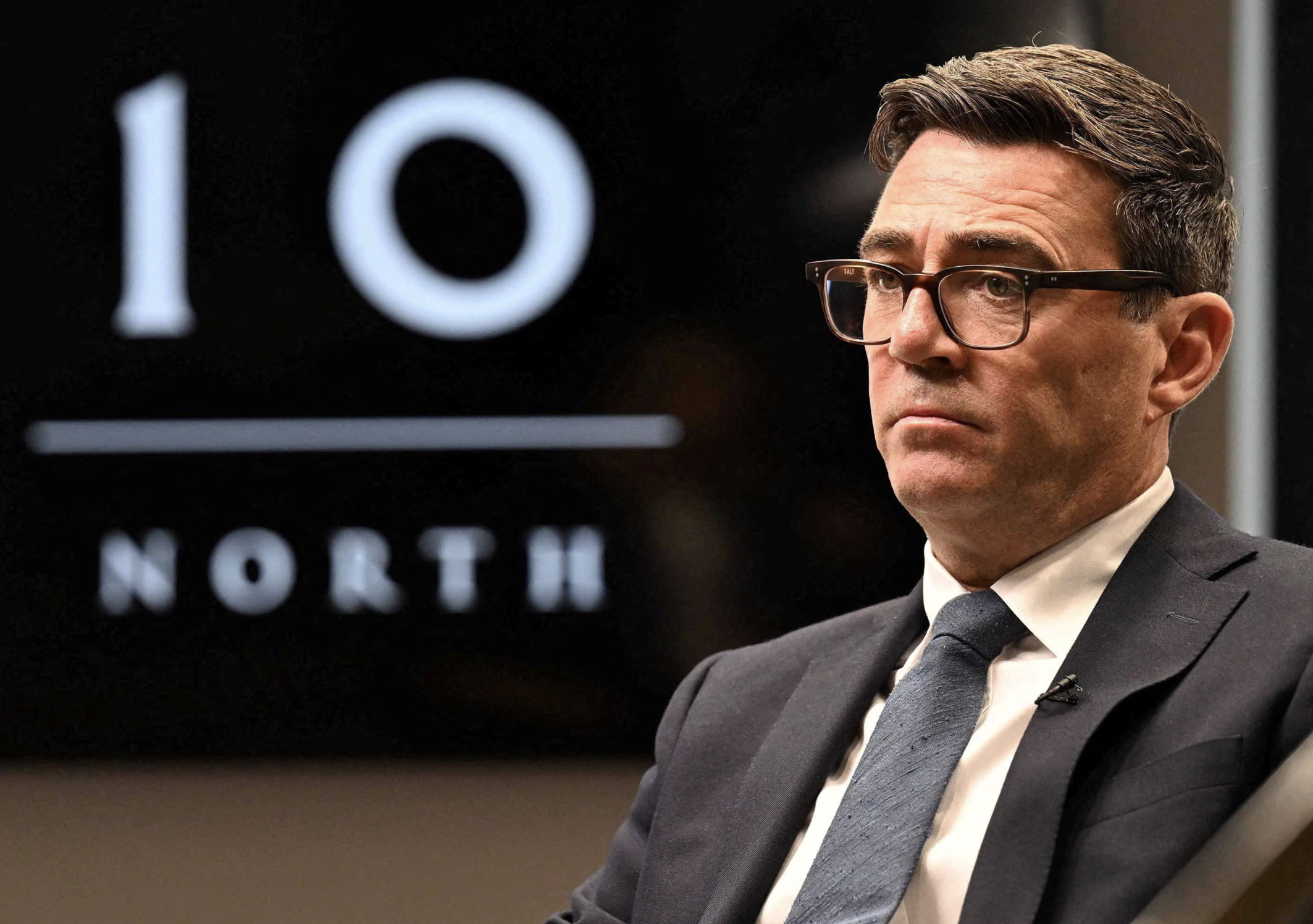
Burnham goes off the boil
After a month of frenetic activity, this was the week when Andy Burnham’s new government began to encounter something rather less exciting than political momentum: governing.
Reform UK returned to the polling lead with the YouGov voting intention poll based on 16th-17th August data, which placed Reform UK on 24%, Labour dropping to 22% and the Conservatives at 19%. Burnham seems to have unbounced remarkably quickly.
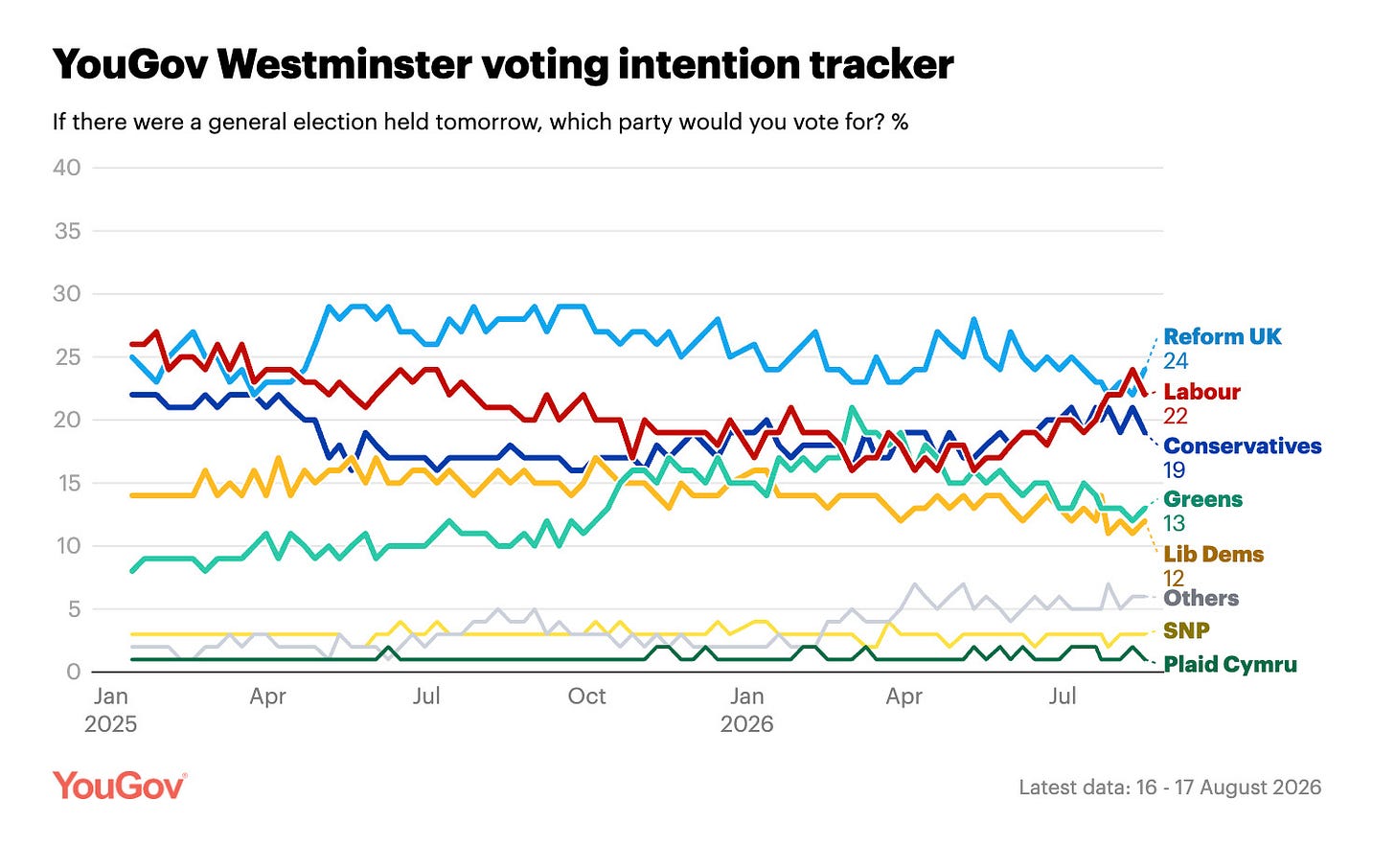
The difference between the top three parties is, however, small enough to be a statistical error. More data needed before Reform lead declared officially restored. (Irony.)
This is not to suggest that the wheels have come off the Burnham train. The new PM continues to generate ideas and announcements at a rate his predecessor would probably have regarded as showing off. The first weeks of his premiership were dominated by the sense that things were suddenly moving. This week offered the first hints of the rather more difficult question: moving where?
theworldofpolitics is a reader-supported publication. To receive new posts and support my work, consider becoming a free or paid subscriber.
The government’s Great Devolution Drive continued. Whitehall is to second 5-10 “high-performing” civil servants into each of England’s 18 mayoral offices. Meanwhile, Housing Minister Matthew Pennycook announced plans to give mayors powers to overrule councils blocking housing development (Kate Whannel, BBC News, 23rd August 2026 “Mayors to get powers to overrule local councils on planning decisions.” Lord Khan of Tooting has had this power in London for some time, but not long enough to see whether it works or not.
Burnham also chaired his first “Growth Situation Room” from No.10 North in Manchester on Friday, bringing mayors together to discuss economic growth and investment.
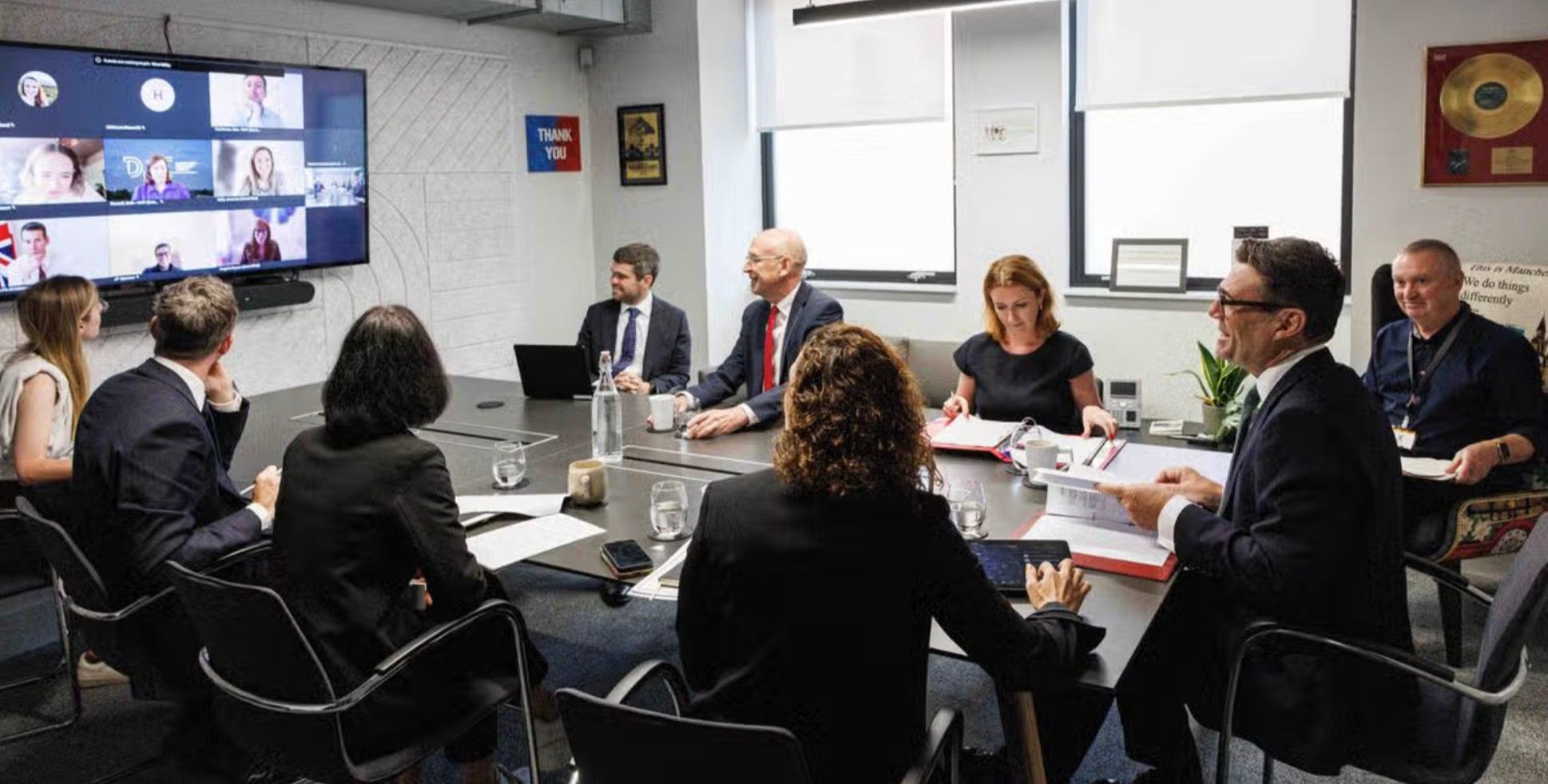
Unfortunately, it was held on Zoom and there is something almost Pythonesque about establishing a Northern Command intended to break London’s grip on government and then discovering that getting everybody to Manchester on a Friday is actually not on every mayor’s wishlist (Iram Ramzan, Manchester Evening News, 23rd August 2026 “Inside No 10 North.”)
Nevertheless, beneath the rather clunky theatricals there is a discernible Burnham political project. The PM clearly wants decisions taken outside London and mayors to become an alternative route through which Government can hope to get things done.
Starting with planning was a sound tactic. If local authorities refuse housing developments that regional government or mayors consider necessary, giving mayors the ability to intervene could unblock the sclerotic planning process. However, it could also make local democracy more “interesting”: there was some immediate blowback from local council leaders, such as Bridget Smith, LibDem leader of South Cambridgeshire District Council who pointed out that many councils with planning responsibilities have invested significant time and resources coming up with structure plans that it seems may be overturned on a mayoral whim. (BBCR4, Broadcasting House, 23rd August 2026, from 7:40.) The spectre of judicial review for mayoral interventions is a real prospect. That should speed things along nicely.
The underlying danger is that the Government (or at least No 10, North or South) begins to confuse announcing new mechanisms for action with action itself. That distinction cropped up elsewhere this week when Burnham announced a consultation on forcing fly-tippers to undertake up to 20 hours of unpaid clean-up work.
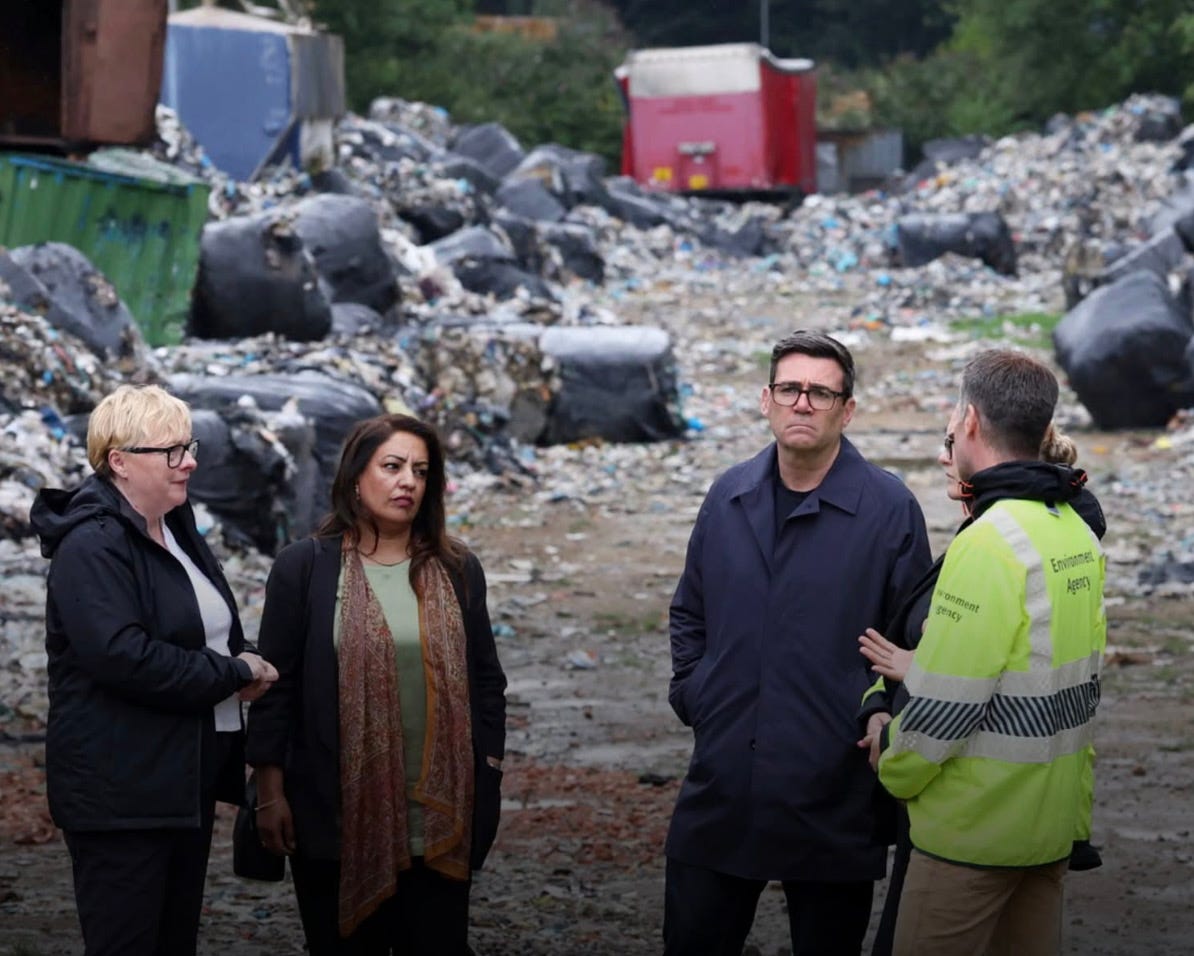
This sounds perfectly reasonable, but significantly underestimates the level of background frustration with the political process – many people of widely differing political views will have thought:
“It’s not that deep! Stop consulting and just get on with it.”
The State’s propensity to dither has reached crack cocaine addiction levels.
Reality arrives at the Treasury
The more serious interruption to Burnham’s first-month momentum came from the public finances. Unexpectedly, the Government had to borrow £1.8billion in July (Faarea Masud, BBC News, 21st August 2026 “UK borrows more than expected in July as Healey prepares for first Budget.”) a month which traditionally sees the receipt of significant self-employed income tax payments and usually produces an inflow for the Treasury. The new Chancellor, John Healey, insists that the Budget due on 28th October will remain within Labour’s fiscal rules and as he does not seem to be practising conjuring tricks involving rabbits and hats this could be interesting.
There was another small disappointment for Burnham when former Goldman Sachs chief economist Lord O’Neill ruled himself out of becoming the Prime Minister’s permanent chief economic adviser (Mauricio Alencar, City AM, 21st August 2026 “Lord O’Neill declines job in Burnham government.”) which put a little dent in Team Burnham’s optimism
Kemikal attack
Kemi Badenoch popped up at the Edinburgh Fringe to chat with Iain Dale attack former Conservative MPs who have defected to Reform as “some of the most dishonest people” she has ever encountered in politics. (Geneva Abdul, The Guardian, 21st August 2026 “Badenoch says Reform defectors ‘some of the most dishonest people I have met’.”) Robert Jenrick presumably. Just guessing.

Although Kemi has found her mojo recently, this attack neatly encapsulates the Conservatives’ strategic difficulty. Every minute spent explaining why former Conservatives in Reform are dreadful people is another minute spent reminding voters that rather a lot of former Conservatives are now in Reform.
The shape of British politics therefore remains frustratingly familiar: Labour is trying to govern, Reform is waiting and the Conservatives are arguing about Reform.
Meanwhile, across the Atlantic…
If Burnham spent the week discovering the constraints on political power, Donald Trump continued experimenting with the alternative proposition that constraints are largely in (other people’s) minds.
The latest US–Canada trade negotiations collapsed spectacularly (Wyatte Grantham-Philips, AP, 22nd August 2026 “Trump’s trade war with Canada: A timeline of how we got here.”) after repeated noises from both camps during the week that “a deal” was almost locked on.
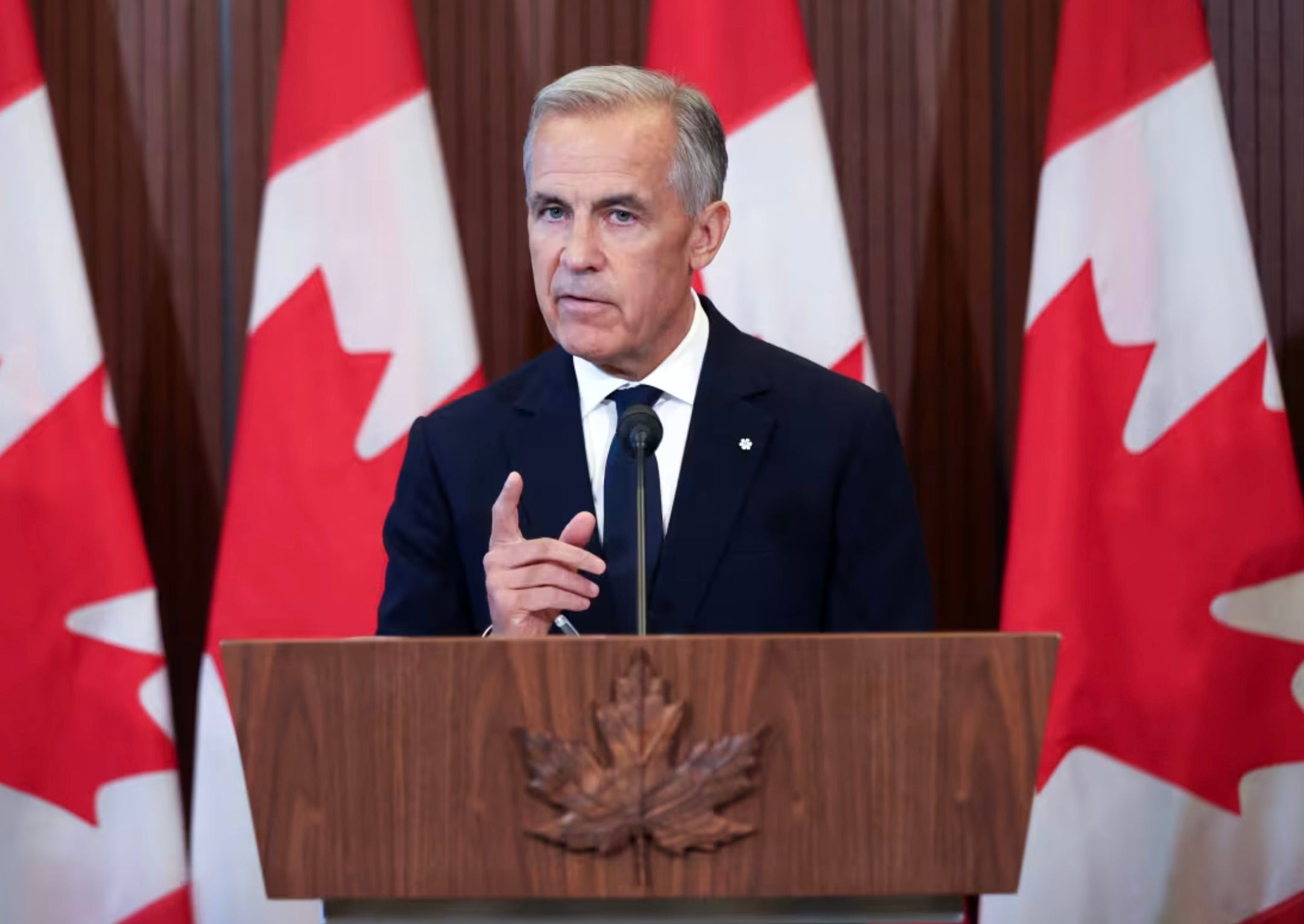
Washington then imposed 50% tariffs on around $20billion of Canadian imports and Canadian PM Mark Carney immediately announced that Canada would respond with dollar-for-dollar retaliatory tariffs on American steel, electronics and timber, from 8th September (Nadine Yousif, BBC News, 22nd August 2026 “Canada says it will match US tariffs ‘dollar for dollar’ as trade talks break down.”)
This is Trumpian catastrophisation in its purest form. A disagreement becomes a crisis. A crisis becomes an emergency. An emergency justifies an extraordinary response. The extraordinary response produces retaliation. Retaliation “proves” that the original crisis was indeed real and therefore requires an immediate and severe reaction. Round we go.
The world does not improve while Britain reorganises itself
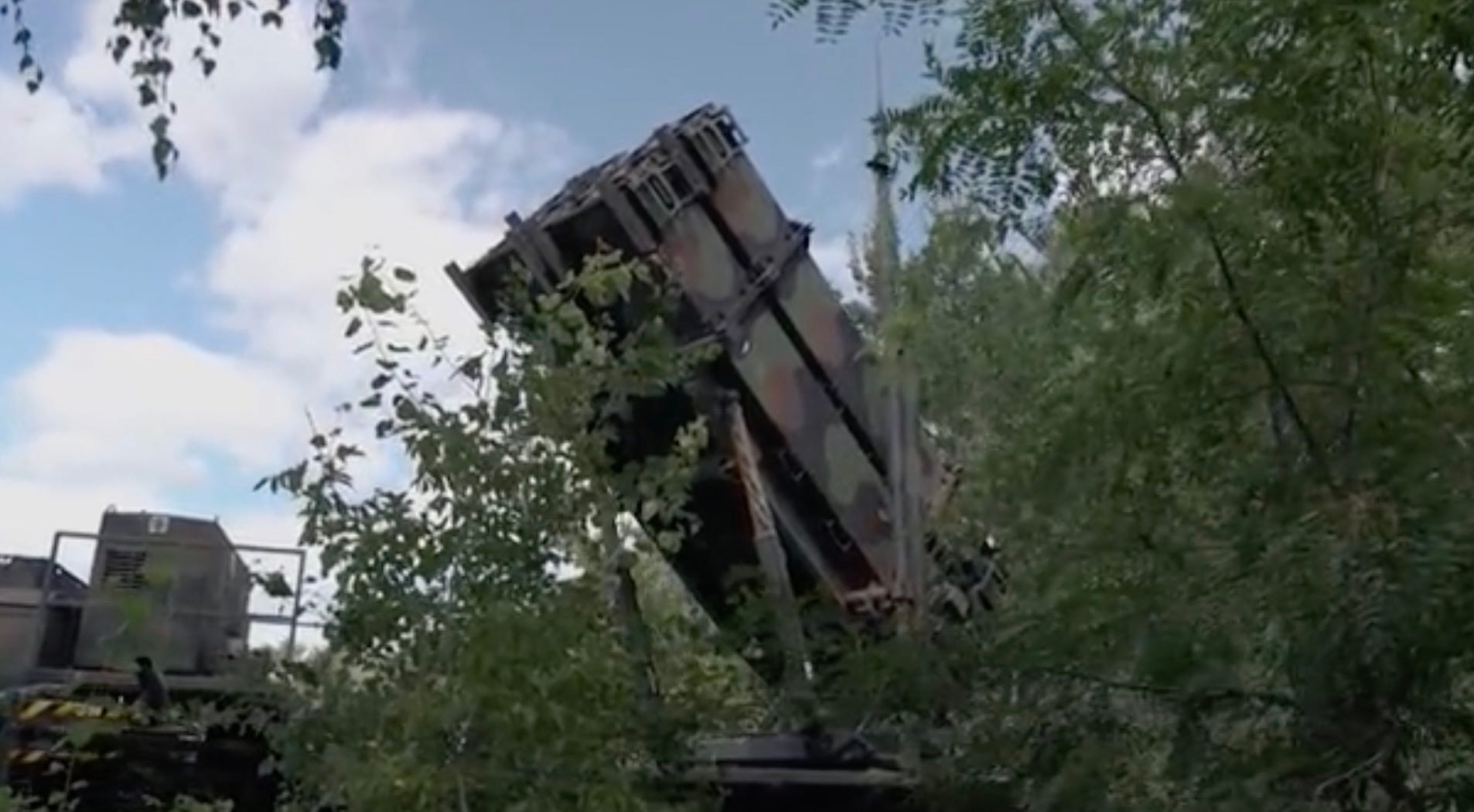
Ukraine endured another brutal week. A Russian double-tap missile attack on a shopping centre in Kryvyi Rih killed 16 shoppers, (Rebecca Whittaker, The Independent, 22nd August 2026 “Zelensky vows revenge after Russian double-tap strike on shopping mall in his hometown kills 16”) while Kyiv’s mayor warned that Ukraine’s supply of Patriot interceptor missiles has been exhausted (Nick Paton Walsh, CNN, 17th August 2026 “Ukraine reveals its Achilles’ heel to CNN as Patriot missile launchers run dry.”)
Meanwhile, recently dismissed Defence Secretary Fedorov ratcheted his campaign up a notch by calling for Presidential elections despite the constraints of current martial law. President Zelensky also dismissed Iryna Mudra, his Deputy Chief of Staff, as the corruption scandal surrounding his administration continued (Dan Sabbagh, The Guardian, 19th August 2026 “Volodymyr Zelenskyy sacks senior aide amid Ukraine corruption crisis.”)
In Iranian news: lots of threats, lots of declarations that nobody will bow to anybody else and precious little evidence that anyone has identified a route out of the impasse. Trump announced an “Economic D-Day” (Anton Troianovski & Alan Rappeport, New York Times [PAYWALL], 20th August 2026 “The Message Behind Trump’s Threats of ‘Economic Warfare’ Against Iran”) thus signalling to the Iranian regime that he has no appetite for continuing the military campaign he started and therefore making resolution less likely as the Iranians will now believe they can wait Trump out.
The honeymoon ends
None of this amounts to a bad week for Andy Burnham. After the drama of replacing Keir Starmer, establishing No.10 North and launching an apparently endless procession of initiatives, an ordinary week now feels like a loss of momentum.
That is an occupational hazard of beginning a premiership at speed.
Burnham’s first month has demonstrated that a change of leadership can change the mood of government remarkably quickly. The challenge now is converting that altered mood into outcomes: houses built rather than planning structures reorganised, rubbish removed rather than consultations launched, economic growth rather than situation rooms convened. If the Prime Minister must hang a slogan on his wall, TWOP suggests:
”Just do it!”
Money is getting tighter. Reform UK has not gone away. Burnham’s initial polling bounce seems to have quietly deflated.
Burnham has not run out of ideas, authority or political energy, but the first month was about showing that things could change. September may be about discovering how difficult changing them could be.
Check us out on insta @theworldofukpolitics and now at theworldofpolitics.substack.com too!
Leave a Reply
You must be logged in to post a comment.