
The Politics of the Quick Fix.
After two weeks of frantic Prime Ministering the Announcement Machine finally fell silent as Andy Burnham went on holiday. Thankfully this also put a temporary stop to the pubs-and-footie tik-toks. So there’s that. (Kate Devlin & Millie Cooke, The Independent, 7th August 2026 “Minister forced to deny Andy Burnham is ‘too blokey.‘ ”) although it was meant to be “business as usual” (James Gregory, BBC News, 4th August 2026 “Government to function as normal while Burnham on holiday.”)
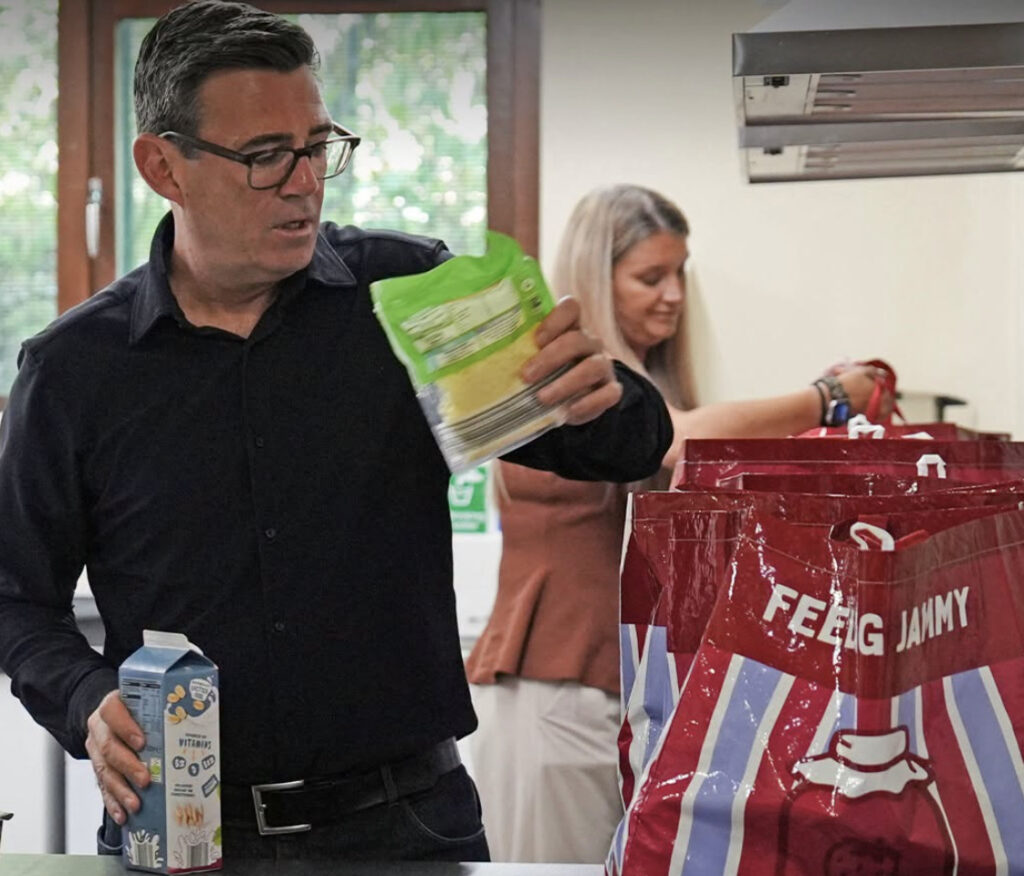
But no, by the weekend Downing Street’s new Instant Litmus Test department had apparently decided that even a Prime Minister’s holiday required a governing narrative: our Andy was instead going to embark on a “Cost of Living Tour” of Great Britain (Raphael Boyd, The Guardian, 9th August 2026 “Andy Burnham to tour Britain in effort to reconnect government with public.”) Skeggy and Portal – you have been warned!
It was tempting to regard the changing nature of the Burnham family’s mini-break as merely another triumph of political communications over ordinary English, but this little change of emphasis demonstrated that something more interesting was happening. British politics appeared once again to be reaching for its favourite policy instrument: the quick fix.
A Holiday is Usually Good for One’s Mental Health, Though
Whether on holiday, or a UK Cost of Living Tour, no-one could entirely quell Andy’s need to emote and so late on Wednesday evening and through the pages of the Daily Mirror (ho-hum) the Prime Vacationer announced that he would get to grips with the spiralling consequences of mental health deterioration across the land (Andrew Burnham, Daily Mirror 5th August 2026 “Mental health system piles pressure on NHS – this needs to change.”)
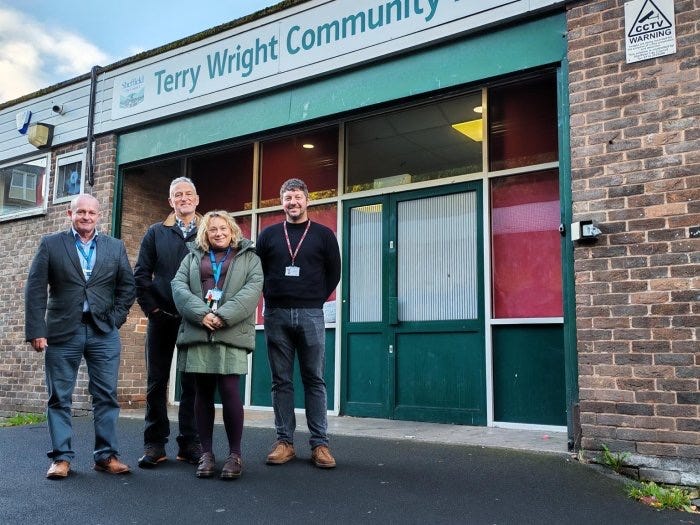
And lo, beholdeth: as fast as our Leader sayeth, so shall His policy springeth to life! Caught visiting the Newfield Green Neighbourhood Mental Health Centre in Sheffield the newly-minted Secretary of State for Health and Social Care, Yvette Cooper, announced that this pilot Community Mental Health Centre would soon be joined by 100 new CMHCs and 59 new Mental Health Emergency Departments (MHEDs).
However, this announcement was so new off the presses that the not insignificant start-up costs of £343m were not accompanied by any operating budget for staff, leaving the new Health Secretary blathering unconvincingly on BBC Breakfast that “As you’re getting people to work differently means you can work better and we shouldn’t just assume “look we have to leave the NHS the way it is” and then just wait ‘til here’s new funding going in.” (BBC Breakfast, 6th August 2026 via facebook unfortunately.)
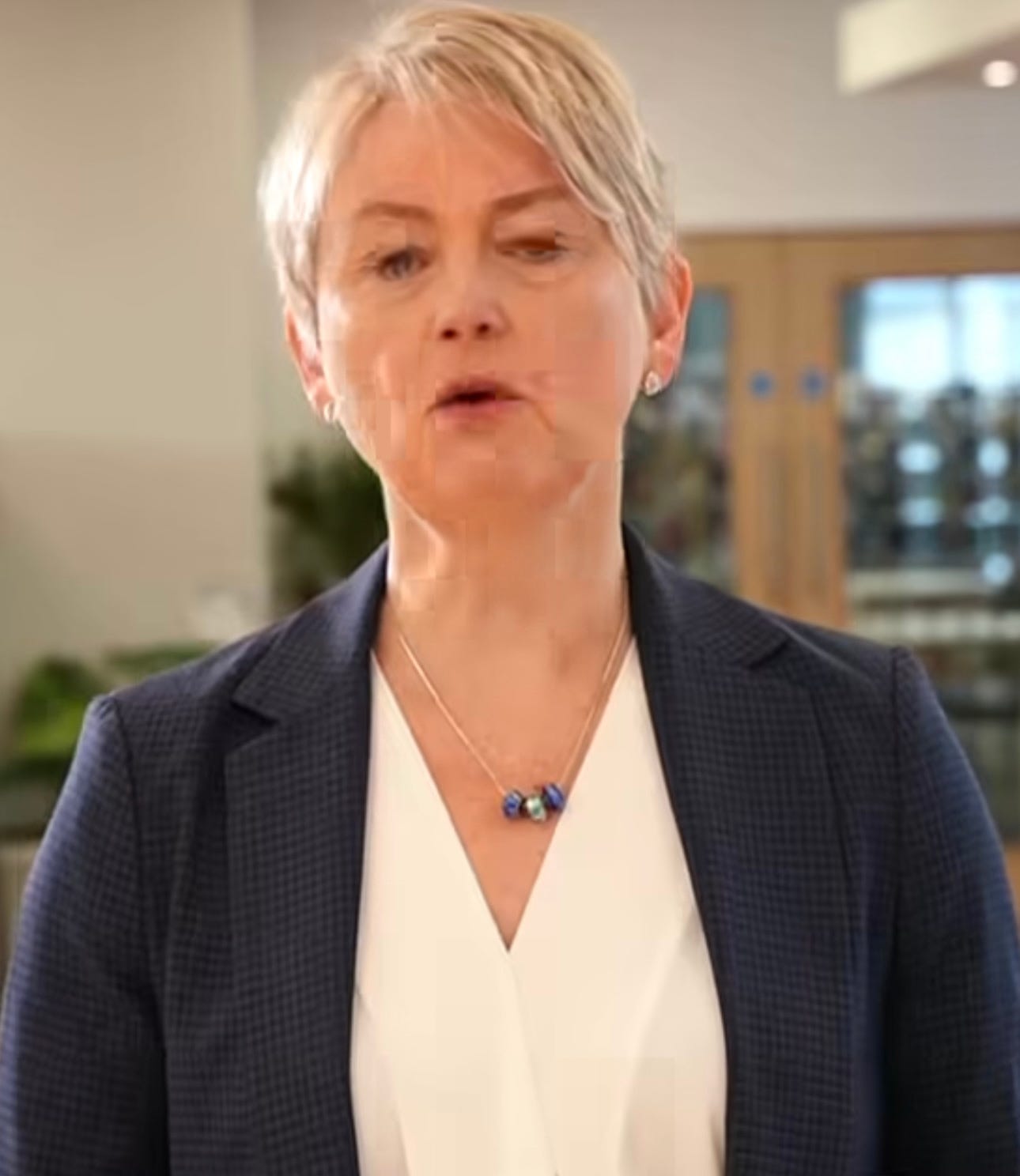
Oh really Secretary of State? Do you also do that one with the fishes and the loaves????
The NHS Budget is amongst the larger financial sources in which to find a spare £343m sloshing around to fund the building and renovation of 159 new or repurposed facilities. But capital availability is not service operation. A building is not a mental health service without staff.
HMG’s policy announcement (Department of Health and Social Care, 5th August 2026 “Major expansion of community mental health support across England.”) NHS announcement of the Sheffield pilot CMHC in Ocotber 2025 (Sheffield Health Partnership University NHS Foundation Trust, 8th October 2025 “Building work begins on new mental health centre in Gleadless Valley.”)
Reform UK: the “let’s build an aircraft carrier” solution
With Nigel’s self-imposed by-election coming up on Thursday 13th August (also, en passant, A Level results day) the “Return to Clacton” strategy does not seem to have generated the interest or support that Nigel hoped when he triggered the election in defence of his and Reform’s various issues about donations and hostile journalism.
In to that strangely empty space therefore the Reform machine, spotting the possibility of a wave of immigration worry set off by the Invasion of Ceuta, announced their “Operation Fortress” proposal to use the Royal Navy and the Royal Marines to physically intercept illegal small boat arrivals in the Channel and hold them on a landing ship before returning the migrants back to France (Amy Gibbons & Nick Squire, Daily Telegraph [PAYWALL], 2nd August 2026 “Reform pledges to use Navy to stop Ceuta-style ‘invasion’.”)
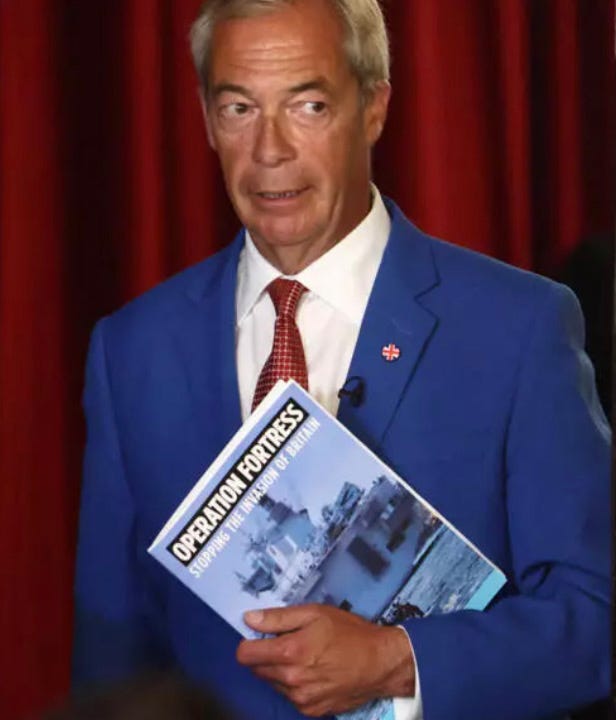
“Operation Fortress” is a catchily-named announcement in search of an implementation path. It sounds simple. It calls on the Royal Navy, who have rarely disappointed historically, to act in a quasi-military role, with clear potential deterrent effects.
BUT… such a policy would crucially depend on French co-operation to accept the return of these migrants – seemingly unlikely in the context of the French interior ministry, immediate condemnation and the very probable conflict with international law. (France24, 3rd August 2026 “France slams hard-right Reform UK party’s plan to use navy to stop Channel migrants.”)

The immigration drum it beateth, but with migrant arrival numbers significantly reduced and small boats arrivals in 2026 running at half the level of 2025, notwithstanding that this decline appears to be the result of Rishi Sunak’s policy changes, the weather and the behaviour of the people-smuggling gangs (Mihnea Cuibus, The Migration Obervatory, 5th August 2026 “Why have small boat arrivals declined in 2026?”) it feels very much as though even the most loyal audience for this drumbeat are becoming a little less convinced that Reform are the only party who can “get it done.” Polling over the remainder of August, post-Clacton, will reveal whether there is something of a Reform bubble bursting.
Conservatives: the social-housing “solution”
The Conservatives also launched a “new” policy proposal to end social housing for non-EU citizens” (Tony Diver & Pieter Snepvangers, Daily Telegraph, [PAYWALL] 6th August 2026 “Tories promise to end council housing for foreigners.”) Just a week after protestors in Glasgow closed two Housing Association offices with aggressive street demonstrations against the perceived (but denied) injustice of immigrants receiving priority for social housing placements (Chris Taylor, Scottish Sun, 25th July 2026 “Huge anti-migrant protest in Glasgow descends into chaos as cops warn people to avoid area.”)
On Friday evening, 7th August, Helen Whately, Shadow Work & Pensions Secretary announced (on X, linked here) that the Tories would give six months’ notice to the curiously specific 228,144 non-EU families in social housing. Mrs Whateley claims that this would reduce the current 1.3m social housing waiting list far more effectively than Andy Burnham’s “Build, Angie, Build” policy (James Gregory, BBC News, 6th August 2026 “Conservatives pledge to ban foreign nationals from social housing.”)

For those with elephantine memories, this Conservative proposal seemed to echo Reform UK’s “Operation Restoring Justice” announcement by Nigel Farage in his inaugural substack posting (Nigel Farage, substack, 14th June 2026 “Britain is a two tier state – against white people.”)
“Under a Reform UK Government, foreign nationals will not have any access to welfare. Foreign nationals who are unable to relocate to private rented accommodation after a three month grace period will lose their right to remain and be liable for deportation under Operation Restoring Justice.”
This seems, to say the least, “rather problematic.” The timing is striking: a Conservative proposal closely resembling Reform’s appeared days after angry demonstrations in Glasgow built around claims of migrant prioritisation in social housing. More practically, where will these 228,144 non-EU families end up living? Among those affected will inevitably be the families of workers who gained Indefinite Leave to Remain in the UK to work in the NHS and the social care sector and other shortage occupations. What would the repercussions be for the NHS and social care if any significant proportion of them faced with eviction, understandably chose to return to their original home countries? Has anyone thought about this for literally any time at all?
This is disappointing policy-making from Badenoch, who had a very positive interview appearance on Political Currency at the hands of Mr Yvette Cooper ironically last week.

This social housing policy mis-step smacks of unthought-through reactions to Farage and Burnham squeezing through in the unstaffed office context of the August political doldrums.
Compulsive lack of attention: Tik-Tok policy making roulette
The Government’s almost entirely unbaked rush to announce a mental health facilities building programme with no staff provision, Reform UK’s “Operation Fortress” proposal to call in the Navy to interdict the Small Boats and the Conservatives’ reflexive proposal to evict non-EU social housing tenants despite the contributions, by definition of their ILR status, they are making to the UK economy, all share one thing in common: the systematic suppression of the complexity that governing inevitably confronts. “Just react!”
Each of these speedy “policy” developments seek to turn a difficult governing problem into an apparently simple political call to action. The complexities have not disappeared. They have merely been pushed beyond the ambit of the announcements.
The problems UK voters are angriest about are precisely the issues government finds hardest to solve: Housebuilding, Immigration, Ballooning Welfare Costs, Mental Health Deterioration, Social Care Inequities, Cost of Living Pressures and Youth Unemployment all involve multiple institutions, long time horizons, scarce skilled labour, difficult trade-offs and huge budgets.
Democratic politics has always rewarded clarity, speed and visible action. Modern communications have accelerated the cycle dramatically. Any new policy development now needs to survive not merely the front page, or the evening news, but the ten-second clip: identifiable problem, comprehensible villain, immediate solution, preferably conveyed by a “relateable” spokesperson. Governing works on the opposite timetable.
None of this means that simple policies are necessarily bad policies. Sometimes difficult problems can have relatively simple answers. Nevertheless, simplicity should be the result of thinking a problem through, not of stopping the thought at the point where the announcement becomes politically useful.
For Burnham, Farage and Badenoch alike, the question should not be whether the policy fits into a video clip, but what needs to be delivered after the camera stops recording…
Politics rewards announcements, but Governments are judged by delivery. Andy Burnham has made more announcements in his first two weeks of Government than any other recent Prime Minister. The more interesting question is no longer what Burnham hopes to do, but whether his Government, any British Government are now capable of delivering this sort of agenda.
Check us out on insta @theworldofukpolitics and now at theworldofpolitics.substack.com too!
Leave a Reply
You must be logged in to post a comment.