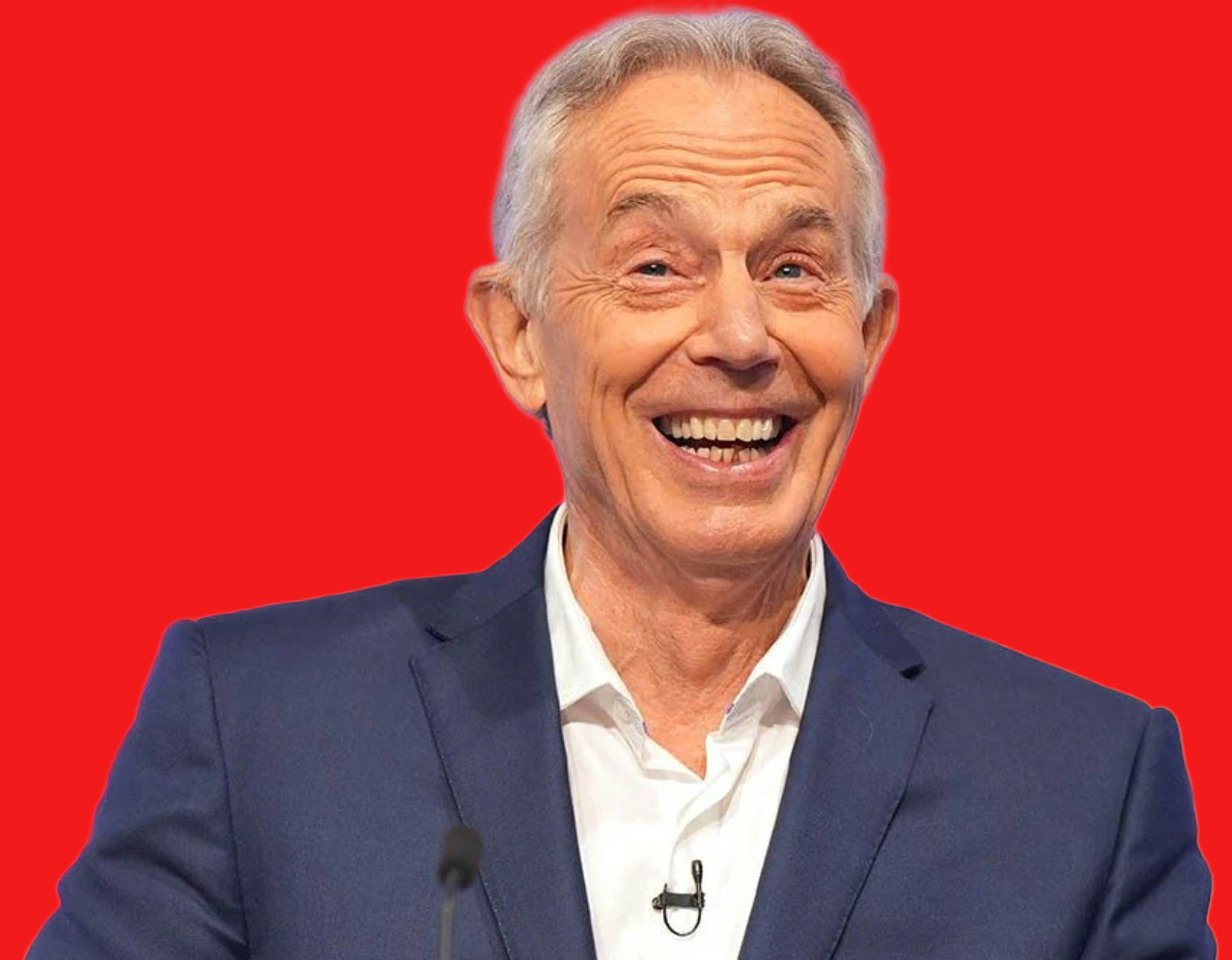
A heatwave, a war in the Gulf driven by bluff and braggadocio and a war in Ukraine seeing the slip of the Russian mask.
A local TWOP correspondent visiting Kew Gardens reported temperatures of 35C (95F.) The country was awash in a public conversation about climate change. Welcome to our future.
This week was also notable for making inconsistency ironically consistent. Everyone is negotiating, nobody is agreeing.
CEASEFIRE THEATRE
Every day the waiting world was troubled with varying variations on a theme of ceasefire madness in the Gulf.
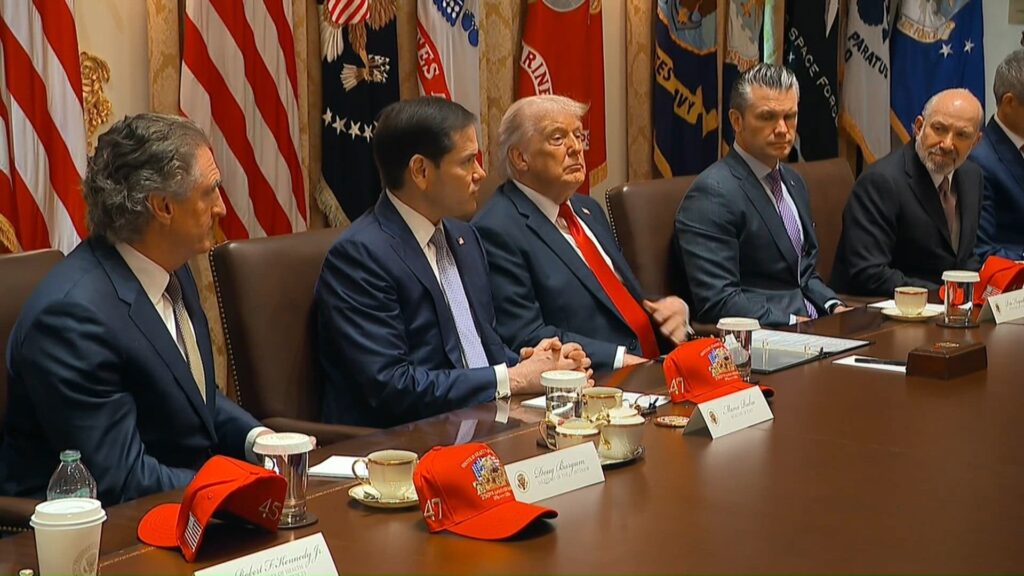
“Yes. No. More. Maybe. No. Perhaps. Less. No. Maybe. Yes. More. No.”
REPEAT
Through the troublingly ephemeral medium of social media posts the US President and his minions seemed to proclaim daily, at some points hourly, that a deal to extend the ceasefire between the US/Israel and Iran was imminent/going back to the drawing board/under active discussion/not really important (you pick!) This suggested that not only were negotiations far from complete, but that even the current ceasefires were being fairly randomly abused. Frustrated observers watching their petrol (/”gas”) prices stubbornly remain far too high have come to the view that both American and Iranian statements are nothing more than (checks notes) “a pack of lies.”
23rd May: “An Agreement has been largely negotiated…” (Donald Trump.)
24th May: “I have informed my representatives not to rush into a deal in that time is on our side” (Still Donald.)
25th May: “Negotiations with the Islamic Republic of Iran are proceeding nicely! It will only be a Great Deal for all or, no Deal at all — Back to the Battlefront and shooting, but bigger and stronger than ever before.” (The Pres.)
26th May: “I think like anything with something like this, it’s going to take a couple days to settle on even down to the disagreements over a word, a sentence. So we’ll have to work through that.” (Marco Rubio in Jaipur.)
28th May: “We’re not there yet, but we’re very close and we’re going to keep on working at it.” (James “JD” Vance.)
29th May: “I will be meeting now, in the Situation Room, to make a final determination.” (Donald back on form.)
Following which, however, no announcement but on Saturday 30th May it emerged that the US was sending revised and harsher terms for a new Memorandum of Understanding back to Iran (Luke Broadwater, Ronen Bergman & Tyler Pager, New York Times “Trump Sends Tougher Terms to Iran for Peace Framework.”)
The motivating force for Donald “I’m not worried about the midterms” Trump seems to be the need to distinguish outcomes for Bibi’s War from the JCPOA negotiated so painstakingly by Barrack Obama in 2015 from which Trump withdrew during his first term in 2018.
The world has reached the stage where official statements provide less clarity than silence.
BIBI’S WAR
Meanwhile in Bibi’s war against Hamas the successor to military commander Izz ad-Din al-Haddad was himself killed in another Israeli air strike on 26th May (Rushdi Abualouf & Ian Aikman, BBC News, 26th May 2026 “Israeli strike in Gaza City kills new head of Hamas’s military wing.”)
Bibi himself then confirmed his definition of “ceasefire” on 28th May, when he announced that he had directed the IDF to move from their control of 60% of the territory of the Gaza Strip to 70% (David Halbfinger & Johnatan Reiss, New York Times, 28th May 2026 “Netanyahu Says Israel Will Control 70% of Gaza, Squeezing Hamas.”)
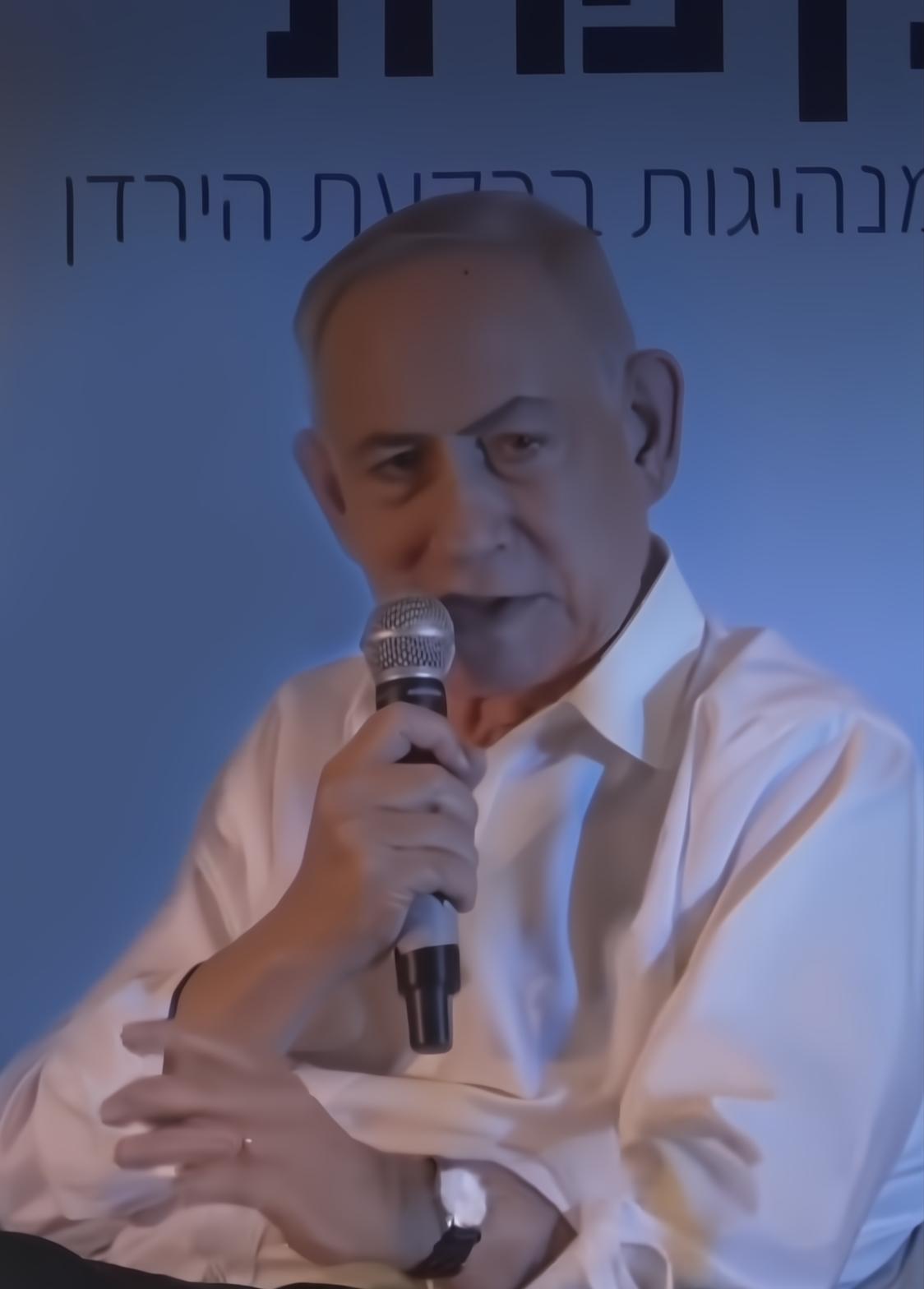
On Israel’s Northern Front, the IDF has also moved across the Litani River, surrounded Nabatieh, bombed the Belfort Tower and isolated the Hezbollah stronghold in the western Bekaa Valley. (Al-Jazeera News, 30th May 2026 “Israeli soldiers reach Nabatieh, one of southern Lebanon’s biggest cities.”)
The world awaits. Ceasefire currently means: “You stop, we fire when we want to.” Bibi’s happy.
THE RUSSIAN MASK SLIPS
Swiftly moving along from Vlad running scared of Ukrainian drone strikes in Moscow on Victory Day (9th May) the Russian President has let his negotiating cover slip. The most significant development may not have occurred on the battlefield at all. Russian negotiating positions increasingly suggest that the Kremlin is not primarily bargaining over territory, but over Ukraine’s sovereignty itself. The question is no longer where a ceasefire line might lie, but whether Moscow is prepared to accept the existence of an independent Ukraine aligned with the West at all. Ever.
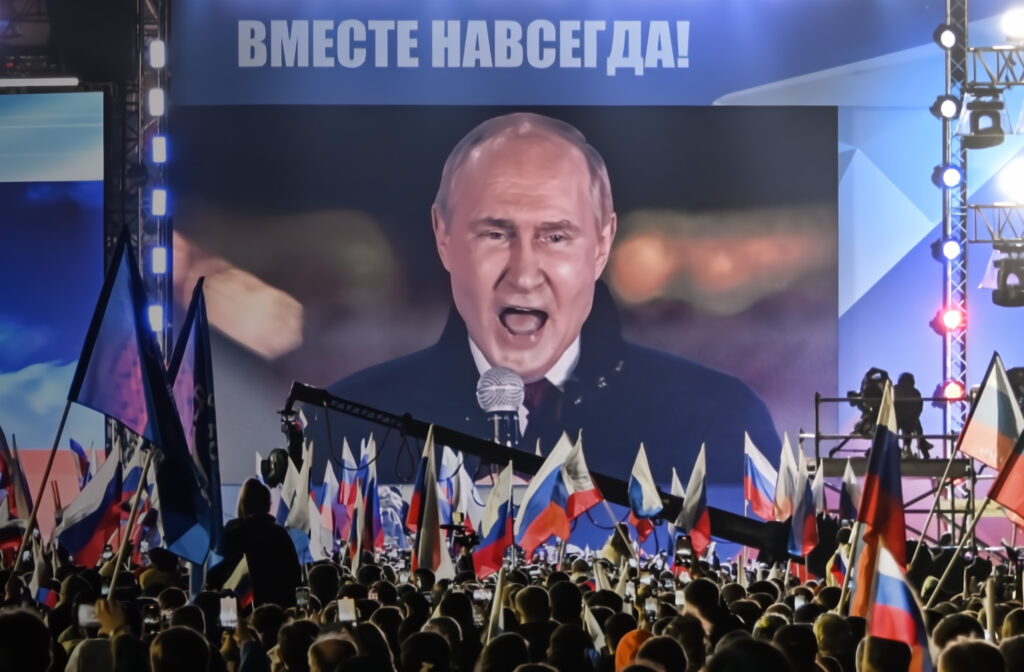
Delegations from both Russia and Ukraine held face-to-face negotiations in Abu Dhabi last week and a further round of direct talks is expected to resume next week. Marco Rubio confirmed that while the US will step back from direct participation to allow bilateral talks between Kyiv and Moscow, Putin then stated that he was open to those negotiations including European representatives (although the prospect of a speedy definition of who those European participants could be is unlikely on previous form.)
Russia continues to insist that Ukraine must recognise Russian sovereignty over Crimea and the Donbas republics, predictably and reasonably rejected by Ukraine, but Zelensky suggested that Ukraine would be willing to discuss a new framework of neutrality, provided it is backed by ironclad Western security guarantees.
Tensions then spiked after a phone call in which Lavrov warned Rubio, to evacuate diplomatic staff from Kyiv as Russia is likely to increase the scale of military actions. Russia duly launched one of its largest missile and drone assaults on Kyiv using an “Oreshnik” ballistic missile, while Ukraine continued its deep-strike drone attacks against Russian energy networks, military hubs and supply routes to the Crimea.
More negotiations not leading to anything approaching a resolution.
BLAIR INTERVENES
Back in Blighty, Blair penned a critique of Starmer’s Government failures (Institute for Global Change, 26th May.)
Blair argued that Starmer should have simply ditched several 2024 manifesto commitments after winning power in order to prioritise the economic growth that could then have funded Labour’s agenda. Blair set out four main issues:
Taxation and Spending: criticising the tax hikes of 2025/6 particularly the increase in Employers’ National Insurance that gave “headwinds, not tailwinds” to the economy and reducing the ability to fund the ballooning welfare spending that the public already resents and opposes.
Workers’ Rights: excoriating Angela Rayner’s flagship “workers’ rights” legislation, arguing this burdened businesses with unnecessary regulations and the Government’s above-inflation increases to the minimum wage that increased the barriers employers face in taking on new staff.
Net Zero: calling on Starmer to simply abandon Miliband’s crazy 2030 green energy targets and remove his illogical barriers to new North Sea oil and gas production that could substitute for importing energy from overseas as the UK moves towards renewables.
AI: warning that the government’s approach to technology mimics the restrictive European regulatory style hostile to tech companies, rather than positioning the UK to reshape the administrative state around the AI revolution.
THE POTENTIAL SUCCESSORS TRY TO AVOID BLAIR’S CALCULUS

Blair’s intervention forces Starmer’s potential successors to choose sides: growth, redistribution, regulation or decarbonisation? The reactions from the (undeclared) runners and riders in the race have been almost comical:
- Streeting found an issue to criticise Starmer, Blair and Burnham for their failure to identify “inequality” as the identifying focus that Labour should be addressing, thus ignoring the mathematics of growth needed to pay for any strategy that reduces inequality without producing overall decline. (Wes Streeting, The Guardian, 27th May 2026 “Blair wants to leave our future to the markets.”)
- Burnham, rather strangely writing in The Times, and after having read Blair’s essay 3 times (Andy Burnham, The Times, 28th May “The simple truth that Tony Blair has ignored”) also identified Blair’s lack of focus on “inequality” as a fatal error, but went on to reject new attempts at deregulation and advocated for increasing state intervention. Any local Manchester observer might note that Burnham’s mayoral commitment to intervene in that city’s homelessness crisis has produced an increase in rough sleeping. Tricky job intervening: all those unintended consequences.
- Rayner did not venture in to print in response to Blair’s essay this week, perhaps wisely, but instead she was seen out and about in Makerfield with the King of the North himself.
- Miliband, the most obviously and directly rebuked minister in Blair’s piece, did not issue a response (but his mother died on Wednesday so it may have been a tough week.) The Green King instead released a statement saying “As we face a second fossil fuel crisis in five years, Britain is taking back control of their energy by generating more clean power than ever before.” (Fiona Harvey, The Guardian, 28th May 2026 “Blair’s fossil fuel ideas ‘bizarre’ in face of energy and climate crises.”)
- Starmer defended his government’s policies from Blair’s criticism on Substack no less, but this basically amounts to 3,000 words of “nah, we’re right, just going to do more of it, quicker.” Thus ignoring the limits of voter patience already demonstrated all too graphically on 7th May.
JUNIOR DOCTORS
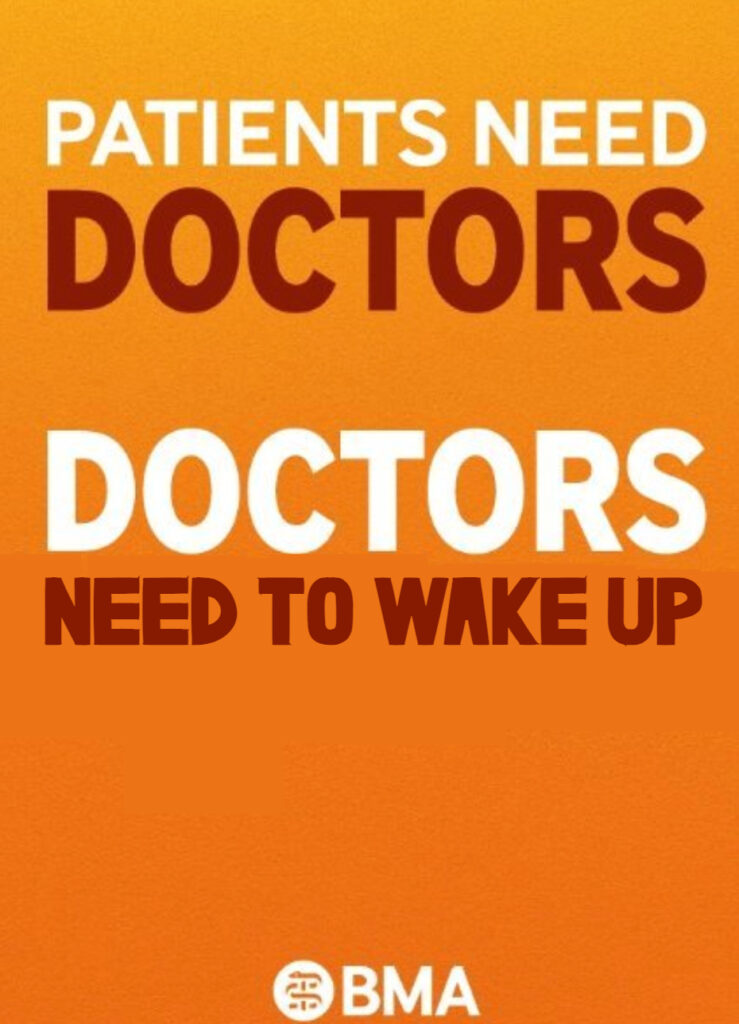
“Resident” doctors announced another 5-day strike in June following talks with the newly appointed Health Secretary, James Murray. The dispute has now become sufficiently repetitive that both sides appear to be negotiating largely for the benefit of their own supporters. (Nick Triggle, BBC News, “Resident doctors in England to strike for 16th time over pay.”)
Consistency, at least, remains abundant. Negotiation without any realistic prospect of agreement remains the eternal doomloop.
The striking feature of the week was not disagreement, but uncertainty. In Tehran, Washington, Jerusalem, Kyiv and Westminster, everybody appears to be negotiating. The difficulty is that many of them appear to be negotiating entirely different things. The result is a politics of perpetual discussion and deferred decisions. It makes for busy news cycles. It is less obvious that it makes for effective government. In the UK, the USA, the Labour Party or the BMA. It’s all very tiresome.
Check us out on insta @theworldofukpolitics
Leave a Reply
You must be logged in to post a comment.