There have been a number of developments that should have been positive for the Government this week:
– immigration numbers fell sharply (thanks Rishi)
– inflation fell faster than expected (but it will be back up next month)
– the IMF upgraded UK growth forecasts (if only by 0.2%)
– fuel duty rises were postponed (a U-Turn, if an inevitable one)
– VAT reductions were announced (good politics if not real solution to anything.)
but, tragically for Sir Keir, attention remained firmly fixed on the increasingly obvious question of who might eventually replace the Prime Minister. Authority, once lost, rarely returns simply because the economic data improve.
Good news arrives. Westminster shrugs
The week began with a stream of encouraging headlines for the government.
Net migration continued to decline, reflecting restrictions introduced largely during the latter part of the Sunak administration. (Migration Observatory, 21st May 2026, “Falls in net migration, small boat arrivals and asylum claims as just under one-in-five in the UK are foreign born”) Nevertheless, after years in which immigration numbers appeared politically uncontrollable, the direction of travel has clearly changed. (Link to ONS latest immigration stats.)
Inflation also fell faster than expected, reaching 2.8 per cent and reinforcing hopes that the post-pandemic inflation cycle may finally be ending, although of course the Iranian War and the closure of the Strait of Hormuz will see a bump in the inflation rate next month. At the same time the IMF upgraded its growth forecast for the United Kingdom from 0.8 per cent to 1 per cent for 2026. A 0.2% upgrade in a growth forecast is not a Hallelujah moment (it’s only a forecast and if achieved would represent lower growth than 2025!) but it is somewhat better than a poke in the eye with a soggy banana.
“The economy grew at its potential rate of 1.4% in 2025 despite headwinds—trade tensions and tight and volatile global financial conditions. Conditional on commodity futures prices as of mid-May, growth is projected to slow to 1.0% in 2026.”
IMF, 18th May 2026
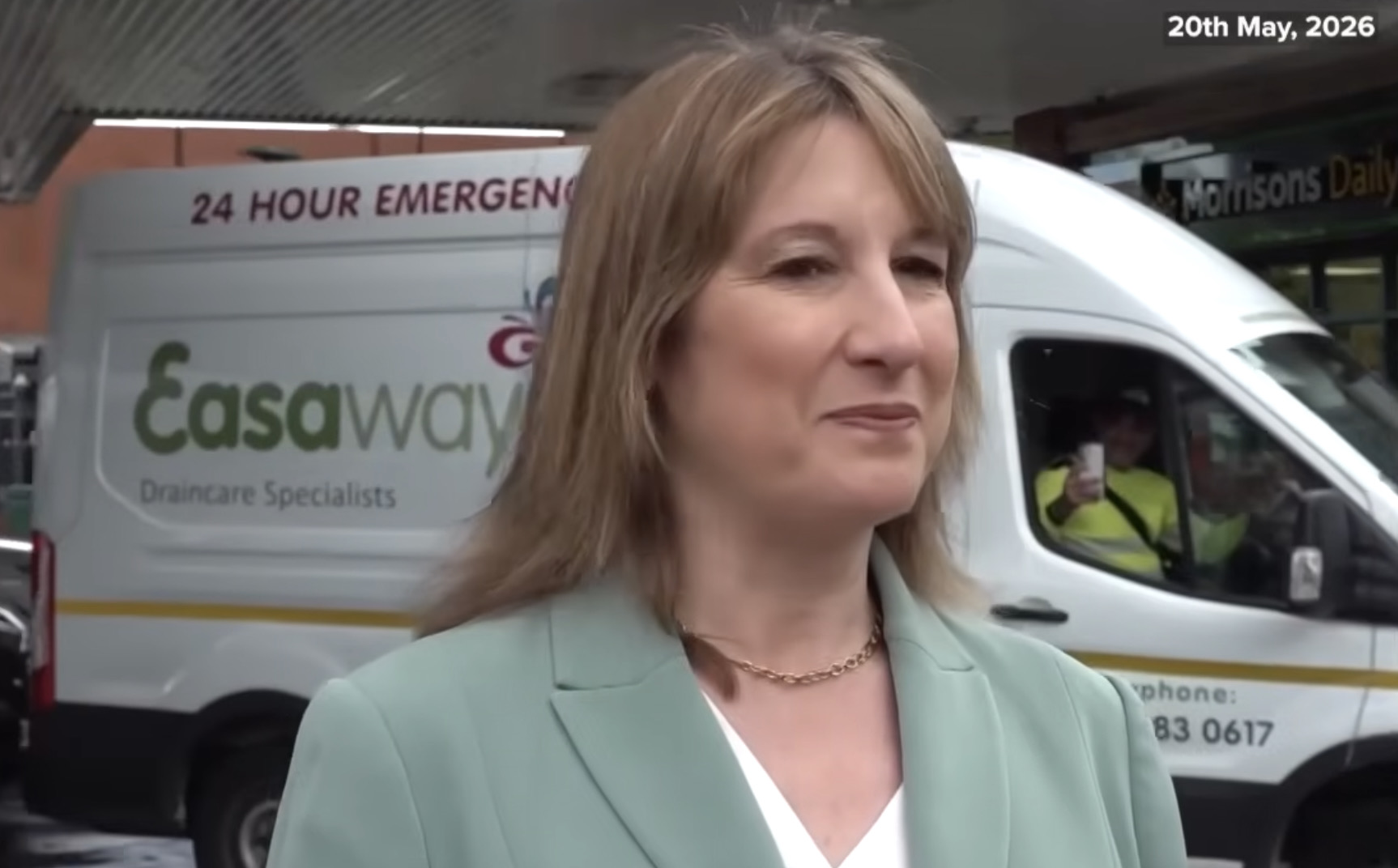
Rachel Reeves supplemented these developments with a series of consumer-friendly announcements, including postponement of the planned fuel duty increase and a temporary reduction in VAT on family attractions such as theme parks and soft-play centres.
Under different political circumstances these announcements might have dominated the week. Instead they barely registered.
Partly this reflects the continuing reality of high government borrowing figures, which continue to constrain the Chancellor’s room for manoeuvre. Partly it reflects a broader political problem: voters increasingly appear to have formed a settled view of the government that individual policy announcements struggle to shift.
Good economic news can be useful. It is not necessarily persuasive.
Ukraine, Iran and China continue regardless
Outside domestic UK politics, events continued their usual refusal to conform to Westminster timetables.
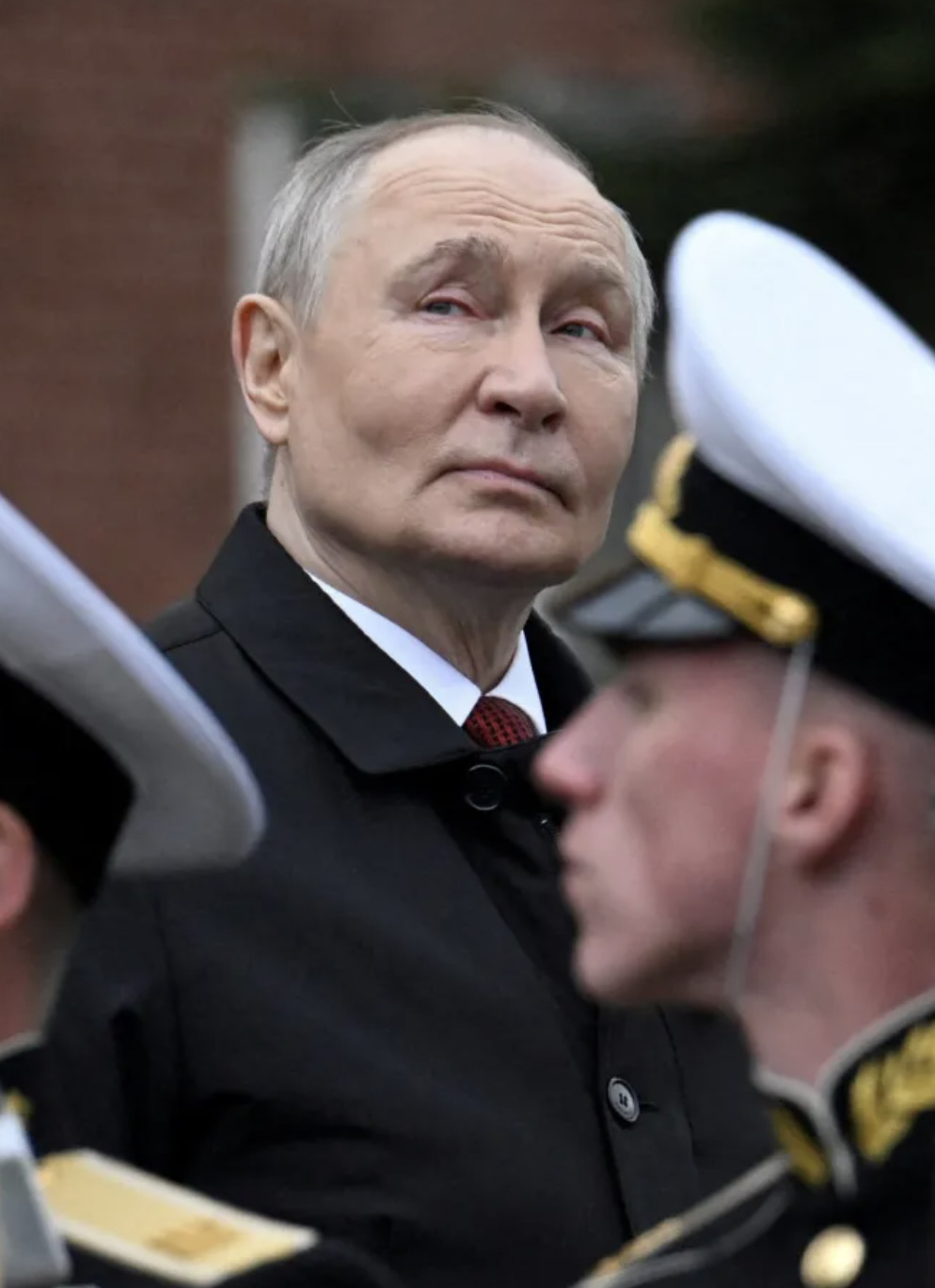
The brief Trump-brokered ceasefire around Moscow’s Victory Day celebrations evaporated, with both Russia and Ukraine resuming significant drone operations. Recent developments nevertheless suggest that Ukrainian adaptation and industrial resilience are tipping the war very slightly back in Ukraine’s favour (TWOP’s favourite substack: Sir Lawrence Freedman, KCMG, CBE, Comment is Freed, 17th May 2026 “Putin and the Cliff-Edge Fallacy.”)
Donald Trump’s visit to China produced another familiar contrast. The American President emphasised deals, relationships and opportunities. President Xi emphasised power, interests and Taiwan. One side appeared focused on the next news cycle. The other appeared focused on the next decade (Amy Hawkins, The Guardian, 15th May 2026 “What was actually achieved at Trump and Xi’s ‘stalemate summit’ in Beijing?”)
In the Gulf, the uneasy pause following the USA’s short-lived “Project Freedom” initiative, seems to have been extended by the President’s underlying boredom with Iran’s failure to cave. Increasingly positive mood music emanating from the State Department over the last few days has suggested that, in the absence the Witkoff & Kushner Show, some progress is being made towards finding Trump a face-saving route to extract the USA from this war, which has basically exceeded the President’s attention span. (Jaroslav Lukiv & Tom Bennett, BBC News, 24th May 2026 “Trump tells US negotiators ‘not to rush’ into deal with Iran.”)
Makerfield and the King of the North
However, the real political centre of gravity this week was not Westminster, but Makerfield.
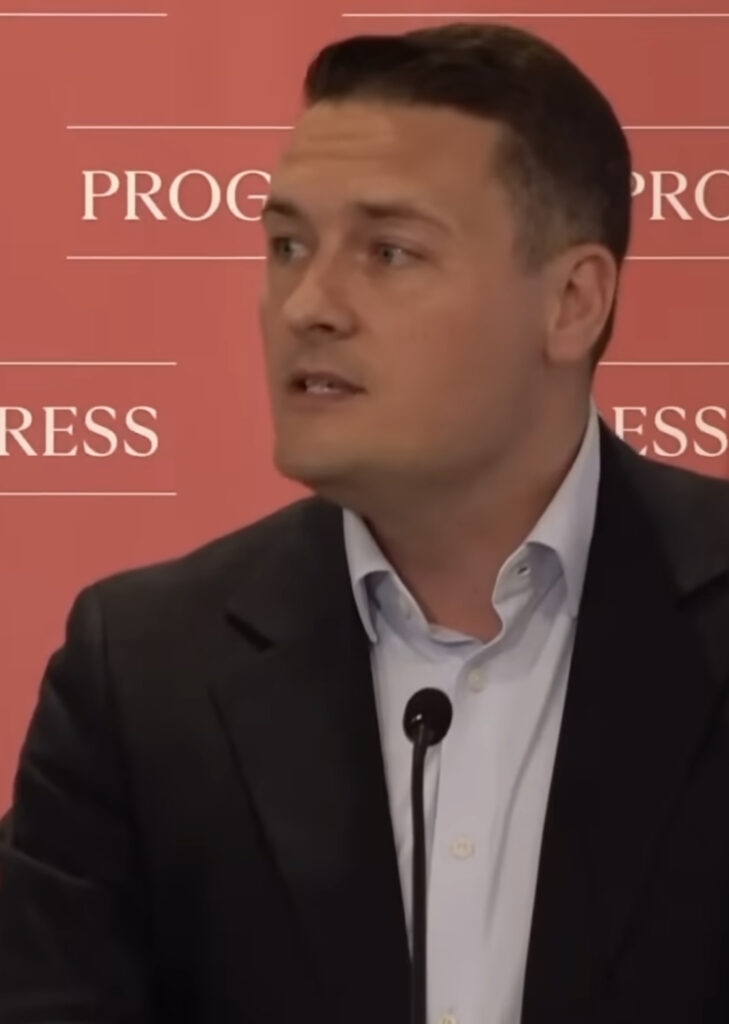
Wes Streeting’s speech to the Blairite pressure group Progress unexpectedly complicated Andy Burnham’s by-election strategy by openly articulating an ambition that Britain should one day return to the European Union. As leadership positioning it was understandable. As campaign support for Andy Burnham it was considerably less helpful.
And Mr Streeting thereby put his finger on the most significant challenge for his great friend’s run in Makerfield: Reform. The local election results just two weeks ago from the 8 council wards included in the Makerfield constituency illustrate the challenge. Reform secured just over 50 per cent of the vote across those wards earlier this month, compared with Labour’s 22.7 per cent.
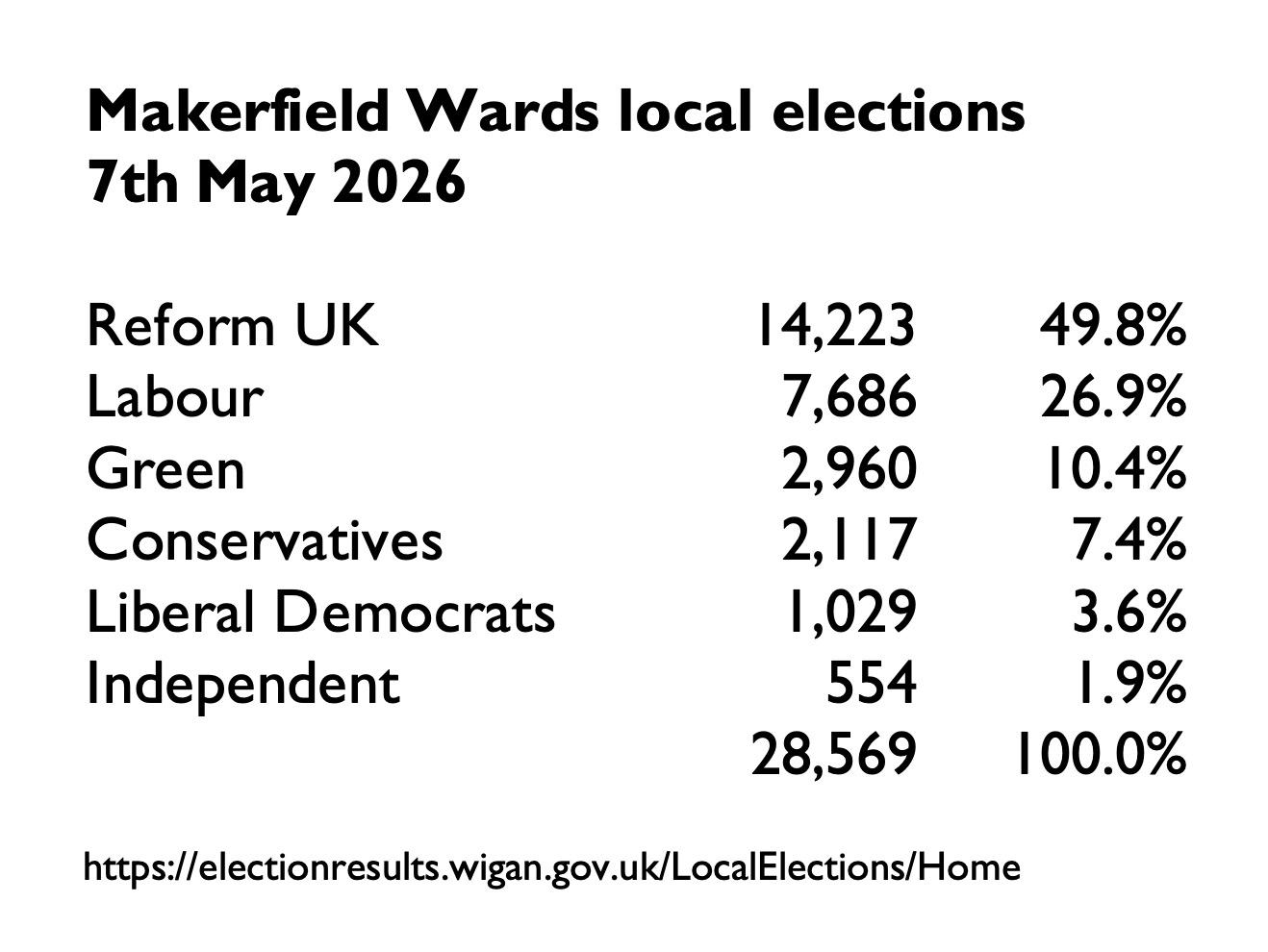
The first Survation poll nevertheless placed Burnham narrowly ahead of Reform candidate Robert Kenyon by 43 per cent to 40 per cent among decided voters.
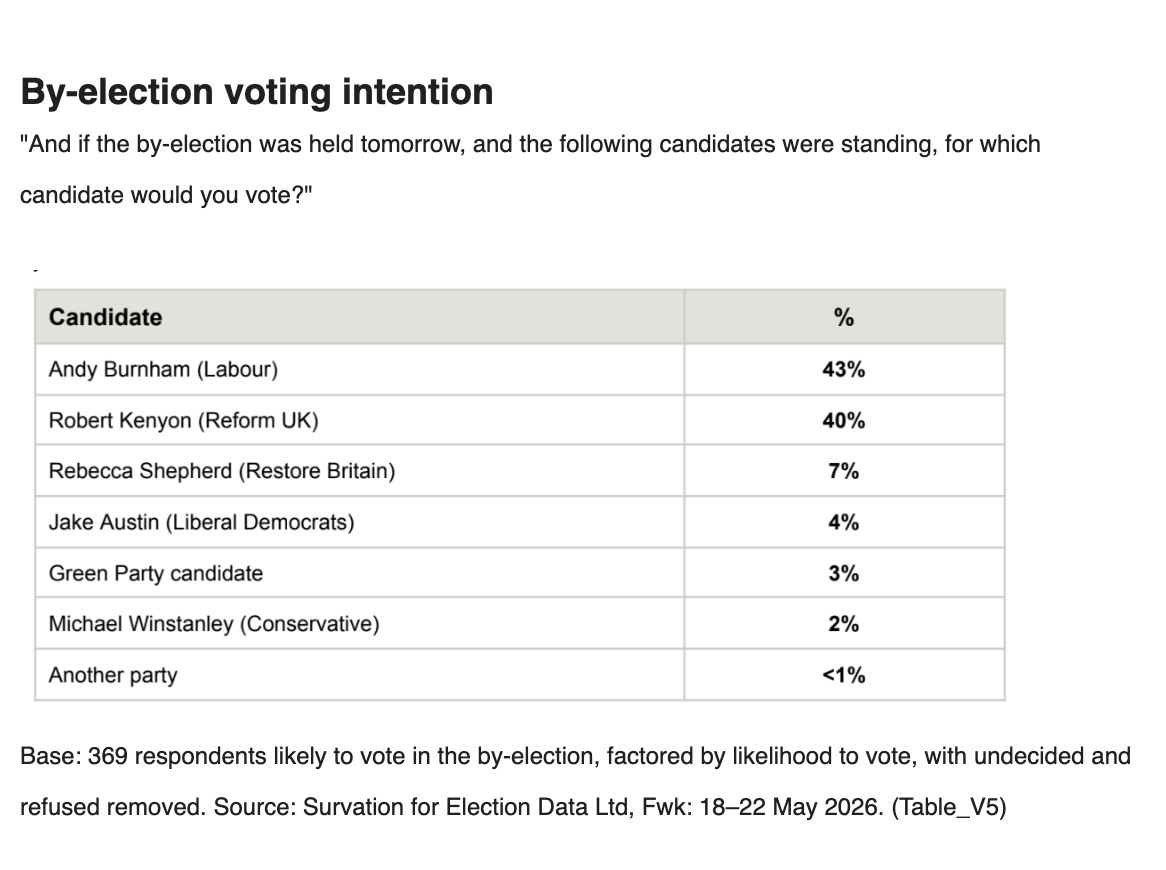
The detail is more interesting than the headline. 15% of likely voters remain undecided, but they currently skew more Burnham-ish than Reformer (50.5% of the “undecided but likely to vote” group suggested they were currently heading to Burnham.)
The Green Party has already been forced into candidate reselection after its original candidate withdrew over antisemitic social-media posts. Meanwhile Rebecca Shepherd appears to have opened Rupert Lowe’s Restore campaign surprisingly well. Whether Burnham will consolidate his wafer-thin opening lead or lose momentum amongst the currently undecided over the next 24 days will depend on how the respective campaigns position themselves against the backdrop of Labour’s anguish.
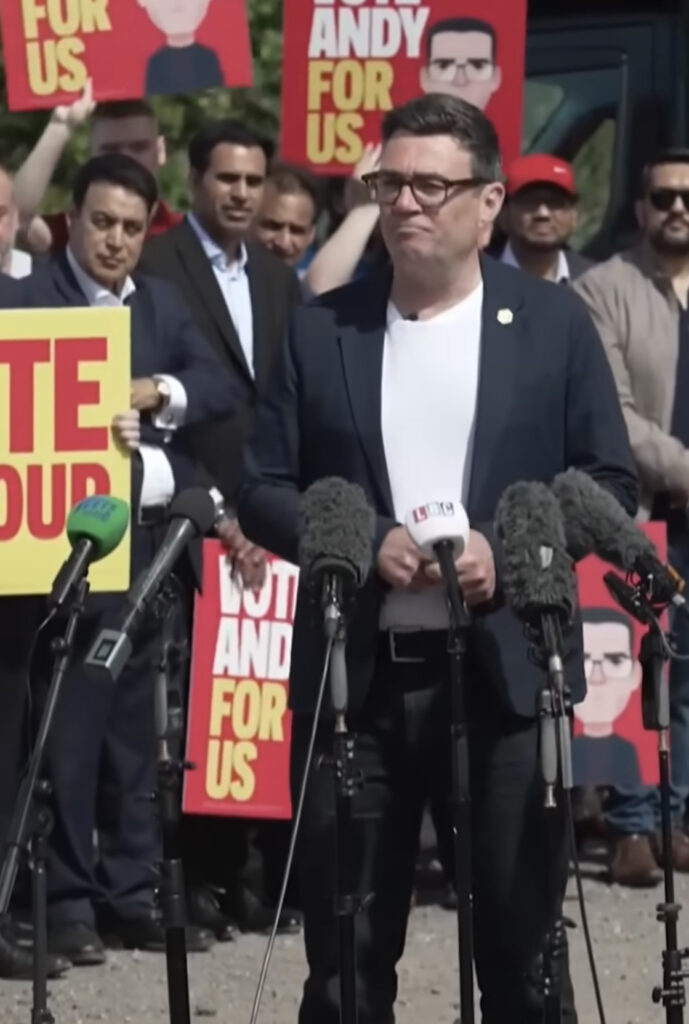
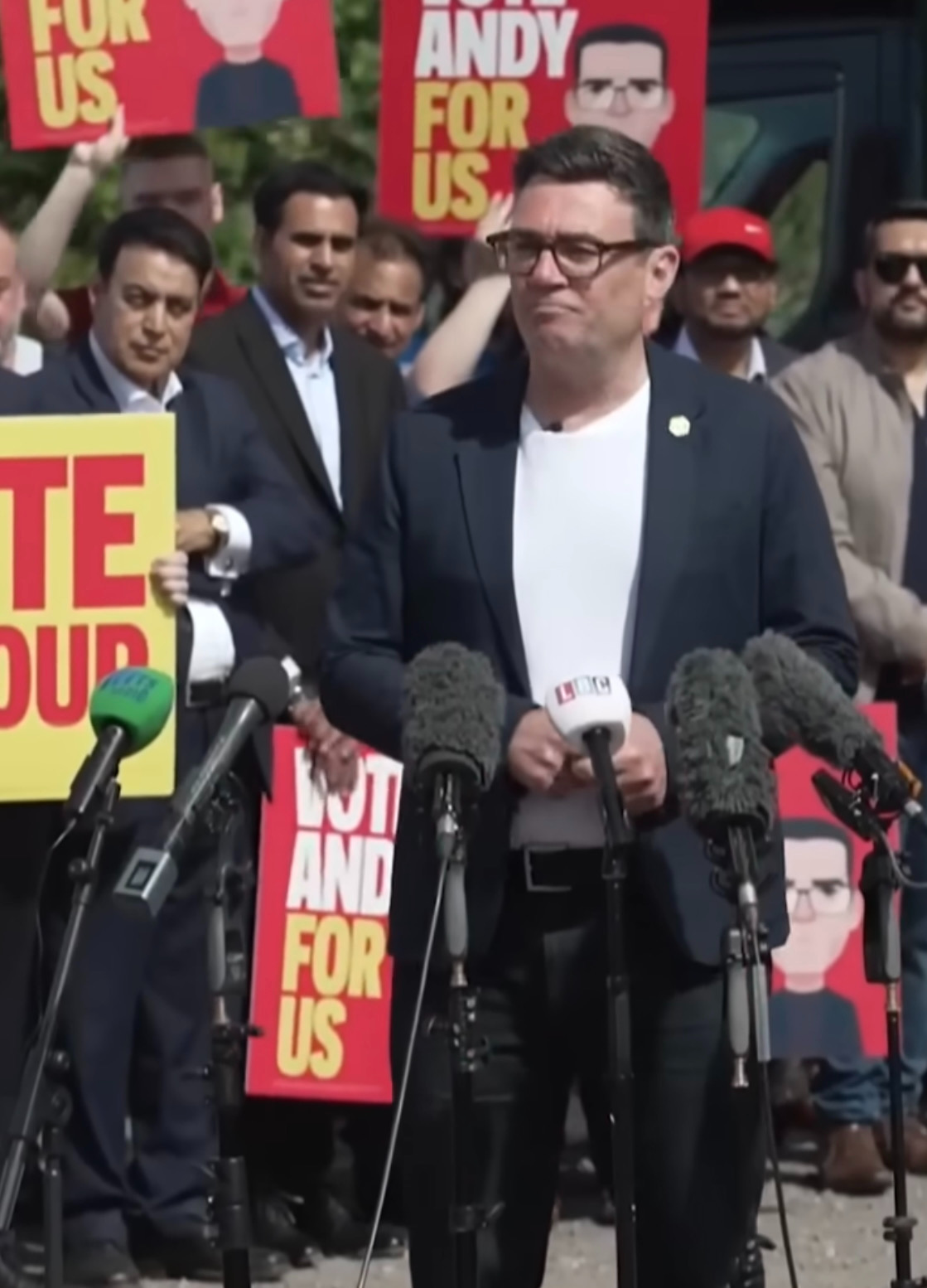
Burnham himself appears keen to avoid the European question. Launching his campaign in Ashton-in-Makerfield, he argued that Britain should focus first on fixing domestic problems before revisiting larger constitutional questions, while simultaneously supporting tougher immigration measures, increased council-house construction and, somewhat inevitably, a wealth tax.
The leadership contest that officially does not exist
Which brings us back to Westminster. For several weeks Labour has attempted to maintain the fiction that no leadership contest exists. Yet virtually every significant political actor now appears to be behaving as though one eventually will.
Streeting’s EU intervention looked like an attempt to raise a substantial tactical obstacle to his leadership rival’s election prospects. Burnham’s return to Parliament itself is an explicit leadership run (under superficial wrapper of “changing the party.”) Rachel Reeves’ noticeably muted enthusiasm for the Prime Minister’s retention looks suspiciously like a job defence.
Prime Ministers can survive poor economic figures if colleagues remain loyal. They can survive policy failures if voters remain patient. Prime Ministers can not survive the moment when allies begin preparing for a new leader.
Check us out on insta @theworldofukpolitics
Leave a Reply
You must be logged in to post a comment.