Hoping for some Realism.
This task is appointed for you Frodo Andy.
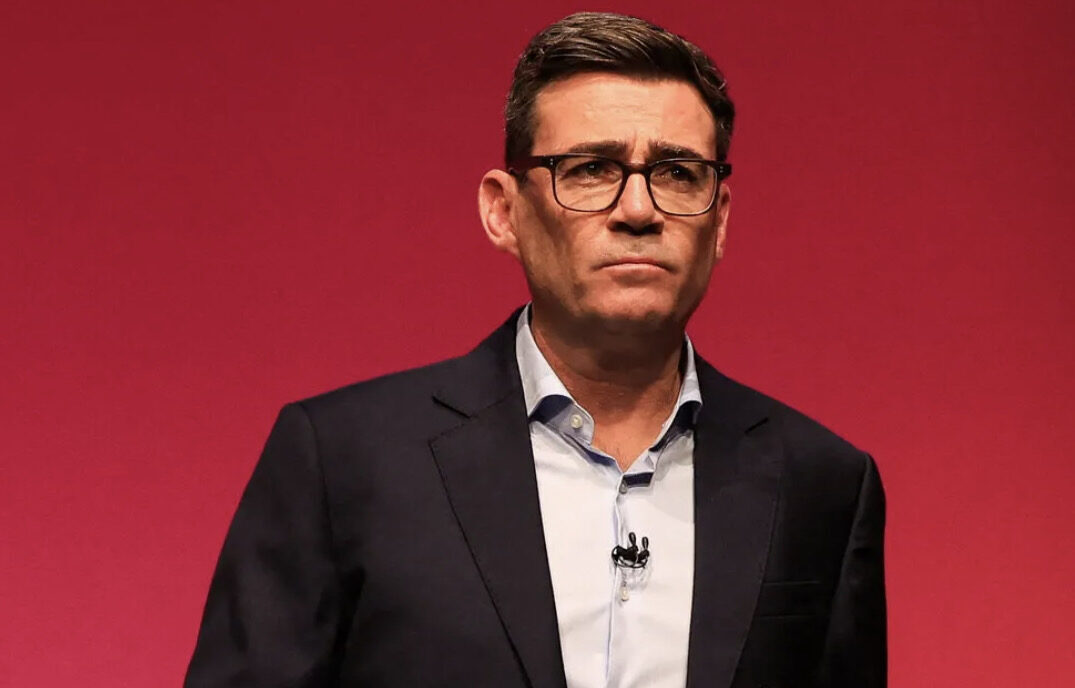
Andy Burnham tried to kill off talk of an early election over the weekend, insisting that he would serve out his predecessor’s mandate until 2029. Nevertheless, his first Labour conference speech as PM fired the starting gun on that election by setting out some of his largest ambitions for the next Parliament.
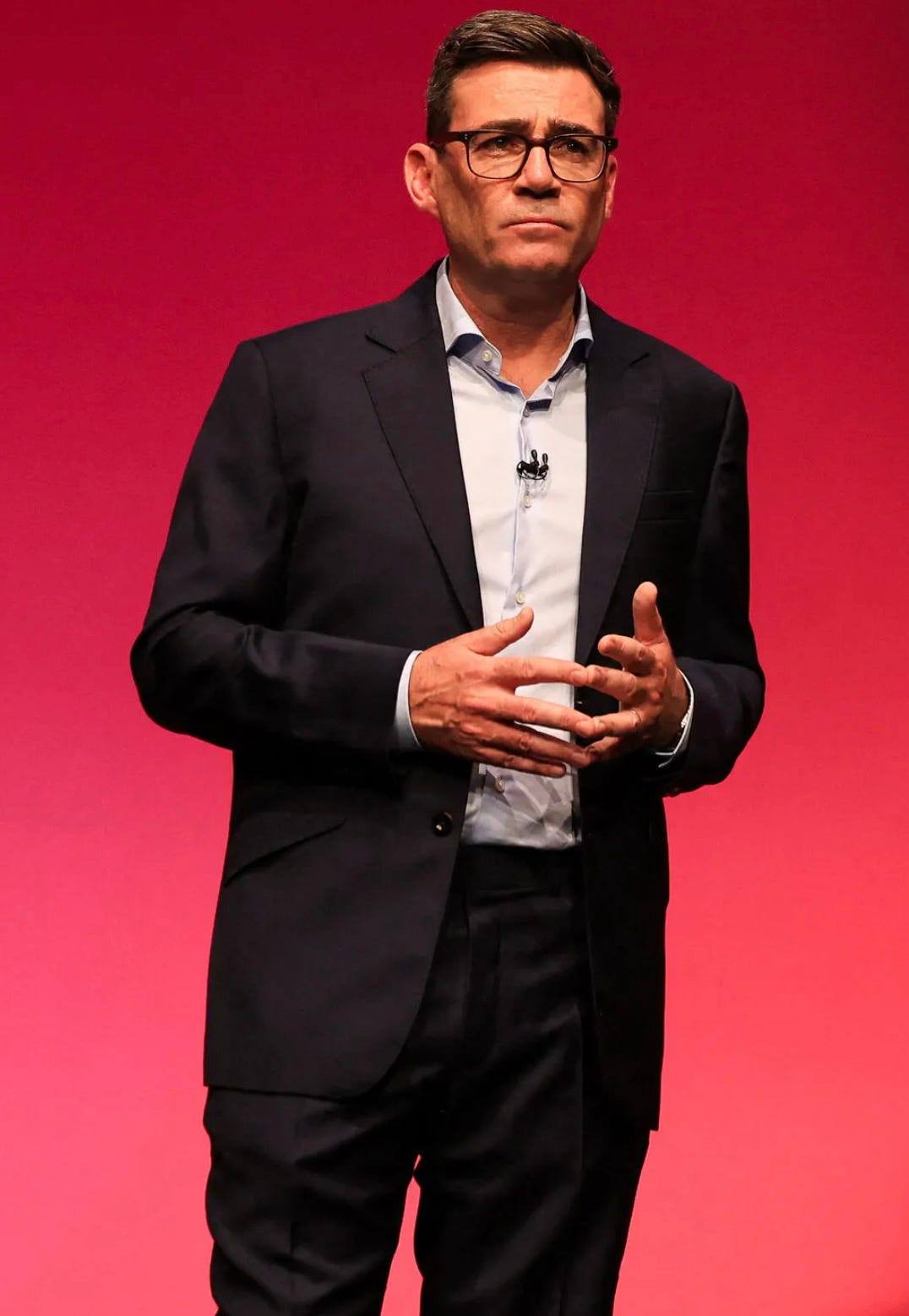
This was a serious speech, delivered with gravity. Burnham promised to reopen fundamental questions about Britain’s relationship with Europe, introduce electoral reform and create a National Care Service for England, free at the point of use. Most strikingly, he proposed helping to pay for the latter by reforming the state pension triple lock from 2030.
Burnham’s phrase was “less drift and more direction.” There was certainly direction. The detail remains at the not even sketchy stage.
EUROPE
Burnham effectively reopened red lines inherited from Keir Starmer, but carefully deferred the reckoning until after the next election. He promised to seek consensus on Britain’s future relationship with the EU and, if one can be found, put an option before voters in Labour’s manifesto. That is potentially a significant change of direction, but also an illustration of Burnham’s emerging method: identify the destination, then buy time to work out the route.
SOCIAL CARE
Burnham repeated his promise of a National Care Service modelled on the NHS, with care free at the point of use and greater opportunity for people to remain in their own homes. This time, however, he attached a politically difficult answer to the inevitable question “Who pays?” with a politically seismic suggestion of removing one of the key constituents of the Pension Triple Lock. From 2030 pensions would retain two and a bit locks, keeping inflation-matching and the 2.5% minimum annual increase, but its current link to earnings would be dropped. Labour officials estimate that the reform could save £15 billion annually by the end of the 2030s and a Burnham government in the 2030s would redirect those savings to fund social care.
This suggestion challenges the most serious electoral shibboleth of British politics. Burnham has spent years arguing that Britain needs to make different choices and he has now identified one: asking future pensioners to accept slower growth in the state pension in return for a social care system intended to protect people from potentially ruinous costs later in life. Politically, only a Labour administration could even ask this question and remove one of the “locks” and whatever its electoral wisdom, setting that hare running makes the trade-off unusually explicit.
Electoral reform supplied another large promise with details postponed. With five parties competing seriously for votes, Burnham argued that FPTP risks delivering government on barely 30 per cent support. And one knows which particular shade of teal blue he worries about letting in to government in this scenario! A Commission will now consider alternatives, but Burnham’s Labour proposes to go into the next election promising to change the system. Which system? We shall apparently discover that later.
That was the recurring feature of the speech.
– Europe: direction now, detail later.
– Electoral reform: principle now, system later.
– Social care went further by identifying both an objective and at least part of its funding, but implementation would still come after the election.
Other difficult questions received much less attention. Defence spending was touched upon without explaining how Britain reaches its existing commitments, let alone achieving currently-agreed-in-principle increases. The small boats and asylum received little space, which leaves one very significant political lever in those light-teal coloured hands. Not even a mention of constitutional reform: the egregious absurdity of the appointed House of Lords is to be seen, but not heard apparently.
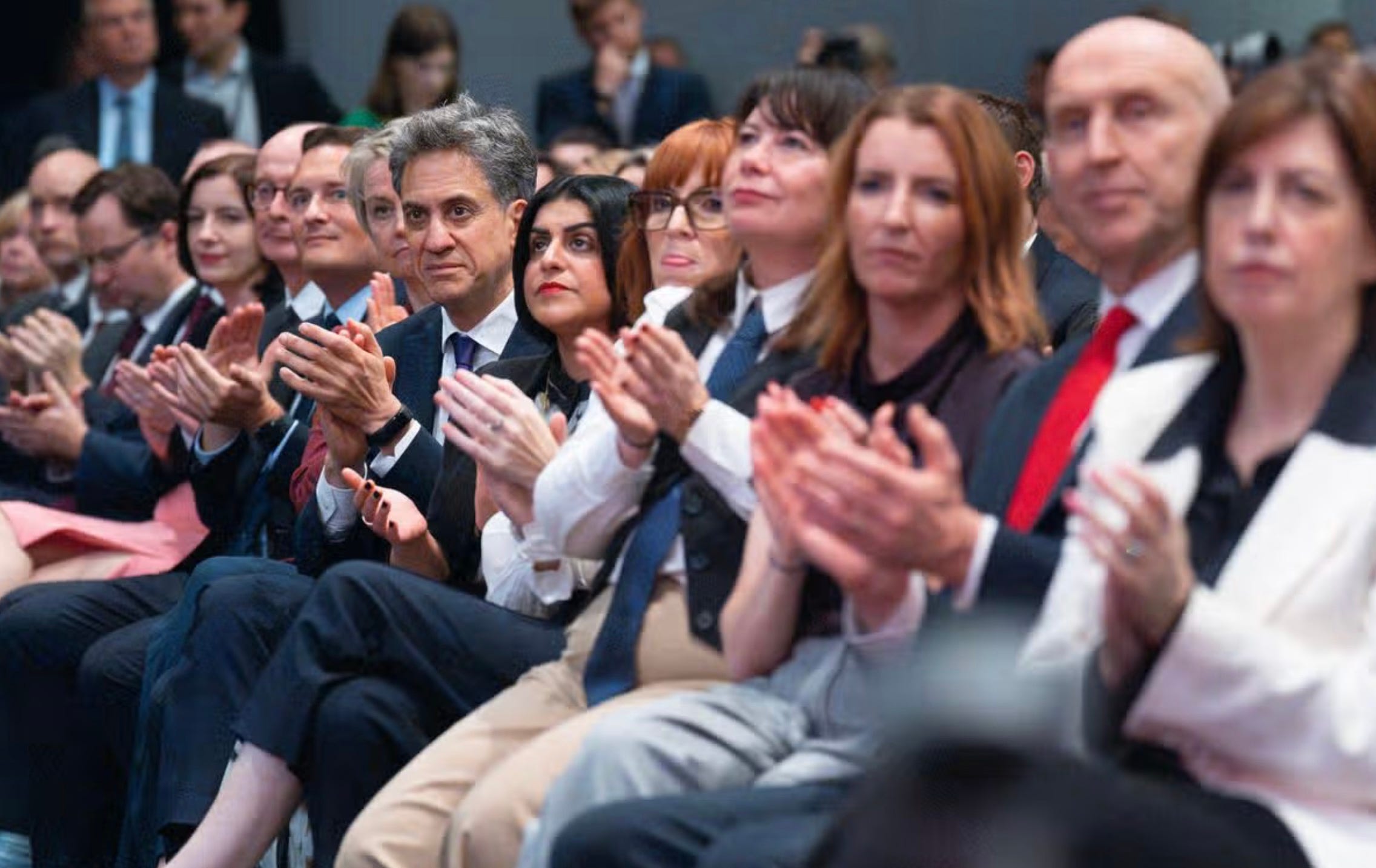
Burnham nevertheless gave Labour something it has been asking him for: an account of where he wants to take the country. The ambition was substantial and, particularly on pensions, some of the politics potentially hazardous. But “less drift and more direction” creates a stern test for the Chief Vibemaker. Once you have told everyone where you want to go, you are rather forced to explain how you intend to get there.
Direction is not yet delivery.
MONDAY 28th SEPTEMBER – Hoping for some realism
Burnham is not up until Tuesday, but More in Common polling released on Monday to catch the conference faithful suggested that the public seem to think that Burnham “gets it” and that he is at least “trying” to improve things, but are sceptical of his chances of success.
There is a lot of hope that the King of the North will not disappoint, not just oratorically.
Perhaps unfairly, all attention was focused on John Healey on Monday morning, although expectations that the new Chancellor would spell out how Andy Burnham will break with four decades of neoliberalism seemed “ambitious.”
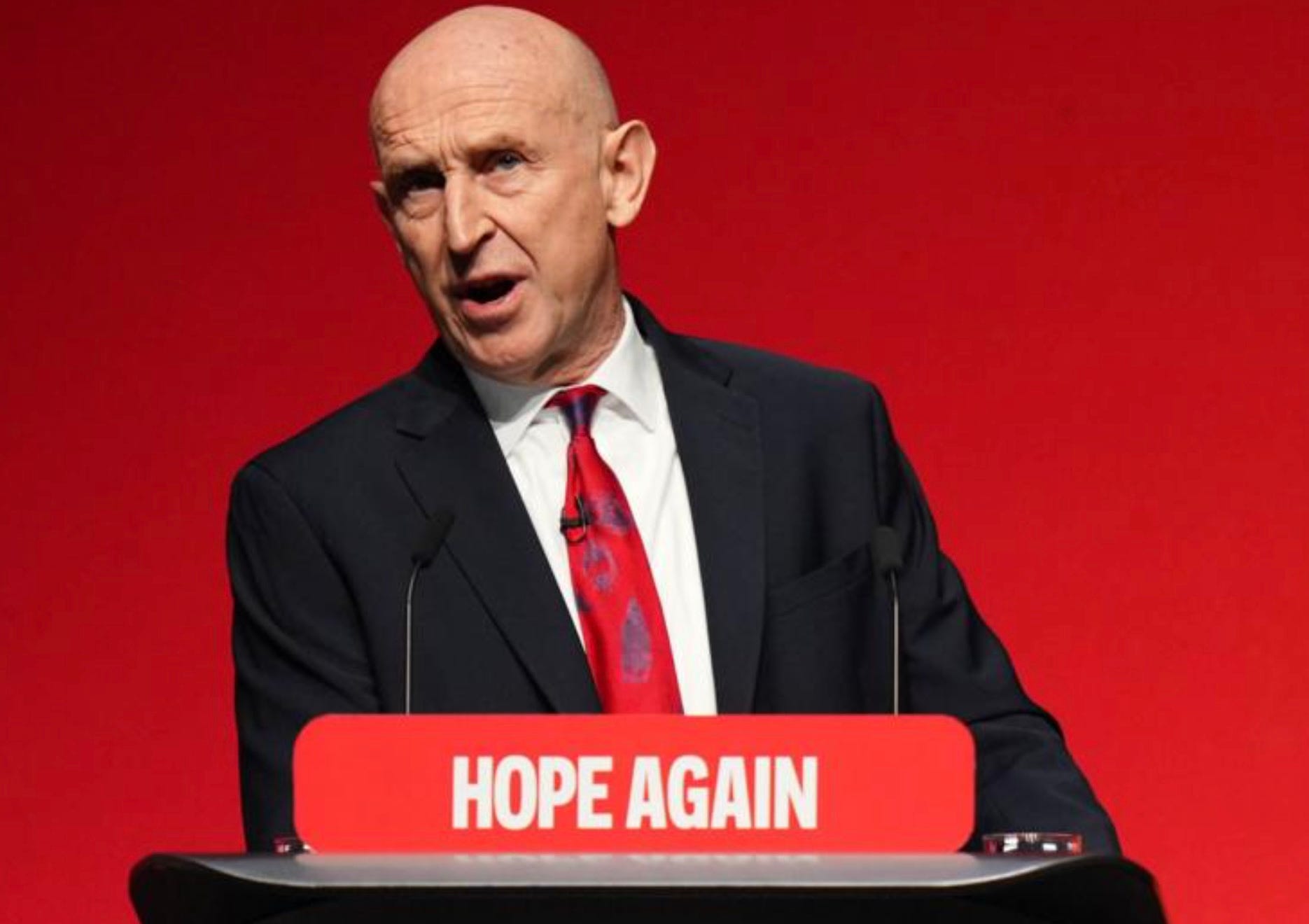
Neverthless, “hope” seemed to be the order of the day. More specifically “New leadership, new confidence and new hope” although there were about 20 other mentions of hope too. There may be hope that the bond markets will not penalise all this hope, but the realisation of those hopes sounded sufficiently costly to make one suspect that that particular hope may be ill-founded.
But lo, another Cabinet Minister hoves in to view to finish the day.
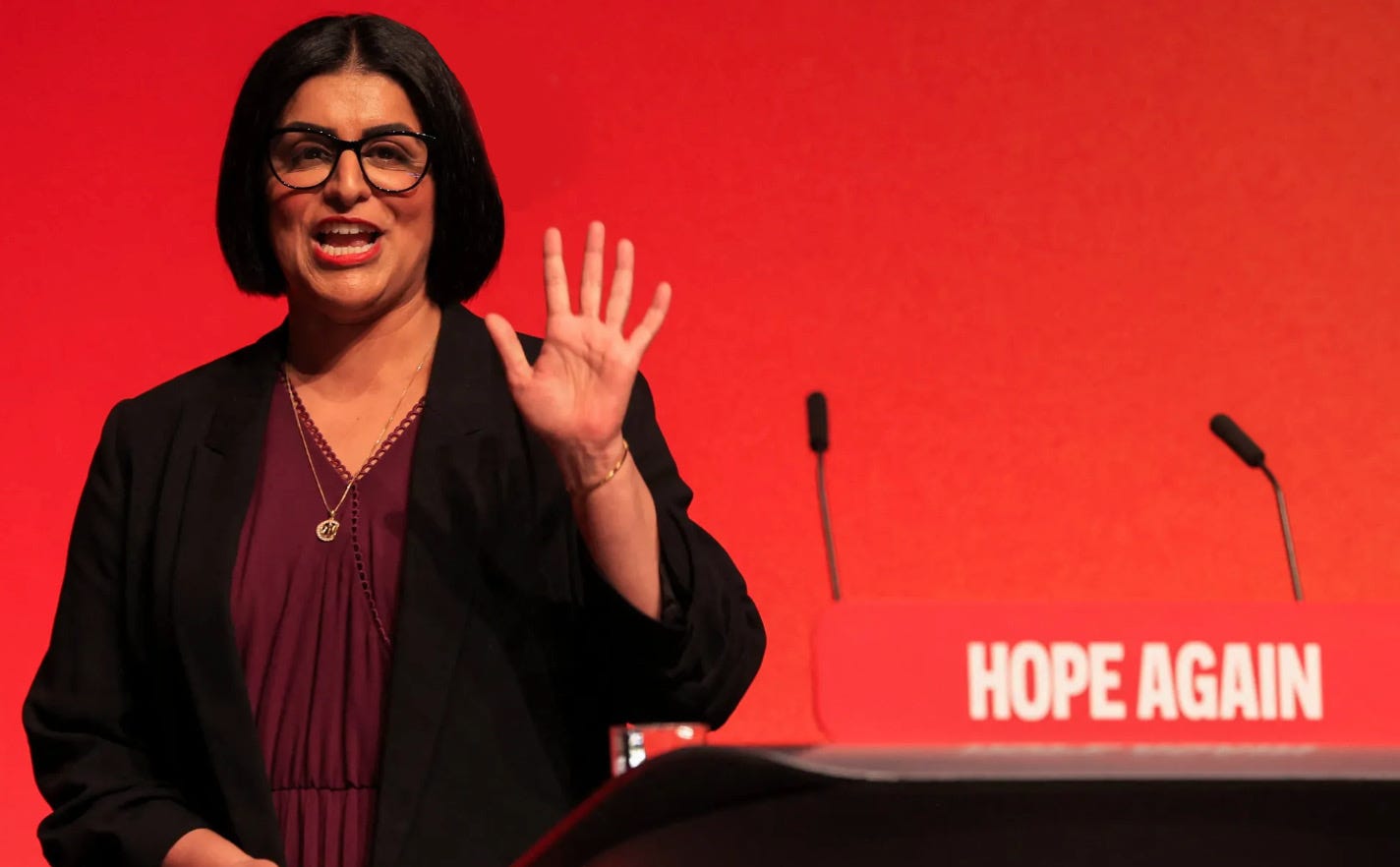
The figure of Shabana Mahmood appeared with the message that she is poised to signal that her immigration and asylum measures are about to be watered-down: “We will come to a position that balances fairness for those who came here legally and fairness to British citizens across this country.”
Lest one feel that the announcement confetti machine had run dry, however, a number of proposals were aired, some new, some, well, not enormous:
– a new marine research ship (Burny McBurnface?)
– three new floating docks for subs on the Clyde
– nationalisation of Avanti West Coast at the earliest opportunity
– guaranteed jobs for out-of-work young people with health conditions
– powers for English councils to take over empty homes more quickly
– revival of the union training fund
and a partridge in a pear tree (although I am sure that I missed some!)
Could one hope for some more substantial fare on Tuesday? Hope, as we all know, however, is not a strategy.
Leave a Reply
You must be logged in to post a comment.