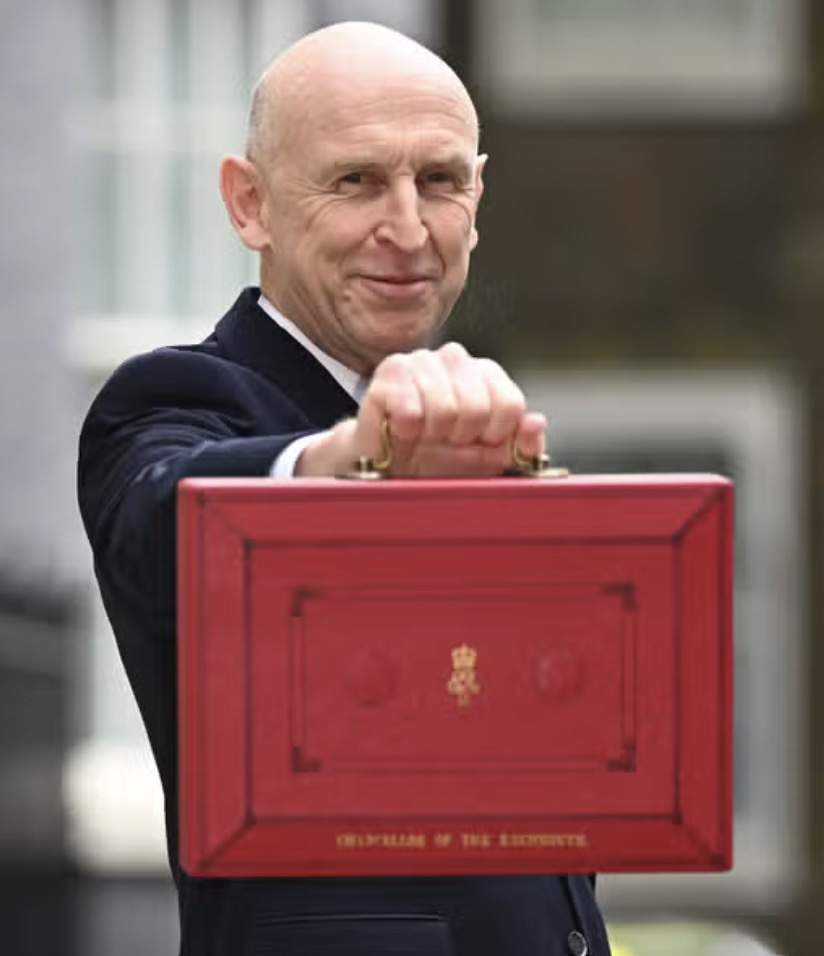
Budget 26
Count them: 98 policy measures! £7bn in additional taxes. A similar amount in additional spending. Remarkably little change to the direction of the British economy.

John Healey’s first Budget as Chancellor was an impressive demonstration of the difference between doing things and achieving things.
The government calls it a Budget designed to provide some “breathing space.” There are payments to households, adjustments to taxes, reliefs for businesses and promises of reforms to come. Taken individually, several measures are perfectly defensible. Taken together, they amount to significantly less than an economic strategy.
For all its marginal activity, this was a Budget designed principally to avoid making matters worse, fitting with the Chancellor’s “do no harm” objective. Most important decisions that could have inconvenienced the government have been postponed.
There are occasions when caution is admirable. Unfortunately, there are also occasions when it becomes an elaborate method of doing nothing.
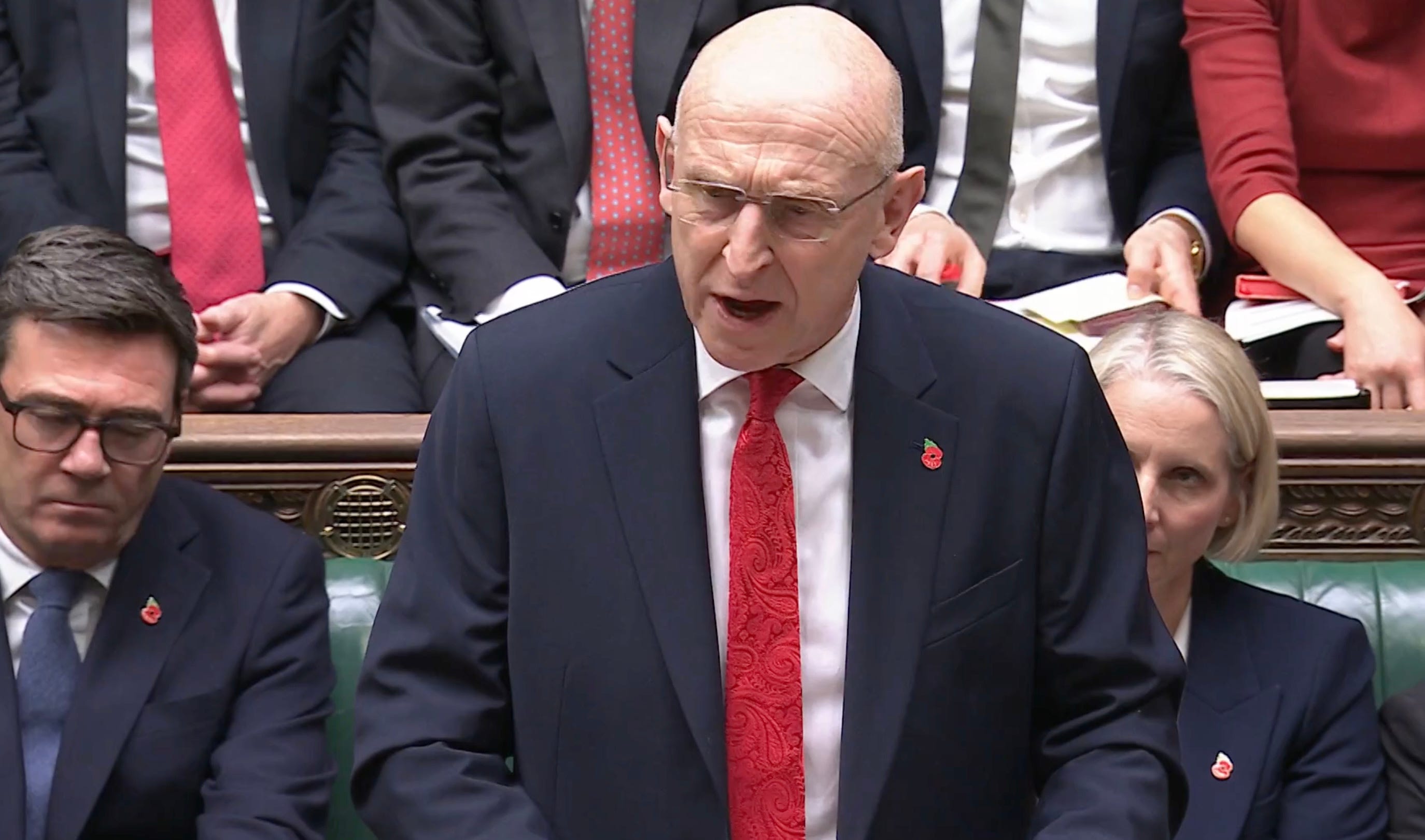
A hundred ways to avoid a problem
The centrepiece of the Chancellor’s Budget is a £100 payment to households in Council Tax bands A to D in England. This will be welcome to those who receive it, but it’s so small that many will not notice and it will infuriate others. At the next price cap review point in January 2027 an average household’s bills are expected to rise by ~27%, from ~£1,730pa to ~£2,190pa, an increase of ~£460, which makes a £100 rebate less than even cosmetically helpful. Someone said to the Treasury: “Think of something that we can say we are doing to help, but don’t spend too much money on it!” Hanging this on Council Tax banding is also just laughably ridiculous.
A similar difficulty appears in the proposal to abolish standing charges on gas bills. Standing charges are unpopular, but the infrastructure required to deliver gas still costs money. Removing a standing charge does not remove the cost it was designed to recover. It changes how that cost is collected. Moving it into unit prices may benefit some low usage households, while increasing costs for others. Why not do the same for electricity if it’s such a good idea? (The argument that VAT on electricity bills has been temporarily suspended makes no sense at all. Not even close.)
These non-policies continue the trend that the government should subsidise the consequences of problems it has no clue how to solve. Energy bills are cushioned while the underlying energy system awaits reform. Housing demand receives assistance while the supply of homes remains inadequate. Some vulnerable businesses are offered selective relief while their wider costs continue to rise.
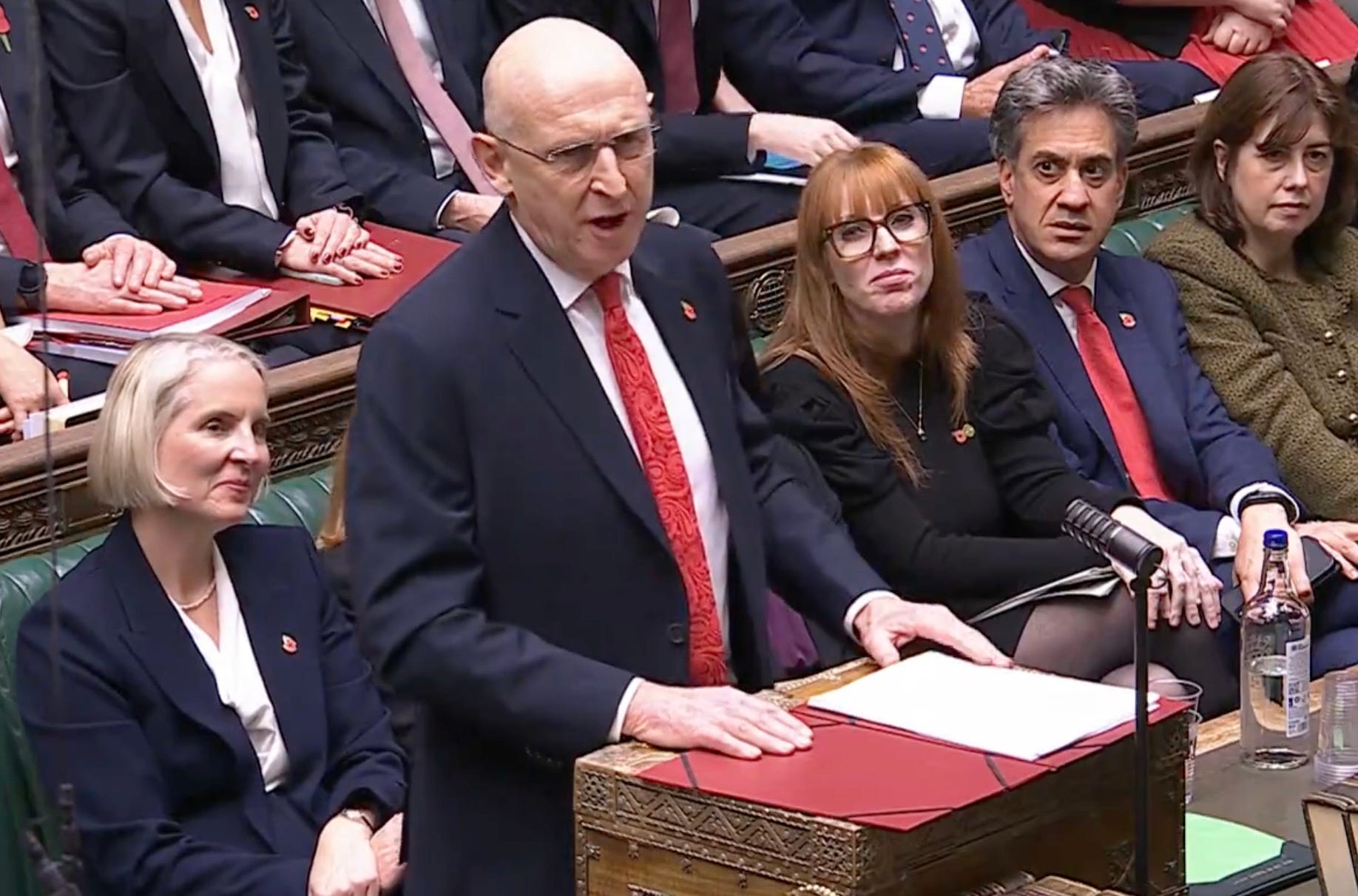
The government has developed an impressive repertoire of ways to make expensive things temporarily less expensive. Making them genuinely cheaper is not a challenge that government seems even able to contemplate attacking.
The OBR provides the plot
For a more revealing account of the Budget, it is worth setting aside the Chancellor’s speech and examining the forecasts published alongside it.
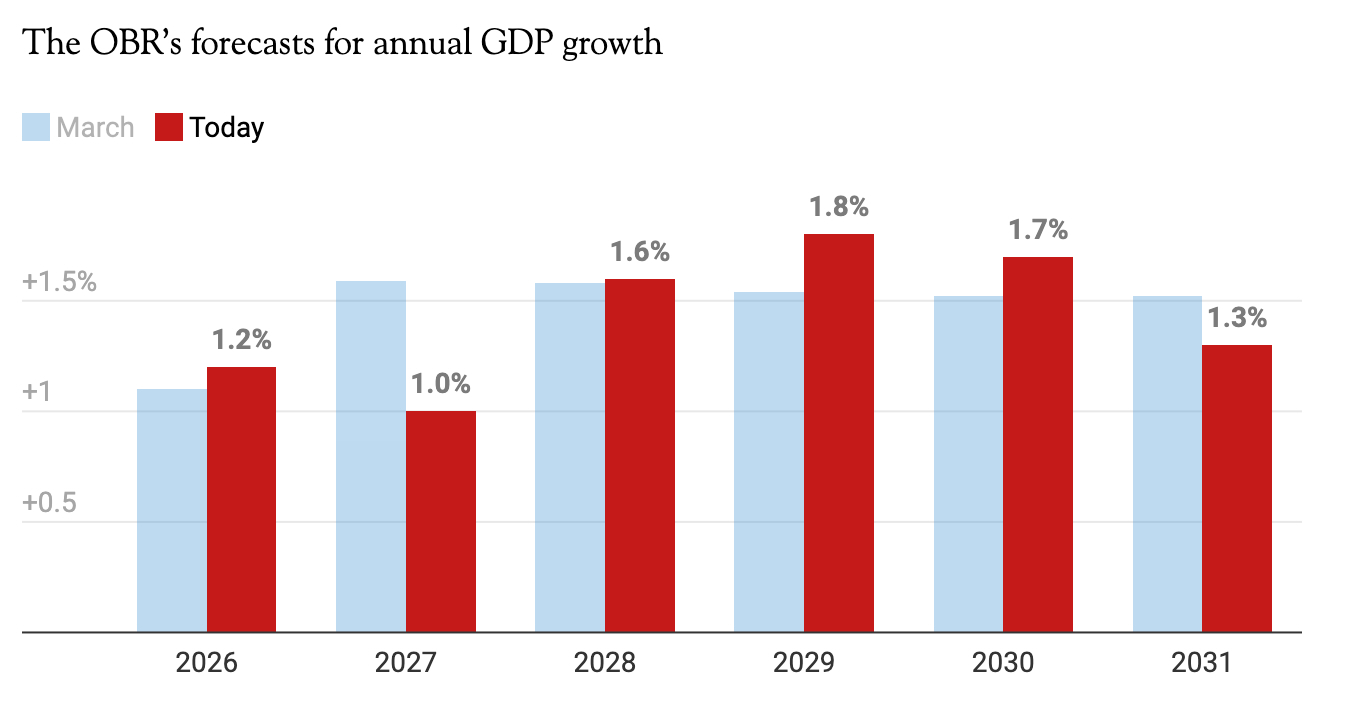
The Office for Budget Responsibility expects the economy to grow by 1.2% this year, just a 0.1% improvement from its March forecast. Next year, however, growth is expected to slow to just 1.0%, against the 1.6% previously anticipated.
Inflation is forecast to peak at 3.8% in the first quarter of 2027, before gradually returning towards the Bank of England’s target. Real household disposable income per person is expected to fall in 2026/‘7, followed by only modest growth.
These are not figures which suggest a country about to embark on a period of conspicuous prosperity. They also reflect serious external shocks. Higher energy prices and borrowing costs associated with the conflict in the Middle East have damaged the economic outlook. That is not the Chancellor’s fault, but it is difficult to claim that his response has altered the outlook. The Chancellor has offered temporary relief from the pressure, but has not even tried to demonstrate how the country could navigate those headwinds more successfully.
The public finances are similarly uncomfortable. Higher borrowing costs have added substantially to the government’s debt interest bill. The Chancellor’s margin against his principal fiscal rule has fallen from £23.6 billion in March to £15.0 billion in October. That is still a margin, but not a particularly reassuring one.
Fiscal headroom is not a pile of money sitting in a Treasury cupboard. It is the difference between the forecast and the government’s own rule. A relatively small deterioration in the economic outlook can make it disappear. To his credit, Healey has not pretended that the problem can be solved by an unfunded spending spree, but has instead elected to live with the deterioration.
Unfortunately, living with a problem and solving it are not the same thing at all.
Taxing the margins
The Chancellor was constrained by the government’s commitments not to increase the main rates of income tax, National Insurance or VAT. Consequently, much of the revenue raising has been confined to smaller and more politically convenient targets. Banks will face a temporary increase in the corporation tax surcharge from 3% to 6%, for another 15 months. Taxes on savings and property income will also rise by 2% from April 2027.
Each measure has its own justification. Banks are profitable and make an attractive source of revenue. The government argues that taxing income from savings and property more heavily will produce a fairer balance between different forms of income.

However, the Chancellor’s insistence that this is a Budget for the “working people of Britain” is less convincing as a description of his tax tinkering. Many working people save, some own property and many hope to do both. Treating income from capital as though it belongs exclusively to a separate and idle class is politically convenient, but so economically simplistic as to defy logic.
The most efficient tax raising mechanism barely requires a Budget announcement at all. Frozen income tax thresholds continue to pull more earnings into taxation as nominal wages rise. This “fiscal drag” increases the tax burden without requiring ministers to announce any increases in tax rates. This is an exceptionally useful arrangement for politicians who wish to promise that taxes will not rise while ensuring that tax receipts do. The result is a steadily increasing burden on households and businesses, accompanied by a political debate in which everybody insists that somebody else ought to pay. Shame on you Mr Healey.
Defence, Welfare and the art of postponement
The most revealing feature of this Budget is what it postpones. Defence is the most obvious example. The government continues to speak of national security as its first responsibility and of higher defence spending as an essential national priority. Nevertheless, the question of how to pay for those commitments remains unimpressively postponed
Changes to forecasts for armed forces’ pension costs have allowed the Treasury to reduce the amount allocated to the Ministry of Defence relative to earlier plans. The Treasury can present this as a technical adjustment. The armed forces might reasonably wonder why any resulting savings cannot be used to increase their own departmental spending.
Meanwhile, the ambition to reach defence spending of 3% of GDP by 2030 remains a target rather than a funded programme. Announcing a percentage is relatively easy., but finding the money, deciding what to buy and ensuring that the equipment and personnel can actually be delivered are more demanding exercises that this government has pushed over the hill into next year. As Sir Ben Wallace pointed out on Monday, merely moving the Intelligence budgets to include them in Defence spending does not actually increase defence spending one jot.
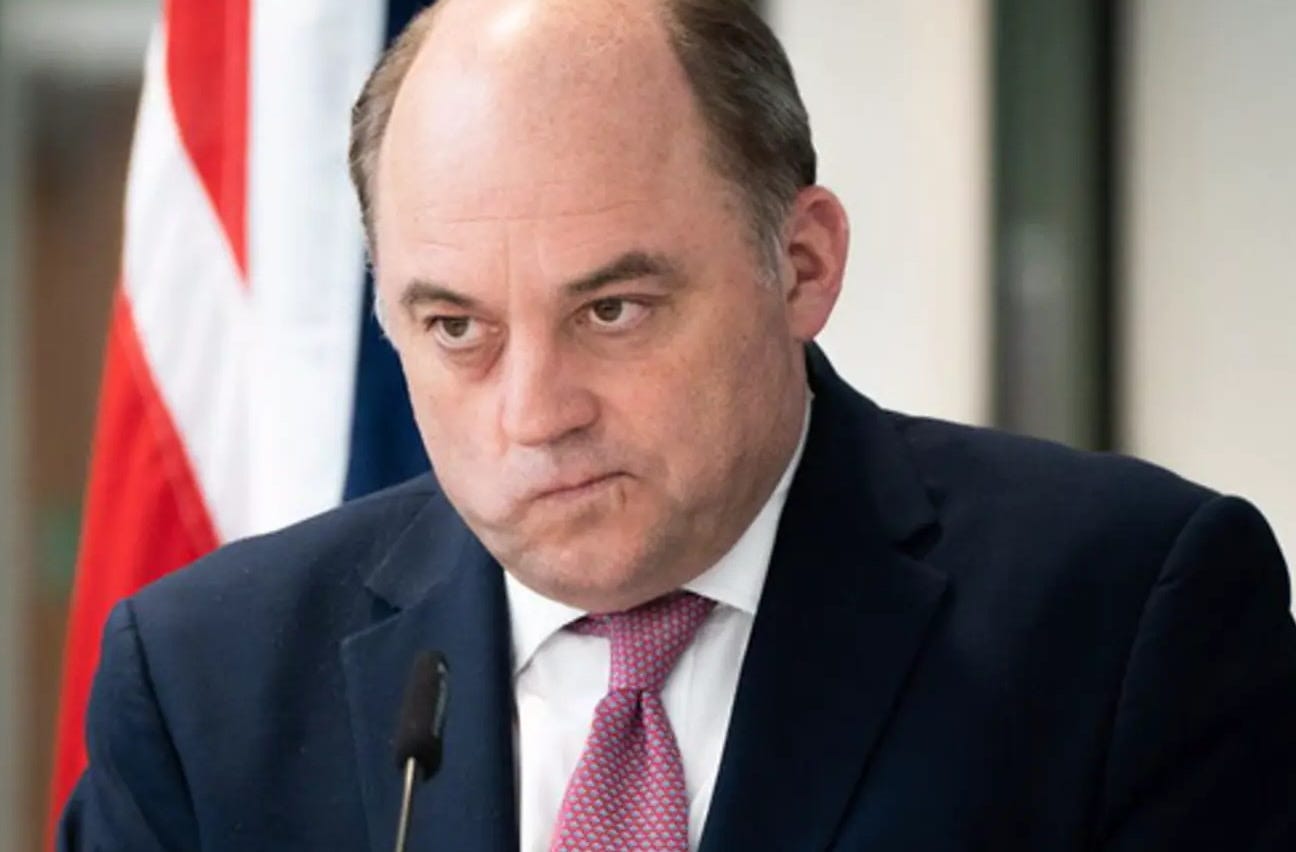
The same reluctance to confront difficult choices is evident in Welfare. The Chancellor promised to control rising social security expenditure in a “Labour way”, which one comes to suspect means “coating this problem in meaningless reassurances.” The government is awaiting further work on youth unemployment and disability benefits before setting out substantial decisions. That is rendered distinctly unimpressive when the author of the NEET report himself reveals that he was asked to delay his report until after the Budget.
Then there are the departments which lack the political protection afforded to health, education and defence. The spending outlook implies considerable pressure on the remaining public services in the years ahead. Courts, prisons, transport and local government cannot all be expected to absorb indefinitely rising costs without consequences.
If the government intends to maintain existing services, it will eventually have to find more money. If it intends to spend less, it will have to explain what it is prepared to stop doing, but neither alternative featured prominently in the Chancellor’s account of Britain’s brighter future. What a surprise. An answer may only be further avoided by calling a General Election before the spending review process is completed. Funny that.
Breathing space for what?
Andy Burnham’s government has inherited a difficult economic position, faces renewed international energy shocks and has little appetite for provoking either voters or the bond markets. A modest Budget, offering some marginal help with household bills while avoiding dramatic tax increases or spending cuts, is therefore understandable. It may also even be electorally effective.
The temporary extensions of relief on fuel duty and electricity bills also leave the government with opportunities to revisit popular measures next year. Whether that reflects prudent flexibility or an eye on the electoral calendar will depend on what happens next.
Britain’s underlying problems are familiar: weak productivity, poor growth in living standards, mounting welfare costs, expensive energy, overstretched public services and defence commitments which are always easier to announce than to finance.
The current Chancellor has not caused all these difficulties. Nobody could reasonably expect him to solve them in a single afternoon. But what this correspondent noticed is that no path to even addressing these significant issues was even signalled. Instead, we have been given a collection of small measures, a few temporary cushions and a promise that serious decisions will follow. Some day.
The Chancellor has provided breathing space as he said that he would. The government has yet to explain what it intends to do with it.
The most important point is not that every forecast has worsened. Growth this year is marginally stronger than expected and the OBR projects some further improvement after 2027, but the short-term squeeze has intensified, while the government’s room for manoeuvre has narrowed.
The Chancellor passed his own fiscal test. Unfortunately, the economy has not come close to a passing grade. Cue General Election. has been politically effective. It has also been relatively inexpensive. The Budget will require decisions that are neither small, nor inexpensive. The question is not now whether Burnham can find things to do, but whether he can decide which things are worth paying for. Not after the next election. Now.’s political leaders can demonstrate the determination to ensure that Russian aggression does not succeed simply by exhausting the patience of Ukraine’s allies.
Leave a Reply
You must be logged in to post a comment.