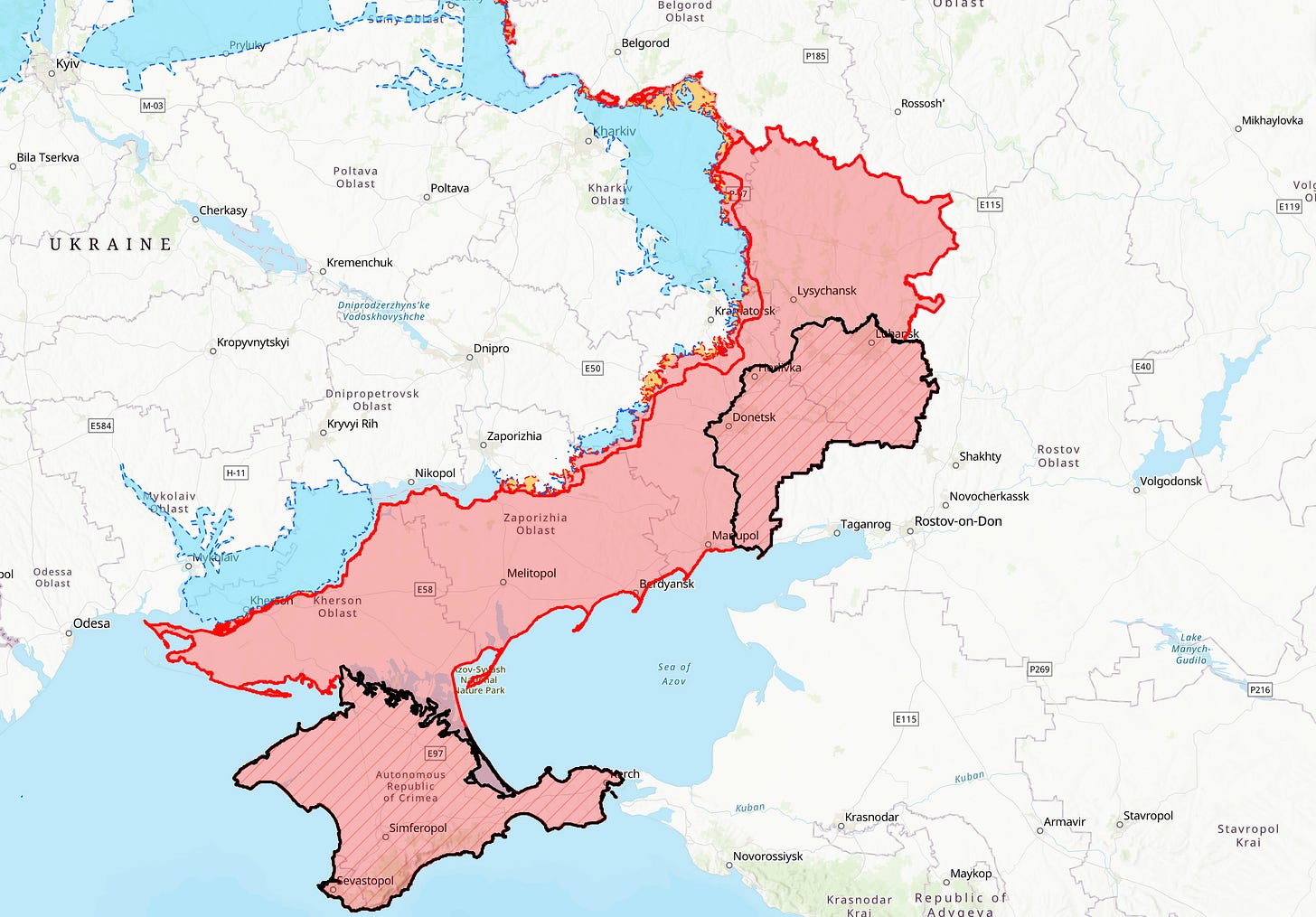
Russia’s War in Ukraine Matters Far Beyond Its Borders
Britain had a disappointingly procrastinatory Budget. America is about to have an election that may curtail Trump and/or enrage him. Westminster is once again arguing about Europe, which may be politically astute of the Prime Minister, but is desperately dull for everyone else. It’s Ukraine, Stupid!
What happens in the remote fields of the Donbas matters more to all our futures than most of what is currently occupying British politicians. So, with apologies, TWOP returns to Ukraine this week with a longer read on this conflict that will define the way Western democracies develop for our lifetimes.
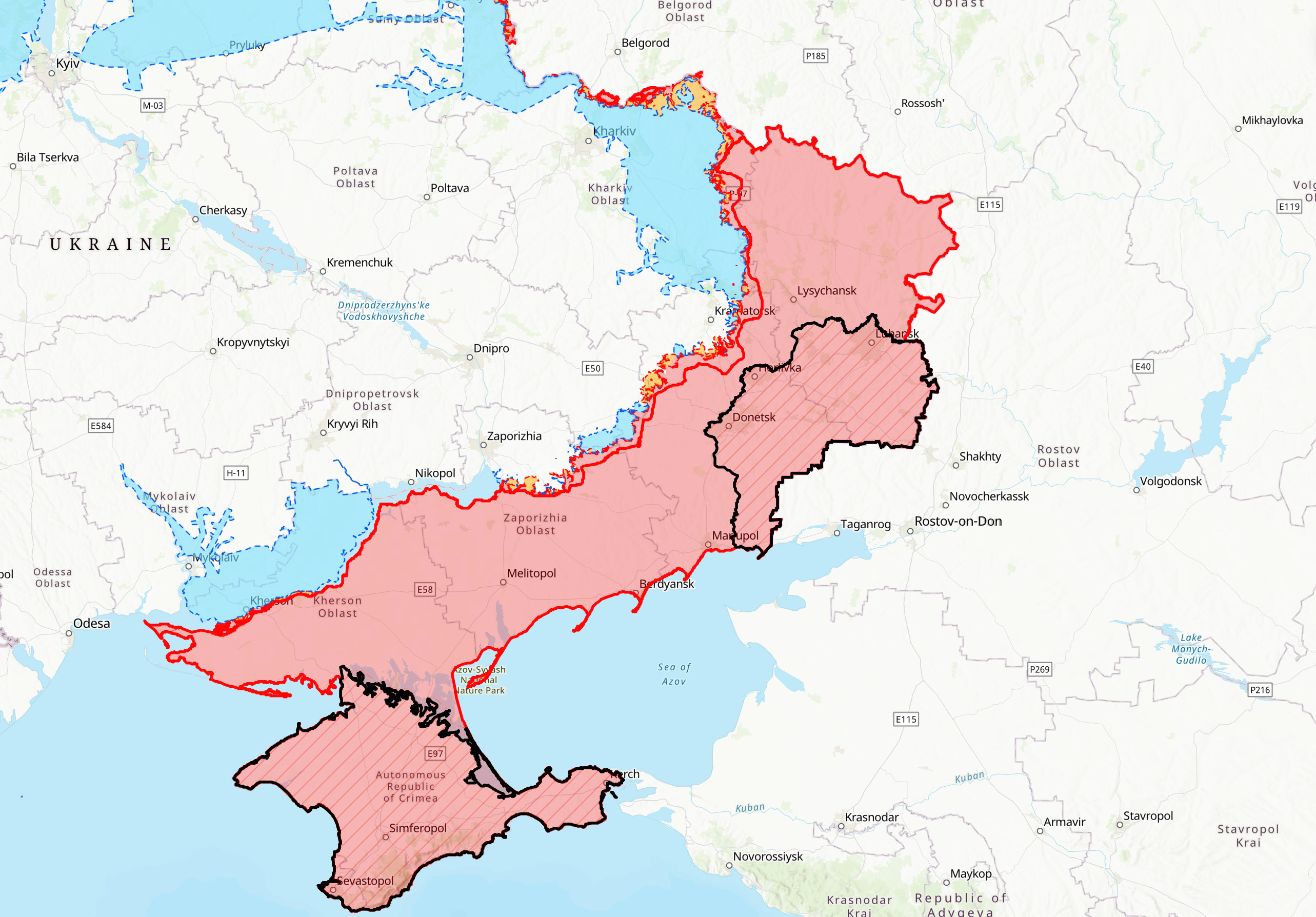
Amid shifting political landscapes across Western democracies the conflict in Ukraine has become the defining test of the modern rules-based international system. Nearly five years after Russia’s full-scale invasion, this war has expanded far beyond a localised struggle for self-determination. Its consequences will reshape European security architecture, American foreign policy templates, Asian strategic calculations and established economic relationships across the world.
The conflict serves as a practical assessment of the durability of the post-WW2 order. That system, founded on state sovereignty, territorial integrity and the prohibition of military aggression as a tool of statecraft, has always been imperfectly applied and influenced by raw military and economic power. However, a critical boundary separates a system where aggression incurs severe, sustained penalties from one where the acquisition of territory by force becomes an accepted norm. While global stability is tested by US-China rivalry and shifting balances between Western and emerging economies, Ukraine has become the focal point where these systemic stresses converge.
The Ukraine War raises fundamental questions for contemporary geopolitics. Can a smaller state successfully resist a major military power? Can rapid technological innovation offset deep conventional disadvantages? Can coordinated economic sanctions constrain a determined aggressor? Can Western democracies secure the financial and military commitments required to maintain their own stability? The answers to these questions will reverberate globally.
The Evolution of the Battlefield
The conflict has evolved into a transparent, slow-moving war of attrition characterised by micro-local counter-offensives and a rapid technological transformation of the battlespace. The widespread deployment of advanced first-person-view (FPV) drones, including fibre-optic systems immune to standard electronic jamming, has minimised the element of surprise. These innovations create dense “Kill Zones” extending up to 50km across the front lines, making traditional massed armoured manoeuvres almost impossible to execute.
The line of contact is no longer a static line of traditional fortifications. It has transformed into a porous, highly contested landscape dominated by dispersed infantry positions, widespread sensor arrays, electronic warfare units and deeply integrated surveillance-and-strike networks. Conventional military assets including tanks, artillery, infantry and logistics remain indispensable, but the cost and complexity of concentrating these forces for decisive offensives have risen dramatically.
Ukraine has adapted efficiently to this environment. Balancing desperate defensive operations with agile tactical manoeuvres, Ukrainian forces have repeatedly disrupted Russian logistics and mounted effective local counter-offensives. This ongoing resistance challenges historical assumptions regarding the absolute dominance of military scale over operational effectiveness.
Central to this dynamic is Ukraine’s rapid development of a domestic drone industry, which now delivers millions of units annually. These low-cost systems help mitigate persistent shortages of conventional artillery ammunition and provide tactical capabilities traditionally reserved for far more expensive military platforms. Tools like the Delta intelligence system combine satellite imagery, aerial reconnaissance and open-source data to accelerate the target-to-engagement cycle. This Ukrainian digital agility compensates for structural gaps in conventional hardware.
However, technological adaptation has limits. Drones cannot fully substitute for heavy artillery, advanced software cannot replace trained personnel and innovation alone cannot generate unlimited manpower, air defence interceptors, or heavy industrial capacity. Ukrainian resilience relies on a combination of domestic innovation, tactical flexibility, national resolve and the continuous flow of foreign materiel. The removal of any single component could severely undermine the efficacy of the others elements.
Conversely, Russia has sustained immense personnel and equipment losses to maintain its momentum. Moscow has drawn heavily down on Soviet-era hardware stockpiles and expanded its reliance on external defence suppliers like North Korea and Iran. The demands of prolonged industrial warfare have exposed systemic vulnerabilities in Russia’s domestic defence production, forcing the state to redirect an unsustainable share of its economic resources toward the military.
Despite these costs, Russia’s political leadership displays a willingness to absorb casualties and economic damage that democratic societies would find unsustainable. This tolerance for attrition provides Moscow with strategic endurance. The war demonstrates that while conventional military superiority does not guarantee quick successes, structural military setbacks do not automatically trigger political capitulation. The war is fundamentally a test of endurance, where each side aims to prove that the opponent’s political and economic costs will become ruinous before their own goals are abandoned.
The Realities of Economic Coercion
The efficacy of Western economic warfare remains an important element of the conflict. The allied coalition has deployed extensive financial restrictions, export controls and targeted sanctions designed to isolate the Russian economy and starve its military-industrial complex.
While these measures have complicated Moscow’s global supply chains and driven up the cost of acquiring advanced industrial components, they have not caused a rapid economic collapse. Russia has adapted by redirecting its primary energy exports to alternative markets and utilising complex networks of intermediaries, shell companies and shadow-fleet tankers to circumvent price caps and trade restrictions. This alternative commercial framework is inefficient and expensive, but it remains operational.
This adaptation deepens Russia’s economic and strategic dependence on China. While this shift provides Moscow with an immediate economic lifeline, it significantly reduces its long-term geopolitical bargaining power. Russia is heading towards becoming a Chinese satrapy. For Western governments, the situation demonstrates the difficulty of using economic pressure to alter the behaviour of a regime that views the conflict as existential to its political survival. If sanctions are to remain a viable instrument rather than a symbolic gesture of disapproval, they must be more rigorously enforced, sustained over the long term and tied to clear political outcomes.
Europe’s Strategic Imperative
Russia’s invasion has forced a strategic reawakening across Europe. For decades, much of Western Europe underfunded defence, relying on the military umbrella provided by the United States via NATO, while prioritising domestic economic integration. Now Europe has finally discovered that it lives on a continent where wars happen. This has come as something of a shock to governments that spent 30 years treating defence as an optional expenditure. The war shattered previous European assumptions, prompting NATO’s northern expansion to include Finland and Sweden, a shift driven by the realisation that military non-alignment can no longer guarantee national security (looking at you Ireland.)
Continental defence expenditures have risen, military procurement has been re-examined and the vulnerabilities of energy networks and critical infrastructure are now treated as core national security concerns. The European Union has taken on a more explicit security role, orchestrating macro-financial aid, coordinated sanctions and joint defence production initiatives.
However, committing financial resources is not equivalent to deploying actual strategic capability. Europe’s defence industrial base remains fragmented, procurement pipelines are slow and critical shortfalls persist in ammunition production, logistics, strategic transport and high-end intelligence capabilities. These gaps leave Europe heavily dependent on American military infrastructure. Furthermore, European governments do not share uniform threat perceptions or domestic political priorities, meaning the long-term durability of their collective support cannot be taken for granted. Rebuilding deep industrial capacity and achieving true interoperability will require years of sustained investment.
In the interim, Europe faces a sophisticated campaign of Russian hybrid warfare including cyber operations, sabotage and disinformation campaigns, all designed to exploit internal political fractures. The challenge for Europe is structural and political: it must transform its vast collective economic weight into deployable strategic power if it wishes to meaningfully influence an eventual geopolitical settlement.
The Risk of American Volatility
The most acute vulnerability facing the pro-Ukraine coalition is the future direction of American foreign policy. The United States possesses unmatched military, logistical and intelligence capabilities that Europe cannot speedily substitute. While the foundational American commitment to NATO was historically viewed as a reliable baseline, the current political landscape in Washington has introduced significant systemic uncertainty.
The US administration has increased pressure on European partners to shoulder a larger share of the financial and logistical burden. There is nothing unreasonable about an American president asking wealthy European countries to pay more towards their own defence. There is considerably more to question about making the reliability of the world’s most powerful military alliance dependent upon the president’s highly changeable mood. There’s only so far that a FIFA Peace Prize can take you.
Modern military planning requires predictability over multi-year horizons. Decisions regarding force mobilisation, defence industrial investments and complex procurement cycles depend on the availability of promised assets. If critical battlefield capabilities or satellite-derived intelligence networks face sudden, unilateral disruption based on shifting political moods in Washington, or a misunderstanding of a short piece on Fox News over the weekend, coherent military planning becomes nearly impossible.
This volatility plays directly into Russia’s strategic calculations. Moscow operates on the assumption that it can outlast the political willpower of Ukraine’s Western backers. The primary danger of American policy fluctuations is not a reduction in direct aid, but that the perception of wavering US resolve will encourage Moscow to prolong the war in expectation of a more favourable negotiating environment.
The upcoming US midterm elections introduce an additional variable. Legislative shifts could alter the balance of power in Congress, potentially increasing oversight or complicating the executive branch’s policy agenda. However, congressional re-alignments rarely mandate a unified foreign policy strategy and the executive branch retains primary authority over foreign affairs. The broader, long-term challenge for Western allies is preparing for an international system where consistent, predictable American leadership can no longer be assumed as a permanent baseline.
The Geopolitical Stakes
The conflict in Ukraine is actively shaping the international order of the twenty-first century. If Ukraine, supported by Western industrial assets, European financial depth and its own asymmetric innovation, can successfully prevent Russia from achieving its core political and territorial objectives, the global implications will be profound. It will prove that determined, well-supported resistance can frustrate a major expansionist power and that coordinated international backing can enforce meaningful limits on revisionist states.
If, conversely, Ukraine’s defence is compromised by the political fragmentation or strategic exhaustion of its supporters, the lessons observed by other revisionist powers will be entirely different. Distant regimes contemplating the use of force to settle territorial claims may conclude that patience, asymmetric endurance and political resolve can successfully outlast the collective will of Western alliances.
The eventual resolution of the war may not match a total victory for either side, but the specific terms of the settlement and Ukraine’s long-term security guarantees will dictate the calculations of global actors far into the future. The core issue is whether the international community can maintain the political and economic focus required to confirm that territorial aggression remains an unreliable and high-cost instrument of statecraft.
Successive British governments and Prime Ministers have pledged unstinting support for President Zelensky and the Ukrainian people and have sent financial aid and equipment that has included useful technologies including Starstreak, Challenger II and Storm-Shadow at different times. Nevertheless, the UK has yet to grasp that the Ukraine War is an existential episode for both the UK and for Western democracies. While President Trump has led the US out of a coherent leadership role it devolves on the UK, France and Germany not just to defend Ukraine, but to ensure Ukrainian victory, whatever the cost.
Leave a Reply
You must be logged in to post a comment.