This last week has provided several reminders that trust, once lost, is difficult to recover. While President Zelensky launched audacious drone attacks on St Petersburg, HMS Prince of Wales returned to port in Norway for more repairs (Navy Lookout, 30th May 2026.) While the Government insisted that all relevant documents relating to Lord Mandelson’s appointment had been disclosed, further messages continued to emerge elsewhere. While the parents of murdered student Henry Nowak appealed for calm and unity, politicians of all parties rushed to fit the tragedy into their preferred narratives.
British voters are watching all this closely. The question shaping British politics is not simply what government, police forces and political parties can do, but whether citizens trust them to do it.
Defence Investment Plan
After three years of war in Ukraine, Britain appears to have rediscovered that defence policy is cheaper before an invasion than afterwards. The argument inside Labour appears to be shifting from: “Can we afford Defence spending?” to “Can we afford not to secure the nation?”
The Public Accounts Committee issued its report “MoD follow-up Spring 2026” on 7th June (a Sunday!)
With admirable restraint, the committee noted that while the Ministry of Defence had committed to completing the Defence Investment Plan in Autumn 2025, after many delays, the dear old DIP is now finally due to be published just in time for the NATO summit in Ankara on 7th July. Dither and delay while the world burns.
The PAC concluded that there is “…a credibility issue around the DIP being serially delayed. One consequence is that [MoD] has been unable to move quickly and assuredly to provide a stronger deterrent to our adversaries and to equip our Armed Forces for the modern battlefield.” The delay is also noted as weakening the UK’s defence industrial base, undermining the UK government’s credibility with its allies as well as, ironically, leading to higher procurement costs as inflationary pressures increase the costs of delayed purchasing decisions.
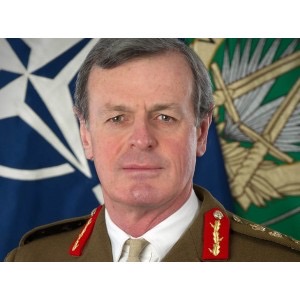
The former Deputy Supreme Allied Commander Europe, Gen Sir Richard Shirreff KCB, CBE, interviewed by Rachel Burden, sitting in rather uncomfortably for Paddy O’Connell on Radio 4, commented “Every time there’s been a tough choice over defence Labour backbenchers start sounding off about welfare and the Government has backed off. Now has got to be the time when the decisions are made.” (BBCR4, Broadcasting House , 7th June 2026, from 07:00mins in.)
More fundamentally, these repeated planning delays raise questions about whether the government can still be trusted to make difficult decisions in a timely fashion. Defence planning only works if allies trust your commitments, industry trusts your procurement timetable and adversaries trust your deterrent threats.
“Don’t think you have mate”
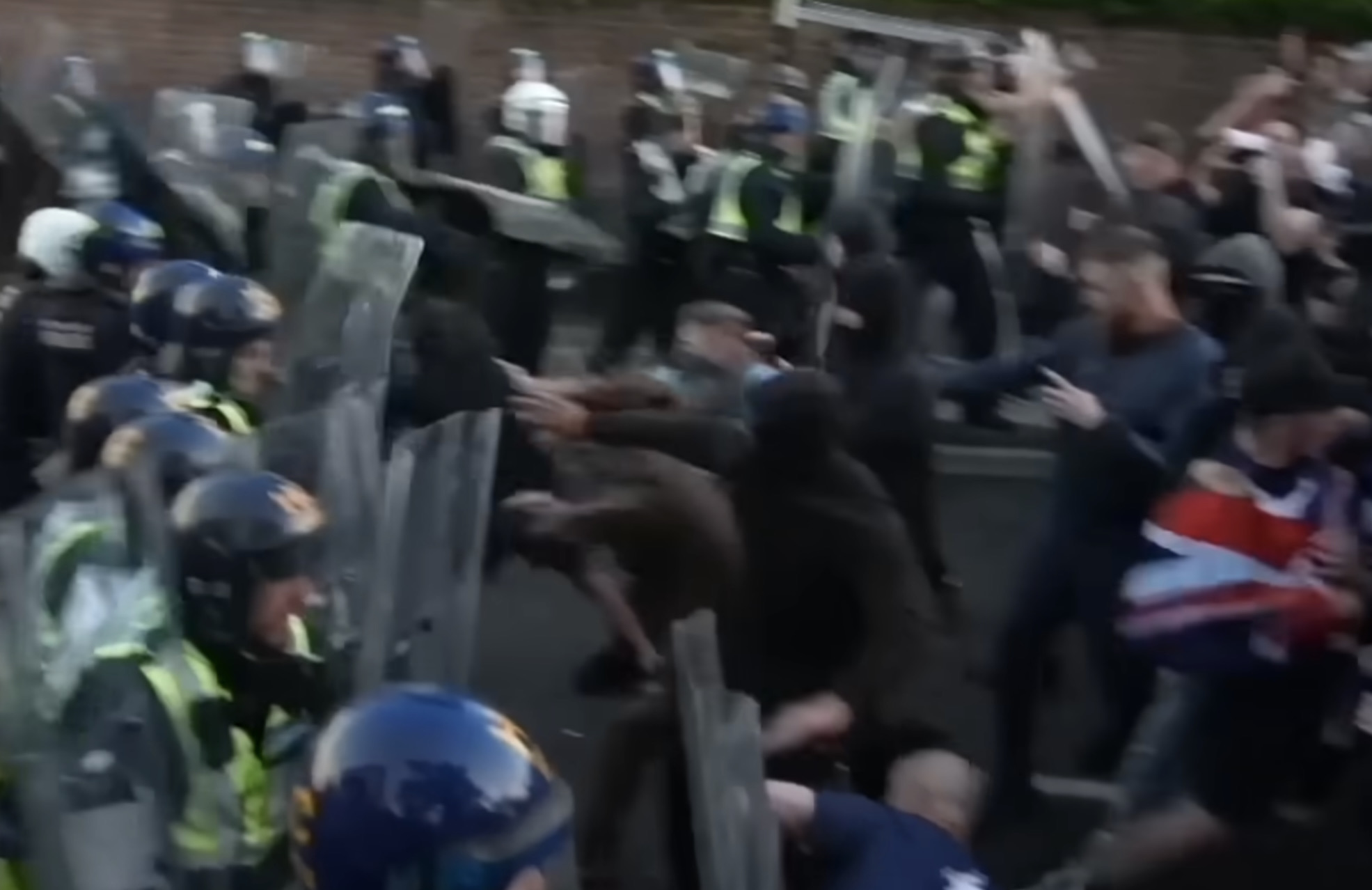
The murder of 18-year-old Southampton Uni Accountancy student Henry Nowak on 3rd December 2025 by 23-year-old Vickrum Singh Digwa powered back in to the news with the release of the police’s bodycam footage on 2nd June, following the conclusion of Digwa’s trial.
This catalogue of police incompetence and platitudinous insensitivity, has speedily become a source of heightened emotions and a political football despite Henry’s parents’ extraordinarily even-tempered and compassionate appeal on the court steps:
“We do not want his death to be used to create further division, hatred or tension. We want his story to make our streets safer for everyone.” (Mark Novak, 1st June 2026)
In this context it is important to ask why this tragic event resonated so viscerally. Certainly not because everyone suddenly became interested in Southampton policing, but the police behaviour captured on video. reinforced a growing perception among many voters that public institutions do not treat everyone equally. Whether that perception is fair or unfair is almost beside the point politically. Trust depends not only upon fairness itself, but upon a widespread belief that fairness exists.
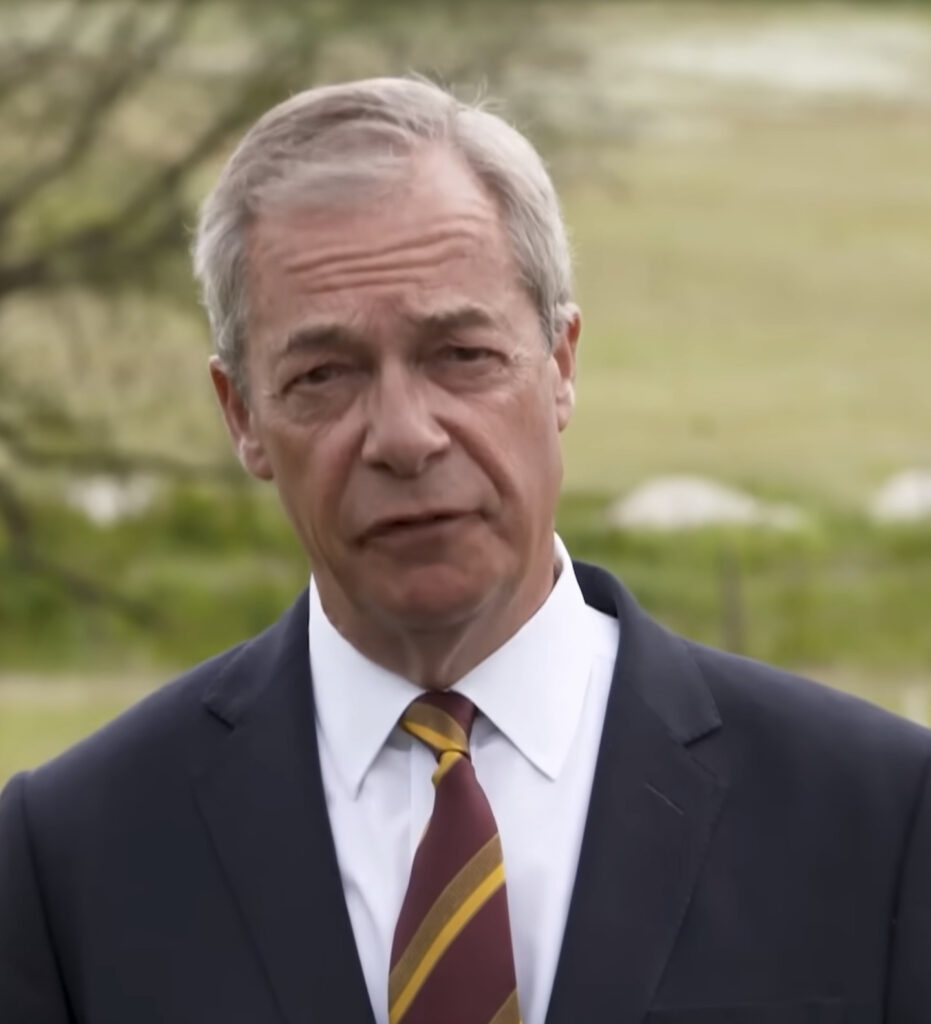
Answering these concerns adeptly, Nigel Farage released a 7-minute video statement on 2nd June and made the point (quite calmly) “An accusation of a racial slur was treated more seriously than an act of murder.”
While Farage agreed that “Henry’s family have responded to this in just the most extraordinarily dignified way…” he continued “I suggest that the rest of us respond to this with pure, cold rage. This is wrong.”
The subsequent Southampton disorder was quickly incorporated into competing political narratives. Critics argued that Farage and others had inflamed tensions. Supporters argued that the unrest reflected genuine local anger. Those charged were from Southampton, Havant, Romsey and Gosport (Hampshire Constabulary) suggesting that whatever, or whoever, amplified the protests, the grievances themselves were locally rooted.
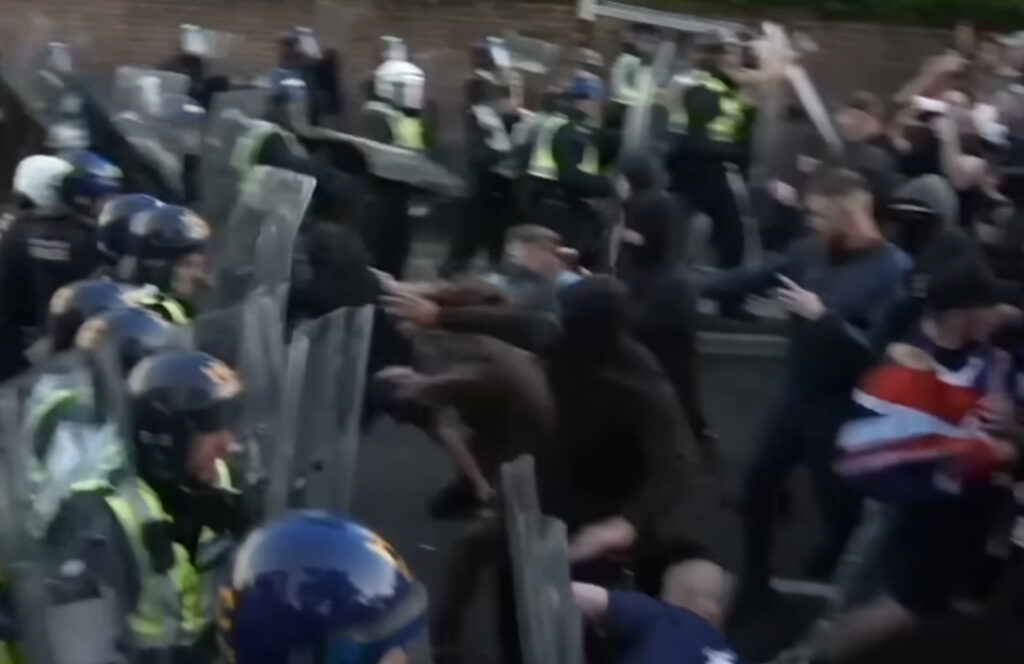
Whether one accepts Reform’s “two-tier policing” argument or not, the bodycam footage reinforced the perception that institutional concerns about discrimination sometimes produce differential treatment. Politically, perceptions matters as much as reality. The political establishment can not cope with this idea as demonstrated by the reaction to Nigel Farage’s question at PMQ’s on Wednesday 3rd June, which was met by sustained cries of “condemn the violence” from the Labour benches.
Honouring the calm request of the Nowak family to avoid encouraging “division, hatred or tension” would best be met with political determination from across all political parties to ensure that both policing and the administration of justice are genuinely free of ALL biases. This will take as much determination and planning, education and supervision as the reaction to the Macpherson Report in 1999 and the Casey Review from 2023. Instead it seems all likely to be adopted as a badge of differentiation, with those who see a “two-tier” problem being labelled as racist defenders of working-class white British tradition, while those who deny that there is a two-tier issue identified as out-of-touch elite immigration lovers.
For Reform, flush with cash not only from Chris Harborne, focus groups and strategy development should make it a priority for their leader’s remarks not to be capable of being lumped together with anything Steven Yaxley Lennon might ever say (and probably Rupert Lowe, who, clearly not wanting to escalate the situation, called for Digwa to be executed.)
Mandelson’s Sometimes Disappearing Archive
More of the Mandelson Archive was published on Monday 1st June and briefly discussed in the world’s finest summary of action in the Commons chamber.
The most politically significant message released, from Pat McFadden to Lord Mandelson via WhatsApp on Saturday 24th May 2025 confirmed many observers’ suspicions of the motivations of the majority of Labour backbenchers

“Every meeting I have is “who can we tax in order to pay benefits to others.” Pat McFadden.
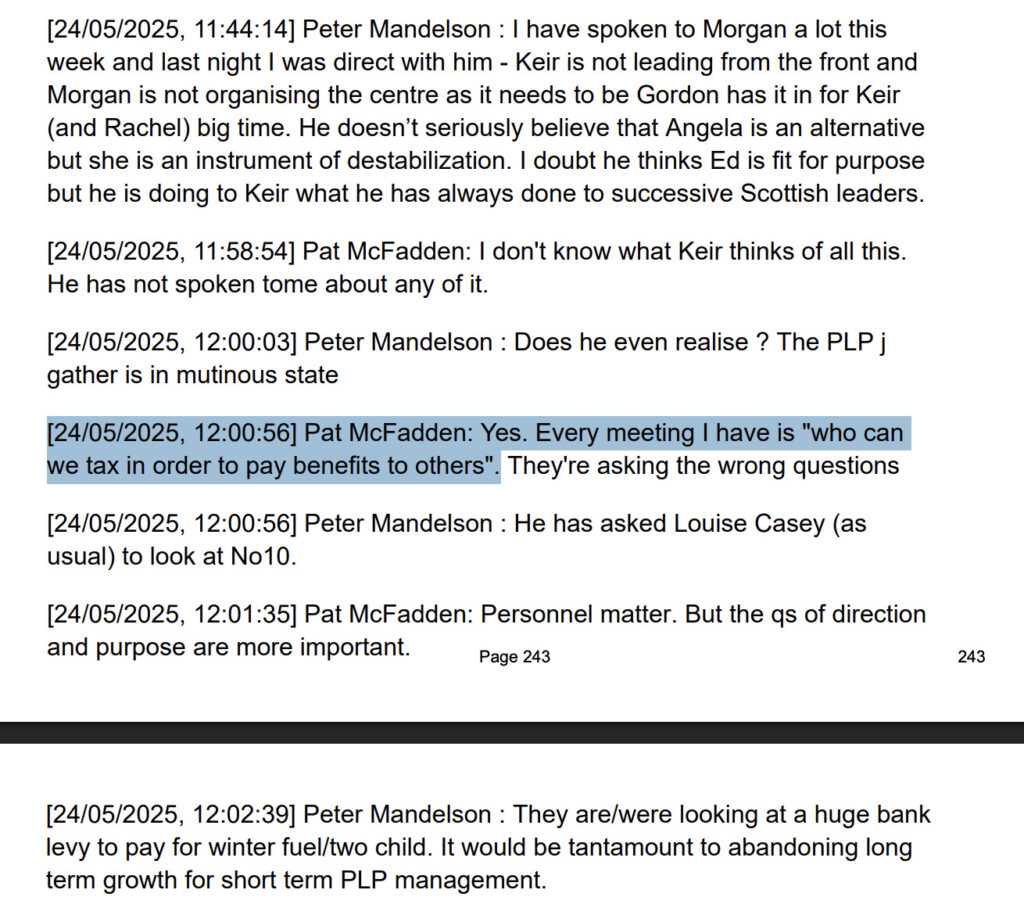
although the commentary on No 10’s dysfunctionality and Gordon Brown’s meddling are also interesting. (p243 as printed, p266 in PDF of Vol II part III.)
However, Tim Shipman was able to reveal more WhatsApp messages between The Prince of Darkness and Darren Jones, Chief Secretary to the Prime Minister, in The Spectator including the outright toadying of:
“You’ve been doing such a great job, and you worked wonders with Trump. I’m so sorry about today” Darren Jones, Chief Secretary to the Prime Minister
on the day of Mandelson’s dismissal.
The fact that these disappearing messages were not included in the documents disclosed, but came to the attention of journalist(s) nevertheless, suggests that the Dark Lord has not lost any of his media management skills.
Kate Whannel made a useful and speedy summary of the other more significant disclosures from the 1st June batch for the BBC (Kate Whannel, BBC News, 1st June 2026 “Key messages between Mandelson and ministers.”)
Although it may be only an “administrative guidance” matter, it seems obvious that government ministers of all ranks must make arrangements (or have arrangements made for them) that all their messages, on whatever platform/medium, must be saved in to a governmentally-operated archive and subject to normal (now 20 year) disclosure rules and more urgent FoI requests.
The constitutional issue is not what ministers say. It is whether ministers should be able to decide which messages survive long enough to be scrutinised. Governments routinely ask citizens to trust institutions. Institutions must therefore be willing to preserve evidence of their own conduct. “Sir Keir Starmer, Rachel Reeves and David Lammy all use “disappearing messages” on the encrypted messaging system WhatsApp.” (Nick Gutteridge, Dominic Penna & Daniel Martin, Daily Telegraph, 2nd June 2026 “Starmer and Reeves use disappearing WhatsApp messages.”)
The Leadership Question Remains
While Westminster spent the week discussing policing and defence, Labour’s succession manoeuvring continued largely in the background. Blair’s intervention last week continues to reverberate because it exposed a question the leadership has spent two years avoiding: where growth is actually supposed to come from.
The responses from Burnham, Streeting and others revealed not merely policy differences, but competing diagnoses of Labour’s electoral problem. The leadership debate increasingly resembles a struggle over whom voters should trust to deliver prosperity, rather than whether prosperity matters.
Reform’s Next Test
For Reform, the challenge is no longer attracting attention, but converting that attention into trust. Outrage generates clicks and fundraising. Winning elections requires persuading voters that a party can actually govern. The distinction will become increasingly important as the prospect of a General Election either on schedule, or called by a new Premier to renew their mandate, approaches.
In that context, Nigel Farage’s YouTube statement on Henry Nowak may have been at least defensible, but for it to appear in commentary alongside the ranting figure of Steven Yaxley Lennon is not helpful electorally. Robert Jenrick, Suella Braverman and Nadim Zahawi should also be pushed to the back row of team photographs.
The common thread running through defence procurement, police conduct and disappearing ministerial messages is trust. Trust that governments will take difficult decisions. Trust that public institutions will treat citizens fairly. Trust that public records will remain available for scrutiny. Once that trust begins to erode, voters look elsewhere for answers. Some look to Reform. Some look to outsiders. Some simply stop listening altogether. Rebuilding trust is much harder than losing it.

For all the arguments over spending, policing and immigration, rebuilding trust may prove to be the defining political challenge of the decade.
Check us out on insta @theworldofukpolitics
Leave a Reply
You must be logged in to post a comment.