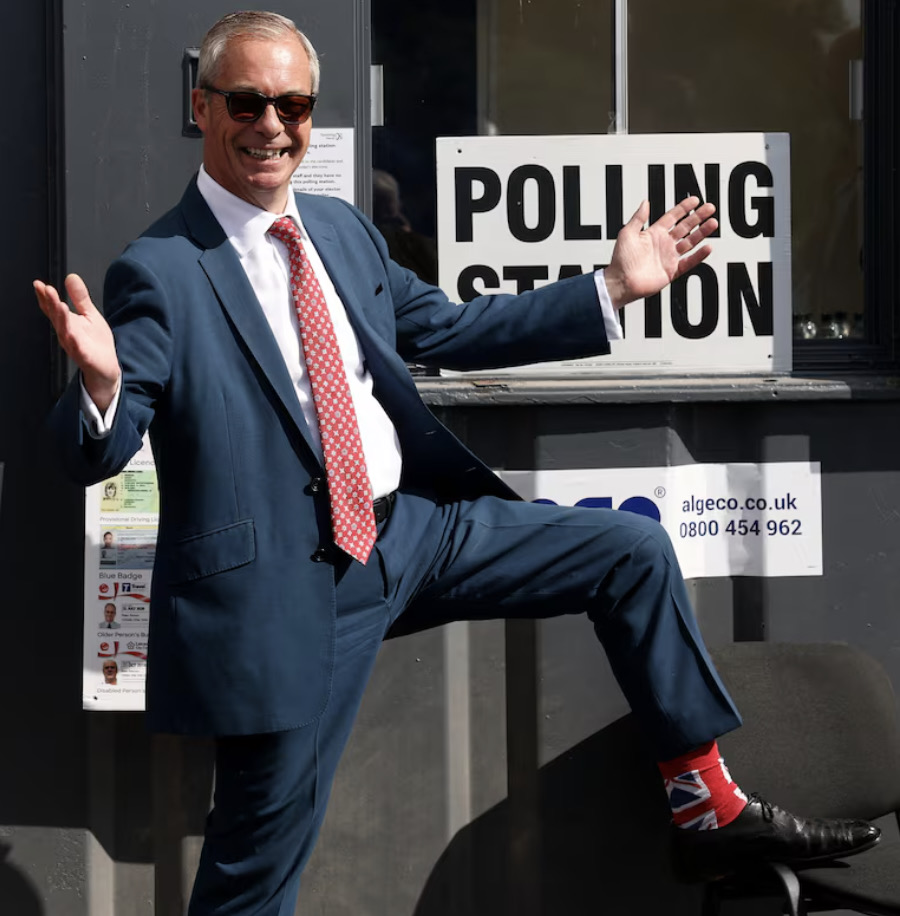
This week the political system finally stopped pretending that Sir Keir ’s difficulties are temporary.
The local elections did not produce many surprises, just confirmation. The public mood that had been detectable in polling, by-elections and Westminster manoeuvring for months, finally translated into hard electoral numbers. The result was not a sudden collapse, but something perhaps worse for Labour: the visible onset of a spiralling loss of authority with no obvious parachute.
Meanwhile, in the Gulf, Donald Trump demonstrated once again that military escalation carried out through branding exercises and TruthSocial declarations does not a strategy make.
Starmer’s vortex
With Parliament prorogued ahead of the local elections, attention focused on Labour’s prospects. Predictions ranged from “dire” to “existential” and the results largely landed within that range.
Reform UK gained approximately 1,450 council seats across England while Labour lost around 1,500. The Greens made substantial gains while the Conservatives performed slightly less catastrophically than some had feared. Wales moved decisively away from Labour, while the SNP retained control in Scotland despite copious signs of the SNP’s administrative incompetence.
The significance of the results lies less in the raw numbers than in the pattern they reveal. Labour is now losing support simultaneously:
- to Reform in post-industrial and lower-income areas
- to the Greens in metropolitan progressive seats
- and to abstention almost everywhere.
That is not a temporary polling problem. It is the fracture of the political bargain under which voters place their trust in politicians who espouse their interests.
The immediate reaction inside Westminster was equally revealing. Calls for the Prime Minister to resign emerged quickly from commentators, but Labour itself responded mainly with procedural delay. Cabinet ministers repeated versions of the same line:
“The electorate is telling us we have not moved fast enough.”
This explanation increasingly sounds like ritual incantation far, far out of touch with political reality. The electorate appears not merely frustrated with the pace of government, but deeply disenchanted with the Prime Minister himself. What the electorate are actually saying is:
“Get rid of Starmer. Now. Do not pass GO. Do not collect our votes.”
Succession manoeuvres begin
The most politically significant development of the week may ultimately prove to be Catherine West’s announcement that in the absence of a Cabinet-level intervention, she would herself attempt to gather the 80 MP nominations required to trigger a Labour leadership challenge.
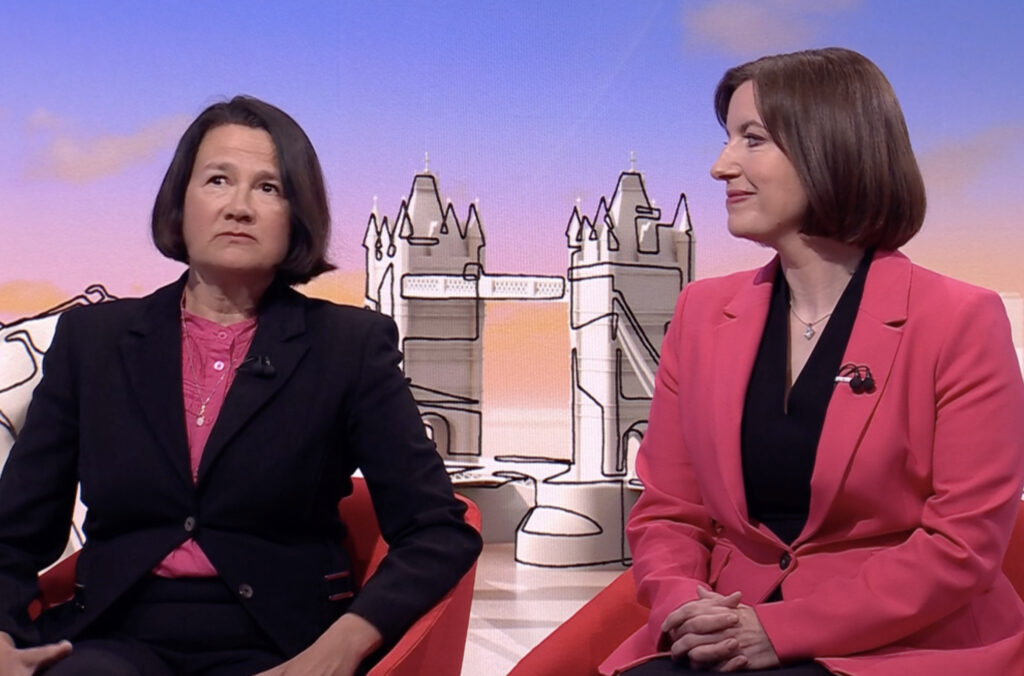
The importance of the move lies not in West herself — a relatively obscure junior ministerial figure (we only vaguely recall an Australian cycling shadow Sports minister) but in what her intervention implies about the mood inside Labour ranks. Leadership speculation has now moved from briefing and factional positioning into procedural territory. At the same time:
- Rayner remains constrained by the investigation of her property taxes
- Burnham remains blocked after Labour’s misguided refusal to allow his return via the Denton & Gorton by-election (although he might have lost!)
- Streeting continues to position himself carefully post-Mandelson, without openly moving: silence does not betoken inaction
- Miliband’s name circulates in desperate Westminster corridors, with the air of a party contemplating an act of absurdist self-harm.
None of this amounts to a formal coup attempt, but it clearly represents preparation for one. West is very unlikely to proceed with her challenge as she is unlikely to obtain the support of 80 current MPs, but her appearance from the woodwork demonstrates that the Prime Minister’s authority problem is no longer simply external. The Labour Party must now calculate how to replace him with the least disruption to the establishment of a new and more authentically “Labour” platform.
In reality, although Starmer has been a pants leader, the leader is only an emblem to attract and channel support. The real problem Labour faces is in its name and definition: “Labour” no longer squares with the party’s actions. Labour was founded by another Keir to represent the interests of the working-class. His successors, 126 years later, can not support the working class because they represent the interests of those who can not, or will not work. Labour is now the party of those who do not labour. Until the party and its leaders resolve this fundamental identification error it matters very little who the leader is.
Reform waits, still
One of the more striking features of the post-election atmosphere has been Reform’s quietness.
Despite the scale of its local gains, the party remains structurally weak inside Westminster itself. Weeks dominated at Westminster by government accountability, Labour leadership instability and parliamentary manoeuvring continue to expose the limits of Reform’s tiny Commons footprint.
Reform polls like a governing party while still operating institutionally as a pressure movement. Tice and Kruger seem competent, but rainmaker Farage cannot carry himself bodily to No 10 alone. Failing to declare a £5million gift from Chris Harborne at the earliest opportunity also betrays a Faragian blind-spot. Of course it was always going to come out. Just declare everything, whether or not it’s relevant, technically necessary, or entirely meaningless.
Reform feels as if they have indeed peaked. Too early certainly, but whether even their declining position can still drift in to the shallows outside No 10 remains to be seen. Accepting the defections of Jenrick, Braverman, Jenkyns and Berry was a tactical error born out of insufficiently clear political priorities.
Strait of chaos
Meanwhile, in the Gulf, Donald Trump announced the launch of “Project Freedom”, a naval escort initiative intended to reopen commercial shipping through the Strait of Hormuz (Julian Borger, The Guardian, 4th May 2026, “Donald Trump sends warships to break Iran’s Strait of Hormuz blockade.”)
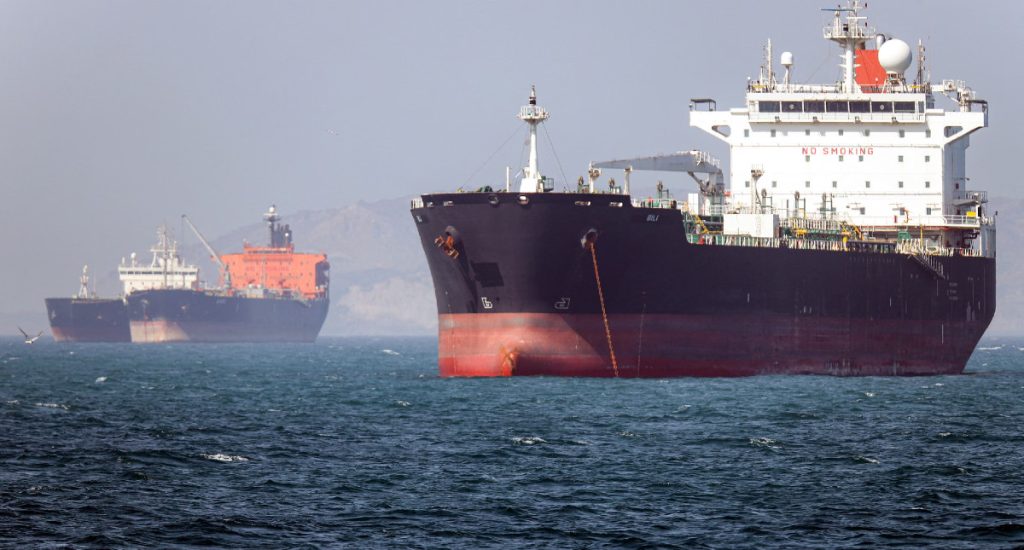
This bombastically named initiative immediately illustrated the gap between symbolic military signalling and logistical reality.
A substantial US naval and air deployment succeeded in escorting just two commercial vessels through the Strait, but the wider consequences were 48 hours of escalating instability involving missile interceptions, drone attacks and renewed threats to regional shipping. The UAE reported that one of its tankers had come under Iranian drone attack off Oman.
More importantly, it quickly became obvious that escorting anything close to the roughly 1,500 vessels currently stranded in the Gulf would require naval resources on a scale the United States cannot currently deploy or is ever likely to be able to (even with its bad allies!)
Reports that Saudi pressure helped force Trump into announcing a “temporary pause” in operations only reinforced the impression that the administration continues to oscillate between escalation and negotiation without a clearly settled strategic objective (Maira Butt, The Independent, 7th May 2026 “Saudi Arabia forced Trump to pause Project Freedom after suspending US access to bases and airspace.”)
In the absence of a settled strategic objective and in the context of the President’s increasingly detached from reality position (from an admittedly high starting base) something in the Gulf must give shortly. TWOP’s bet would be the collapse of the (imaginary in any case) negotiations and the resumption of Netanyahu’s War within the next 3-5 days.
Britain watches and absorbs
For Britain, the immediate implications remain economic rather than military.
Even partial disruption in Hormuz transmits rapidly into global energy pricing, regardless of the UK’s relatively modest direct reliance on Gulf energy supplies. Inflationary pressure returning just as earlier Ukraine-related shocks begin to unwind now significantly narrows the Treasury’s limited fiscal flexibility.
Meanwhile, European governments continue quietly adjusting to the assumption that the United States is now a less reliable strategic partner over the medium term. The consequences of that reassessment — for defence spending, industrial planning and alliance structures — are likely to outlast the current Gulf crisis itself.
What now?
The local elections did not remove the Prime Minister. Nor did they immediately produce a challenger, but the results have convinced much of Westminster that the current situation will not stabilise on its own. The tide has gone out. Now we must wait for the Cabinet to catch up with political reality.
Check us out on insta @theworldofukpolitics
Leave a Reply
You must be logged in to post a comment.