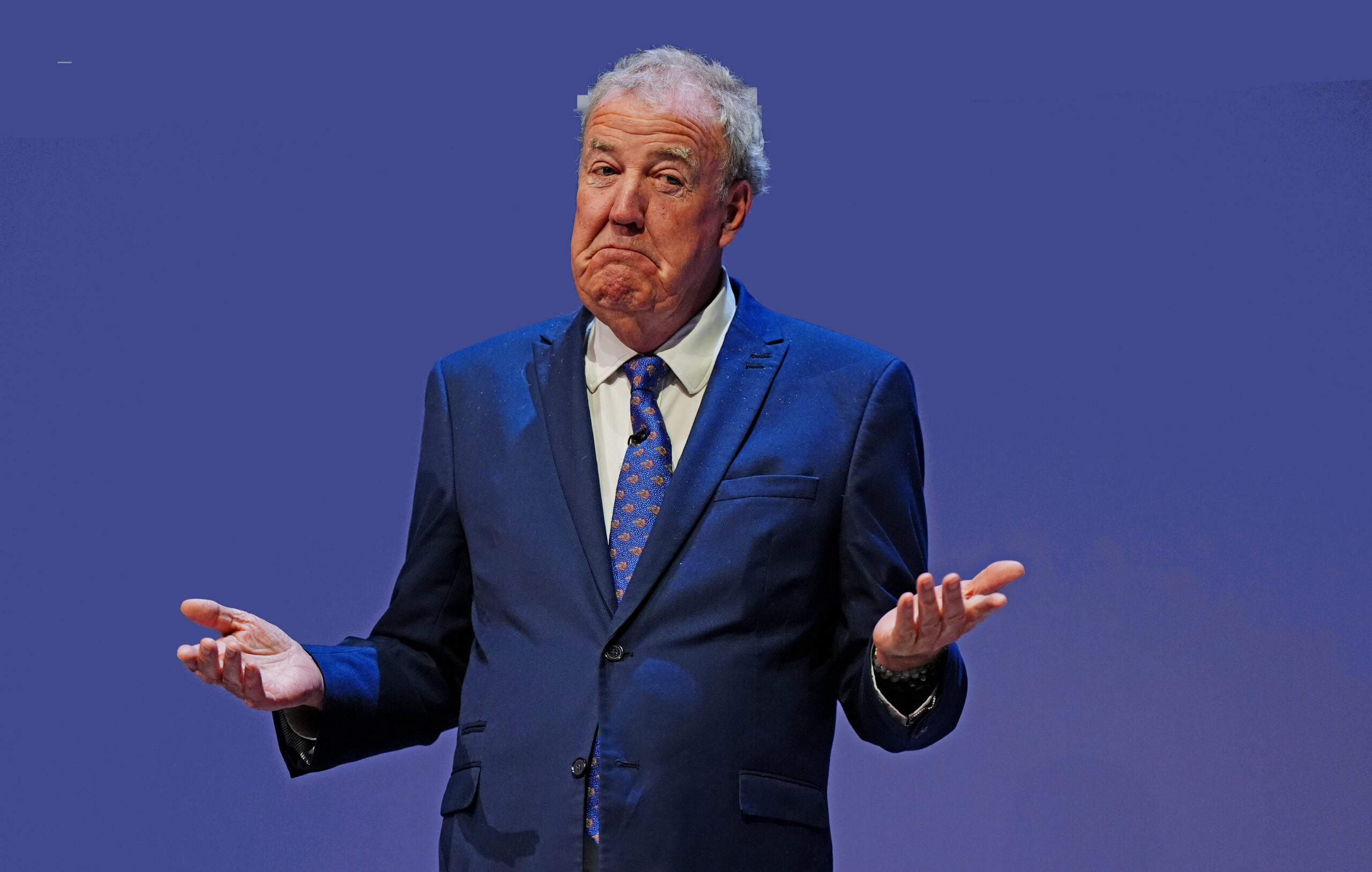
Is that light at the end of the tunnel?
Kemi Badenoch has been having quite a good year. The Conservative Party has not. Twelve months ago, Badenoch was still struggling to establish herself with voters and faced periodic speculation about whether her leadership would survive. She arrived in Birmingham in a much stronger parliamentary position. Her performance at PMQs has improved, the party is less obviously at war with itself and voters have a clearer idea of who she is.
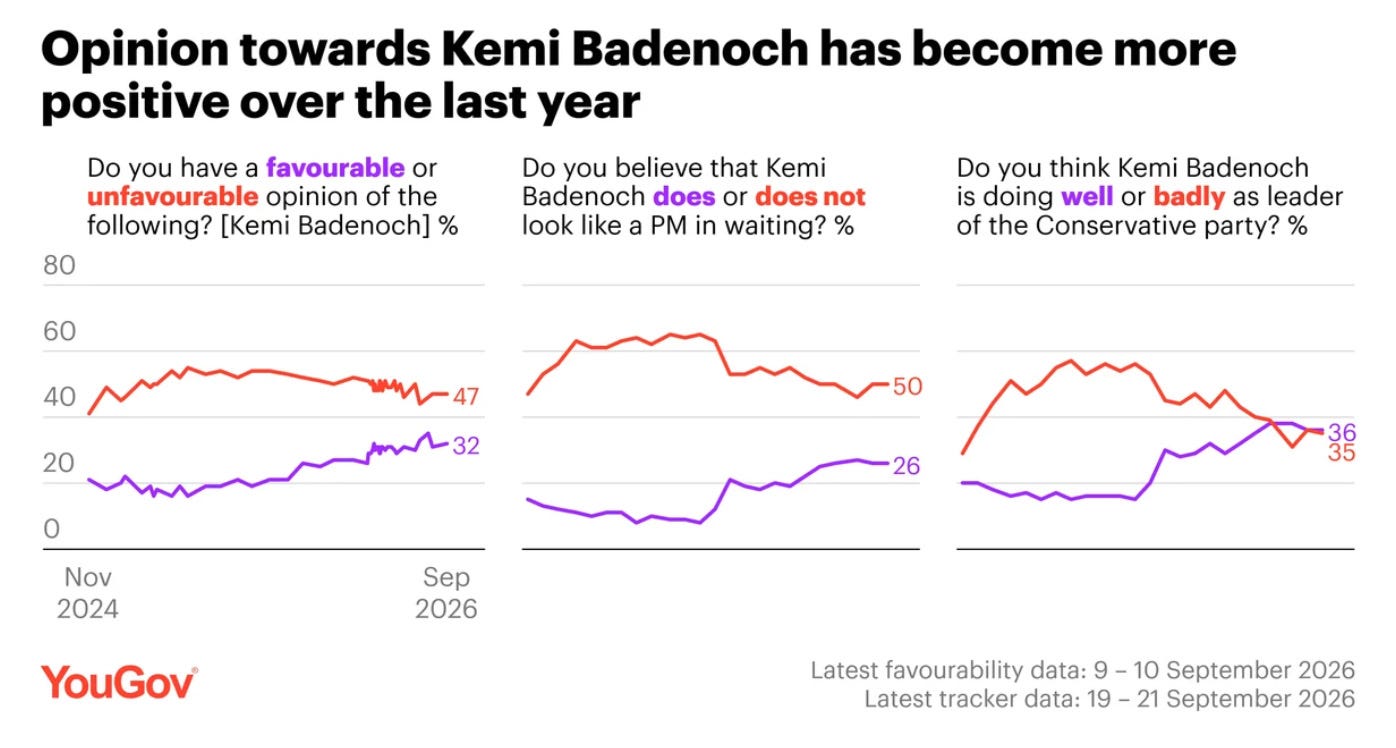
Recent polling reflects at least some of that personal recovery. Badenoch’s ratings have improved substantially and more voters are prepared to consider voting Conservative than they were a year ago. Sadly, for the Conservatives, rather fewer actually believe they might do so any time soon – a particular problem for the Tories wandering around the Birmingham Fringe (and there’s a thought!) murmuring “snap election” at every opportunity.
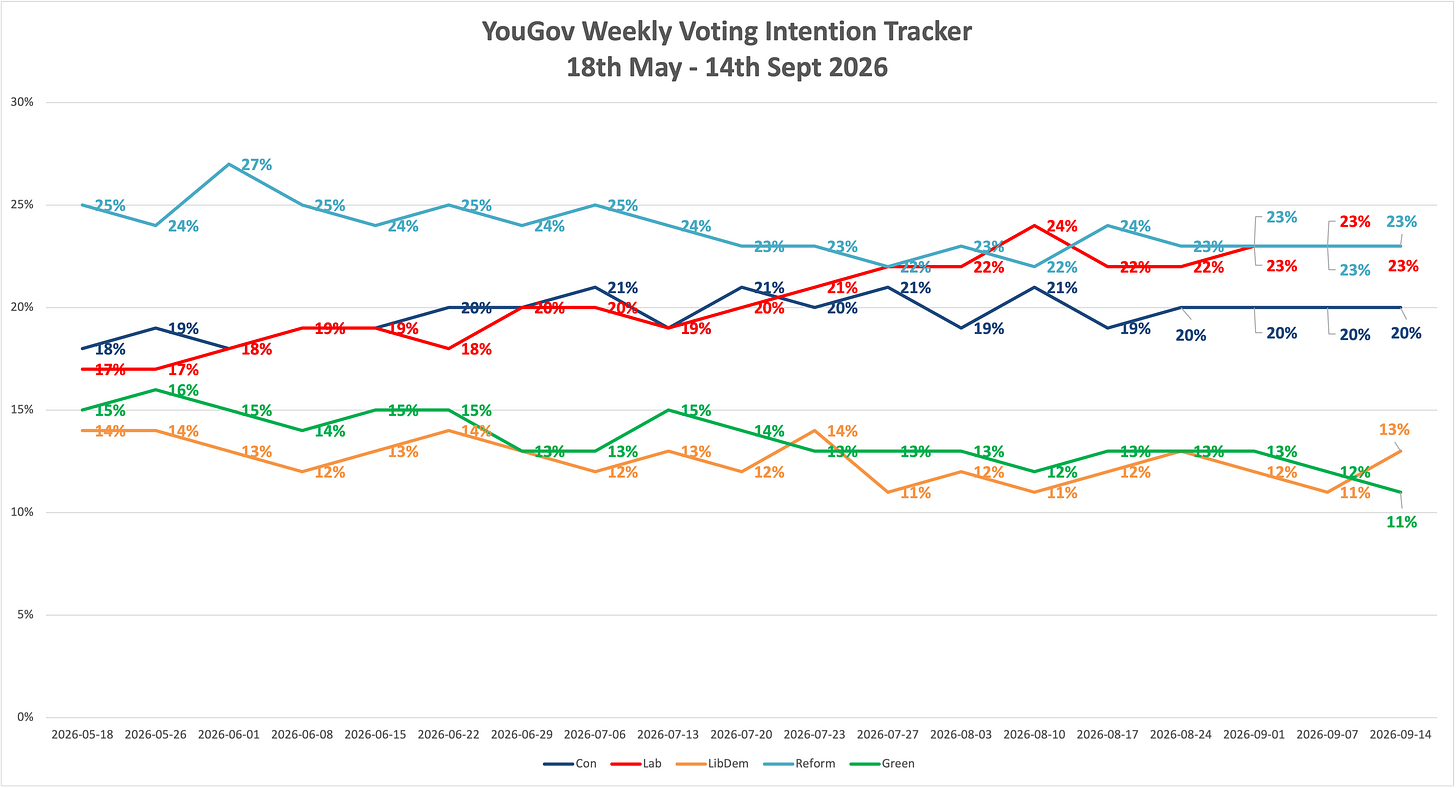
The latest YouGov voting intention polling has the Conservatives stuck on 19-20%, in recent weeks and are not capturing any significant upswing from the recent decling in Reform’s position even thought that has fallen from 25% in July to 22% in September . Other pollsters produce slightly different numbers (there is a broader conference polling review by More in Common), but the broad picture is remarkably stubborn: Reform has lost some of the momentum it enjoyed earlier in the year, but there has been no corresponding Conservative surge.
The Conservatives were in government for 14 years and left office after an extraordinary sequence of political disasters. Partygate, the collapse of public services and Liz Truss cannot simply be wished away by producing a new leader with better PMQ performances. Truss in particular remains difficult to forget and, for many voters, even harder to forgive.
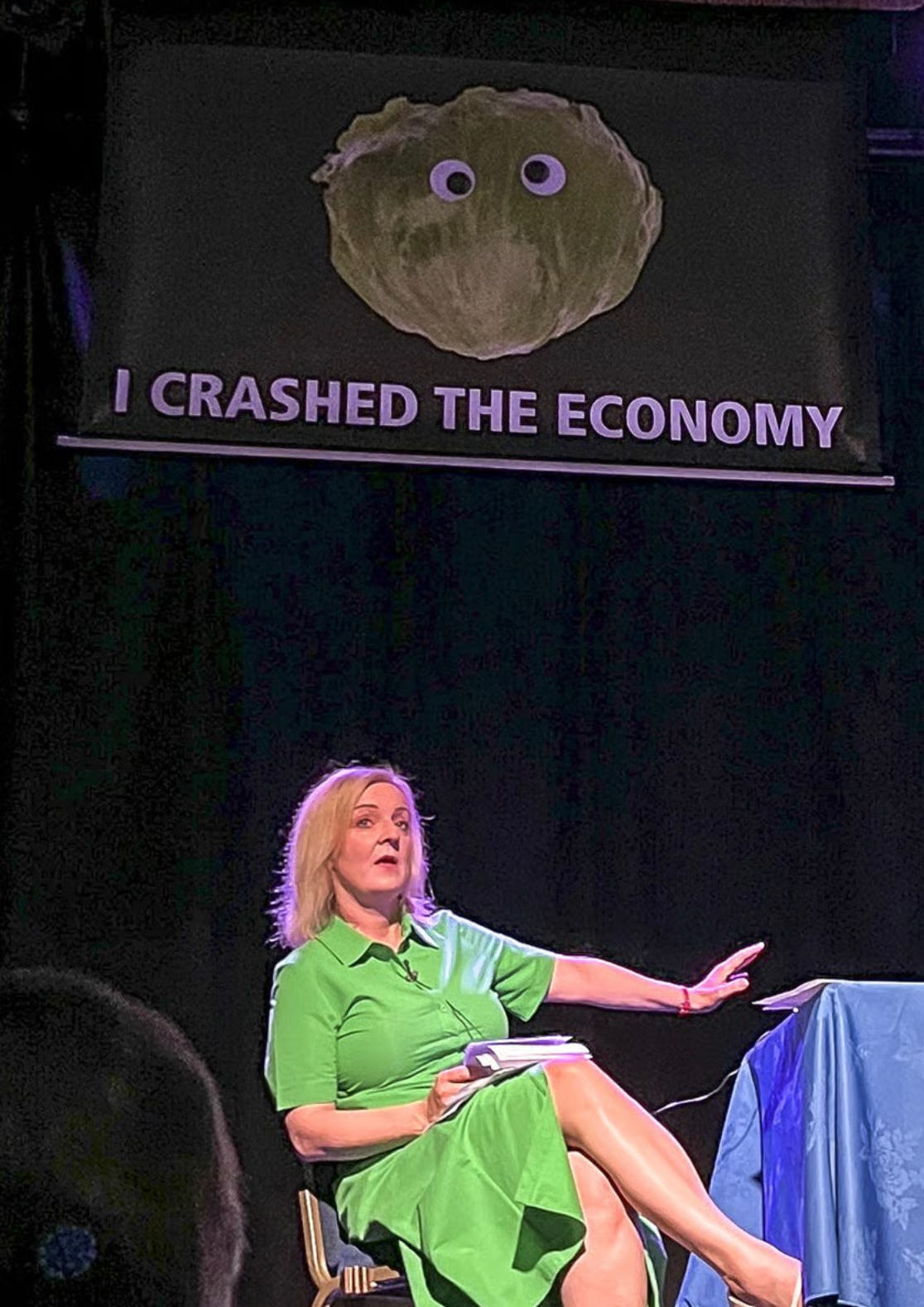
Badenoch therefore has two rather different jobs. She must persuade voters that they have misjudged her, while persuading them that the party she leads is no longer the party they rejected in 2024.
In Birmingham (and on the airwaves that she has dominated for the last two days) Badenoch is attempting to establish a “new-ish” Conservative philosophy. She has talked about escaping Britain’s economic “doom loop”, reducing the size of the state and removing regulations that she argues inhibit growth. Environmental bodies would disappear, Net Zero rules would be repealed, Labour’s Employment Rights Act would be reversed and planning restrictions loosened. There’s a 100-page philosophical tome with 148 footnotes to prove it. Lest anyone get too discombobulated however there is a dollop of more traditional Tory fare on offer in Birmingham: prisons (build ‘em!), welfare (cut it!), immigration (shame!), crime (stop it!), lower taxes (always!) and less government (please!)
Of particular interest to TWOP was trailing of a brilliant policy initiative to halve employers’ National Insurance contributions for employees aged 21-24. Someone’s been reading TWOP’s blog clearly! If we could now just engineer governmental adoption as a bit of pre-emptive gun-spiking that would be brilliant.
Whether voters who rejected the Conservatives so dramatically two years ago will believe that the party which presided over much of this expansion of government is best placed to reverse it is another matter.
Cracked Dome
Sadly, however, someone dreamed up “Britannia Shield” which sounds as though it should be a trophy for third-tier football clubs, but which is far less amusing and has actually sent TWOP in to a bit of a tizzy.
The Conservatives propose spending £10 billion over ten years on an integrated missile and drone defence system covering critical infrastructure, military bases, overseas territories and, depending on which interview one listens to, possibly rather more of Britain. Initially this was sold, including by Mrs Badenoch herself, as, “in essence, a British Iron Dome”, modelled on Israel’s missile defence system.

But as TWOP listened to Mrs Badenoch’s R4 Today interview on Tuesday morning Badenoch was busily explaining that it was not actually an “Iron Dome” at all. That was a journalistic misinterpretation: in fact it was only ever a “Britannia Shield.”
This is a late and unconvincing attempt to dodge the all-too-obvious and entirely reasonable criticism that Britain has a different geography, a different international position, a different defence posture and (mostly) different enemies than Israel.
Israel is a small country facing persistent short-range rocket and missile threats from next-door neighbours who are committed ideological adversaries. Britain is an island protected by the sea, NATO and an independent nuclear deterrent, with neighbours who may be politically exasperated by British “individualism”, but who are hardly likely war adversaries (although, of course, never trust the French etc.) Britain faces a very different mixture of ballistic missiles, cruise missiles, drones and long-range threats than Israel, or indeed Ukraine. The most obvious threat post-Fairford seems to be homemade bombs and drones thrown together by recent immigrants working on behalf of a distant adversary. Those threats are certainly NOT going to be intercepted by any “Iron Dome” lookalike.
Britain undoubtedly needs better air and missile defence. Ukraine and the Middle East have demonstrated that relatively cheap drones and missiles can pose serious threats to expensive infrastructure. There is a perfectly serious argument for investing more in radar, interception and protection of critical sites. However, calling it “Britannia Shield”, comparing it with Israel’s Iron Dome and attaching an arbitrary £10billion price tag does not constitute that argument. It is unexpurgated nonsense.
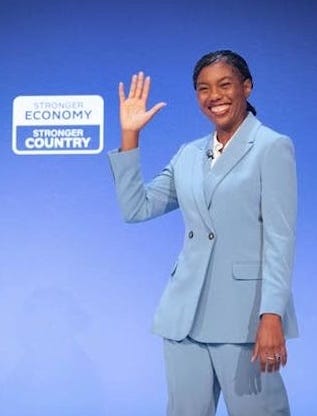
“Britannia Shield” risks making the advances Badenoch has scored personally this last year seem unjustified. She has spent a lot of time and effort to be taken seriously. “Britannia Shield” is a (bad) joke that risks undoing that hard work. Wednesday’s Leader’s Speech had better be good.
Revised on 7th October 2026 to add:
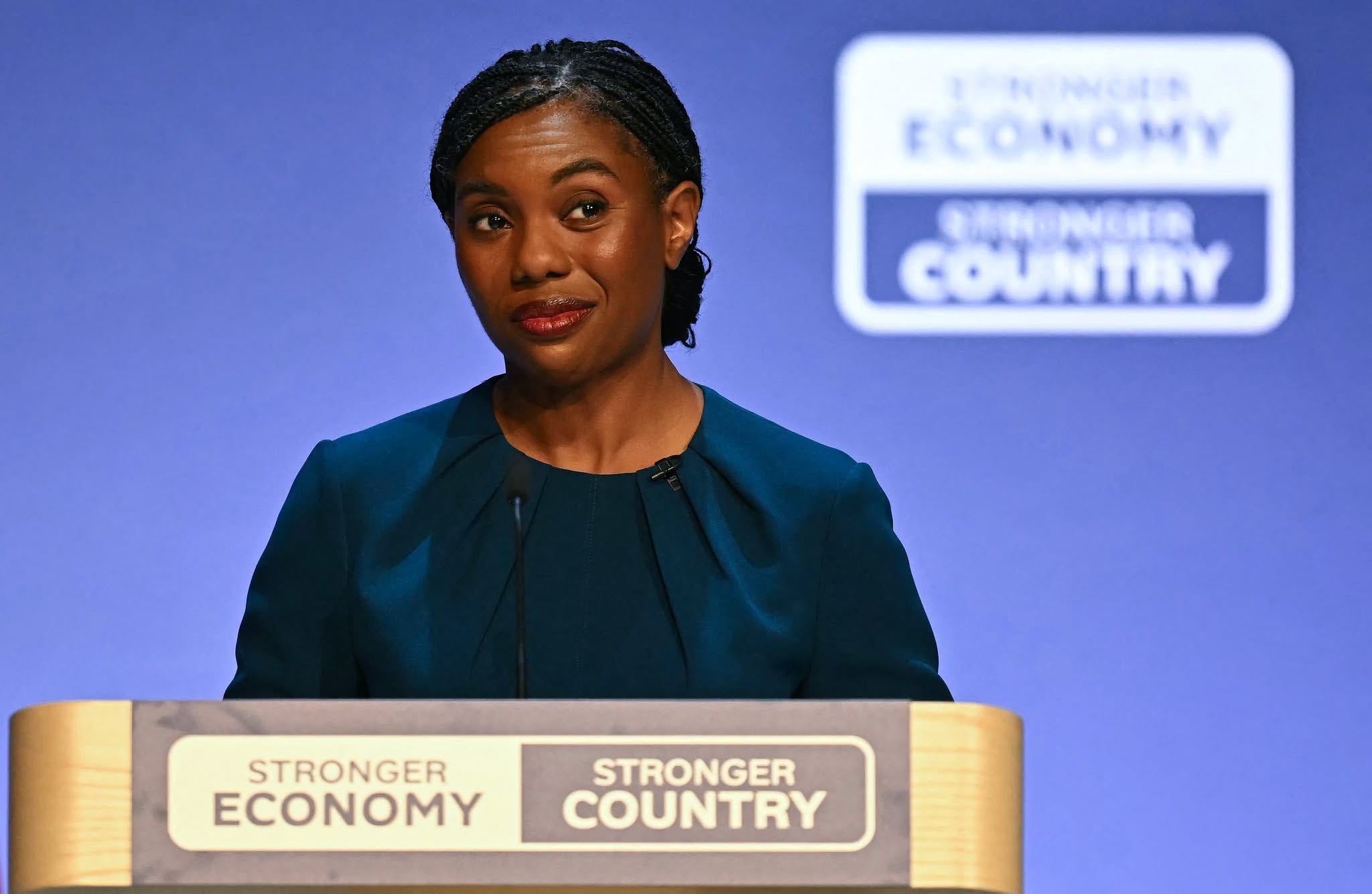
Badenoch gave a confident closing speech on Wednesday, reflecting a leader now in obvious command of her party. It ran a little long and produced few surprises, largely because its principal announcements had been so extensively trailed beforehand.
Cutting employers’ NI contributions on under-25s and more generally taking the state off the back of taxpayers were namechecked, but the commitment to remove family homes and up to a further £1million from the Inheritance Tax net landed with rather less impact after days of advance billing than it might have done. Nothing noteworthy on immigration and asylum, nothing to go beyond 3% on defence spending by 2030 (except the blasted “iron dome” knockoff.)
The Leader of the Opposition was quite muted about The King of the North, perhaps calculating that his “good bloke” vibes repel direct character-based attacks, but she did remind the gathered Faithful that Burnham had been content to be Jeremy Corbyn’s Shadow Home Secretary, eliciting a sustained groan. There was also an interesting moment when Badenoch pointed out, with rising incredulity, that Lucy Powell, the new Education Secretary had said “there is an overfocus on academic outcomes in schools” which actually generated a real laugh from the conference floor. It does seem quite absurd.
However, Mrs Badenoch really hit her stride when she came on to Reform, delivering repeated blows to Nigel Farage, the moral and legal failings of the coterie who surround him, the moral inadequacies of Nathan Gill and George Cottrell, before turning to Suella Braverman whose questioning of whether black people can ever truly be considered “English” was lambasted and derided in equal measure from a position of inviolable and understandable certainty. If it had been Mrs Badenoch’s intention to rule out the possibility of any pre-election deal with Reform this buried any such idea in a very deep ditch. Jenrick, meanwhile, appears unlikely to be forgiven and may prove a useful object lesson in the consequences of incompetent treachery for some time to come.
Away from Reform, Badenoch exuded good vibes. Different vibes from Burnham’s, certainly, but vibes nevertheless: enthusiastically received in the hall and carefully targeted at the Conservative faithful beyond it. The policy omnibus contained no knockout blow and at least one conspicuous nonsense: “Britannia Shield” remains a highly dubious defence proposal draped enthusiastically in a Union Flag, but likely to reduce the credibility of James Cartlidge in the eyes of defence cognoscenti.
The more aggressive anti-Reform rhetoric is significant, but Badenoch cannot rely on further Faragist implosions to repair the Conservative vote. Birmingham demonstrated that she has substantially solved her first problem: the Faithful now seem convinced that she is their anointed leader. Her second problem is considerably harder. Voters may increasingly recognise and even warm to Badenoch, but there remains remarkably little evidence that they have forgiven the party she leads. After 14 years in government, Liz Truss and the electoral catastrophe of 2024, perhaps that was always going to take longer than one good conference, particularly while the electoral Right remains locked in a knife-fight of its own.
Kemi has come back. The Conservatives have not. Not yet.
But they did give us a splendid update on the Bayeux Tapestry.

Leave a Reply
You must be logged in to post a comment.