
It has been James Vance Week, or for fans of Édith Piaf, “Semaine Je Regrette Tout.”
With Westminster largely silent while Parliament was in Easter recess, British politics spent the week reacting to events elsewhere. The most consequential development was the quiet collapse of the Chagos deal, but this seemed like small beer compared to the American Vice-President’s dash for air miles in the absence of any materially thought-through strategic initiatives from the USA.
Chagos Island deal is deaD
After Charlie Falconer’s son mucked up on 25th February and said that HMG was “pausing discussions” it was confirmed that the UK is indeed abandoning the Chagos deal after all (Joe Pike, BBC News, 10th April 2026, “UK shelves Chagos deal after Trump opposition.”)
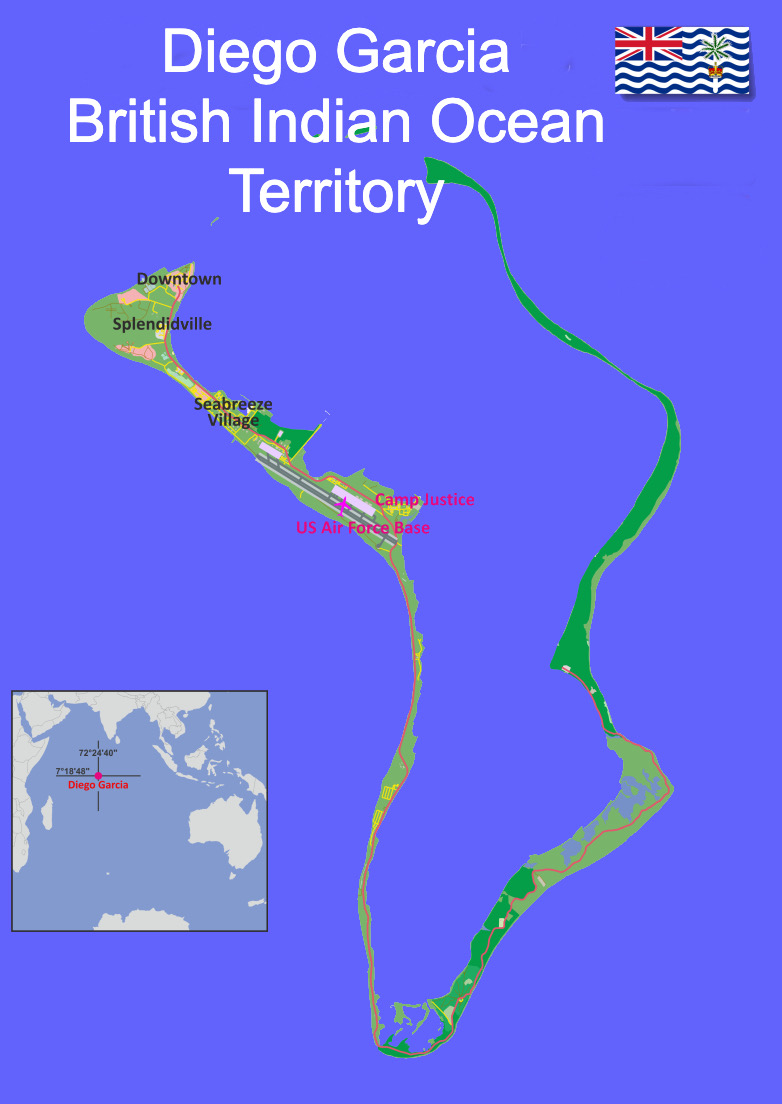
The “Diego Garcia Military Base and British Indian Ocean Territory Bill” reached its final stage in January 2026, but it will not be passed now, apparently because the UK did not receive letters of confirmation from the USA and so will timeout when Parliament prorogues. There are no plans for the government to reintroduce it in the King’s Speech for the next session of Parliament.
The eagle-eyed may note that there was no mention of the need for such letters from the USA in the Treaty text itself or in the now-abandoned Bill. So, the lack of letters may either be some final piece of legalistic flummery, or what is often known as a “fig leaf.” Whatever the case, the Treaty is not being completed. Quel dommage (TWOP is obviously in a French mood, from which it will stage a sudden retreat shortly.)
HungarY
While MPs were “reconnecting with their constituents” over the Easter break, Vice-President James Vance was reconnecting with the world. “JD” started by heading to Hungary, where parliamentary elections are taking place today (Sunday 12th April.)

This election should settle Viktor Orbán’s fate, unless of course Eastern Europe’s most Göring-like Prime Minister puts Project “A Nagy Lopás” in to operation – “The Big Steal” for non-Hungarian speakers without immediate access to Google Translate.
However, in a startlingly obvious case of election interference, compounded by blithely oblivious hypocrisy, Vice-President Vance lent his support to embattled President Orbán, whose foreign policy aligns so well with the Kremlin and MAGA. Vance, apparently with a straight, if bearded face, said:
“I want to help as much as I possibly can the Prime Minister as he faces this election season which I believe is happening in just about a week…”
and went on, just for good measure:
“What has happened in this country, what has happened in the midst of this election campaign, is one of the worst examples of foreign election interference that I’ve ever seen or ever even read about.”
Really, you can’t make this stuff up. “Ignorant American makes embarrassingly loud intervention on whistle-stop of Europe” meme goes here.
IraN
Vance departed Budapest abruptly on Wednesday 8th April to return to Washington very briefly before travelling to Islamabad on Friday 10th April for the ceasefire discussions between the United States and Iran on Saturday 11th April. The resulting diplomatic choreography suggests an administration still negotiating escalation and de-escalation simultaneously. One wonders if it is not possible for the V-P to be briefed securely in Paris or Ramstein (where Air Force 2 stopped anyway.) SCIFs and Zoom and all that jazz.
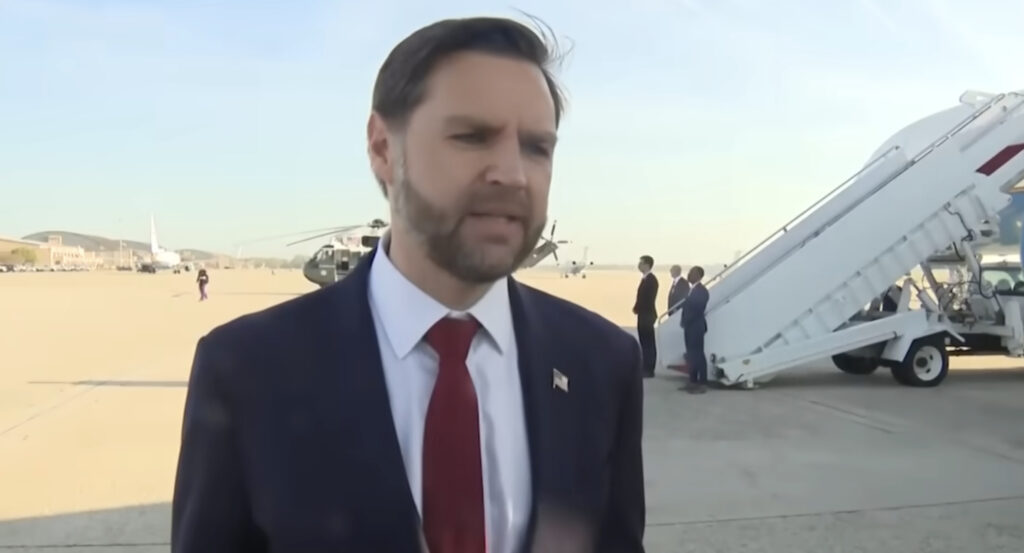
For those who want a blow-by-blow account of events in the Iranian War there is an excellent day-by-day timeline maintained at Wikipedia.
However, in summary, on Tuesday 7th April Trump tweeted that “a whole civilisation will die tonight” unless Iran‘s “different, smarter and less radicalized minds” surrendered.
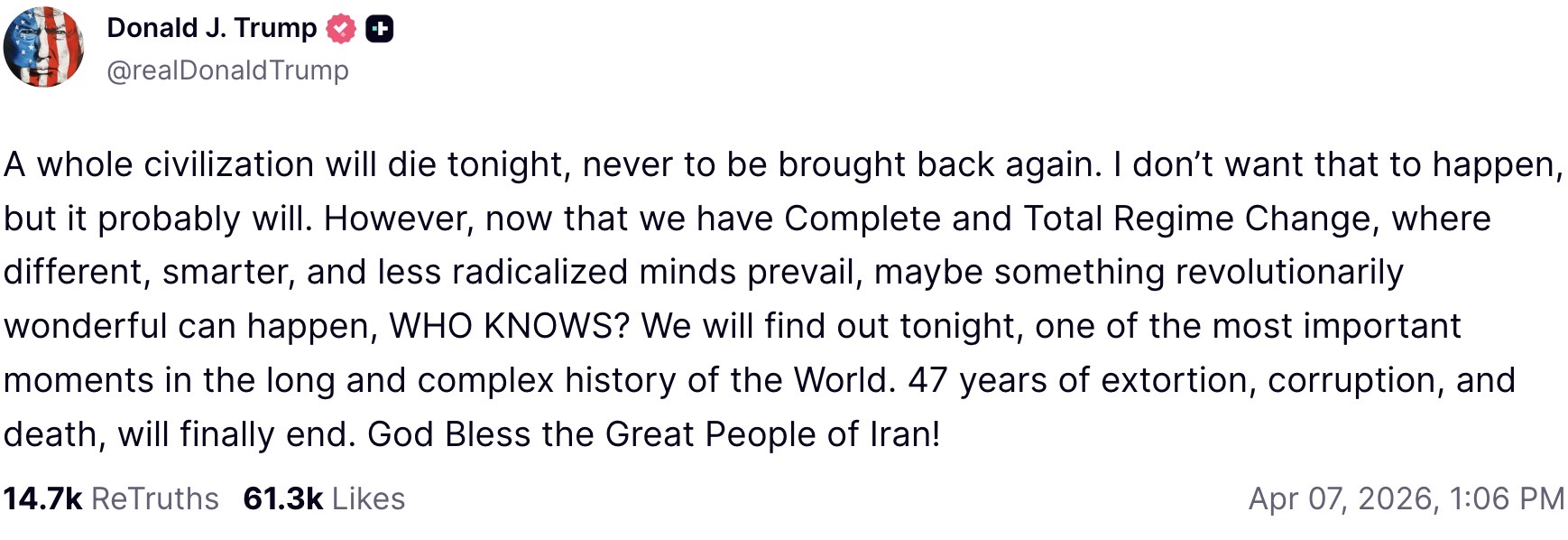
As the Strait of Hormuz remained tightly closed and the clock ticked down to Trump’s 8pm EST deadline, Shehbaz Sharif, the Pakistani PM tweeted that a two-week ceasefire had been agreed (Andrew Roth, The Guardian, 8th April 2026, “US and Iran agree to provisional ceasefire as Tehran says it will reopen strait of Hormuz.”)
Of course, there were problems, not least of which that Pakistan’s tweet appeared to have been drafted by, or agreed with, the White House before being posted, including a specific mention that the ceasefire would include Lebanon. With curious predictability this seems to have encouraged Bibi to unleash the largest wave of bomb and missile strikes of this conflict against Beirut and Southern Lebanon overnight on 8th April, striking 100 different targets and killing more than 250 people. Just Bibi’s way of highlighting that he had not agreed to the terms of the US-Iranian ceasefire.
Despite mutual accusations of ceasefire breakages, the continuation of the effective closure of the Strait of Hormuz and increasing pressure being exerted on Netanyahu to stop attacks on Lebanon, clocks ticked down to Pakistan’s invitation to the US and Iran to start peace talks in Islamabad on Saturday 11th April. The 70-strong Iranian delegation including Foreign Minister Abbas Araghchi and Parliamentary Speaker Mohammad Bagher Ghalibaf touched down in Islamabad late on Friday night and James Vance, who might have been a bit jet-lagged after his Budapest jaunt, arrived in Islamabad on Saturday morning.
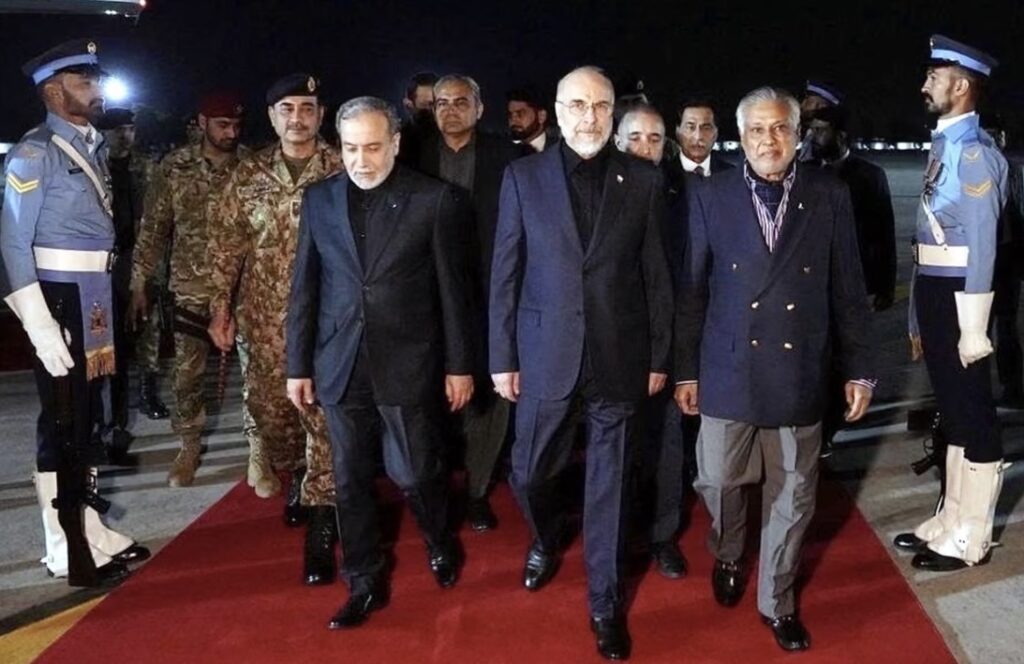
The #IslamabadTalks marked the first serious diplomatic engagement since the closure of the Strait of Hormuz and represented a notable Pakistani achievement in arranging the first face-to-face senior leadership encounter between Iran and the USA since 1979.
Face-to-face negotiations were a remarkable achievement in themselves, but after 21 hours the talks ended without any settlement. The process of getting to these talks also made clear that Iranian threats to the Strait of Hormuz are actually more effective than any number of nuclear bombs and that American diplomacy now operates through a shifting network of intermediaries on the basis of “gut feel”, rather than a stable alliance framework with agreed objectives and tactics.
Announcing the failure of the talks, Vance said “We need to see an affirmative commitment that [Iran] will not seek a nuclear weapon and they will not seek the tools that would enable them to quickly achieve a nuclear weapon.” (Lyce Doucet, BBC News, 12th April, 2026 “After Iran talks falter, the big question is what happens next?”) It was, however, inevitable, that the Iranians would hew to their long-established line that they should not be prevented from doing anything that their status as a (1970) signatory of the Non-Proliferation Treaty allowed.
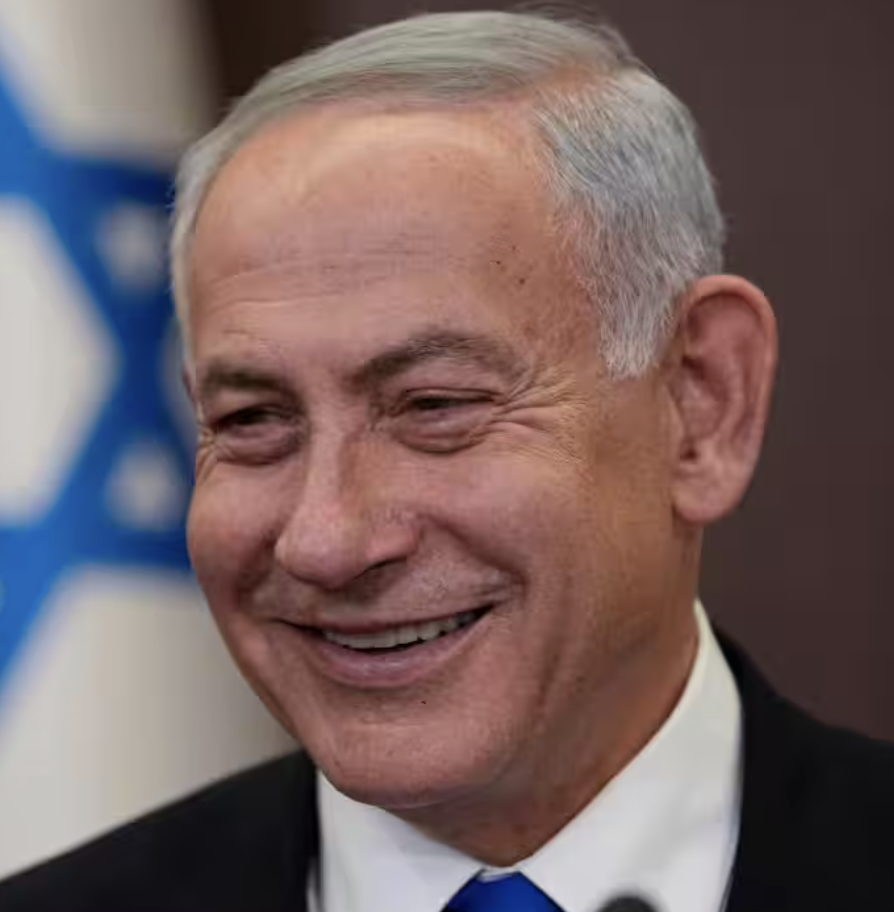
In the absence of any agreement, let alone the “surrender” Donald Trump dreams of, the US has little other option than to consider a more structural and (whisper it!) “agreed” approach to re-opening the Strait of Hormuz. The now revived threat to shipping through the Strait will no doubt see further increases in global energy prices. It is not clear that the US is likely to find it any easier to negotiate with its former “allies” than it does with Iran. One suspects that Bibi is having a great Sunday and will celebrate with a little extra bombing of Beirut and Southern Lebanon.
Back in Blighty
Junior Doctors’ Strike: soggy blancmange

The Junior Doctors’ six-day strike got underway on Tuesday 7th April. “Underwhelmed” seems to have been pretty much the general reaction across the nation, other than at St Thomas’ Hospital, which is conveniently close to Westminster for pickets, placards and politicians, making it easier for the BMA to summon rent-a-mob.

Wes Streeting sounded depressed about it all on the Sunday morning TV shows on 12th April and wearily said that he thought “It’s time for me to meet the organ-grinders.” Streeting had noted that the deal that he had agreed with the doctors’ representatives had then been rejected by “extremists” on the main BMA May Ball Junior Doctors’ Committee who had refused to discuss this with the Health Secretary.
Who would have thought that the Junior Doctors’ Committee would be packed to the gunwales with hardcore extremists?
Lovely Boating Weather
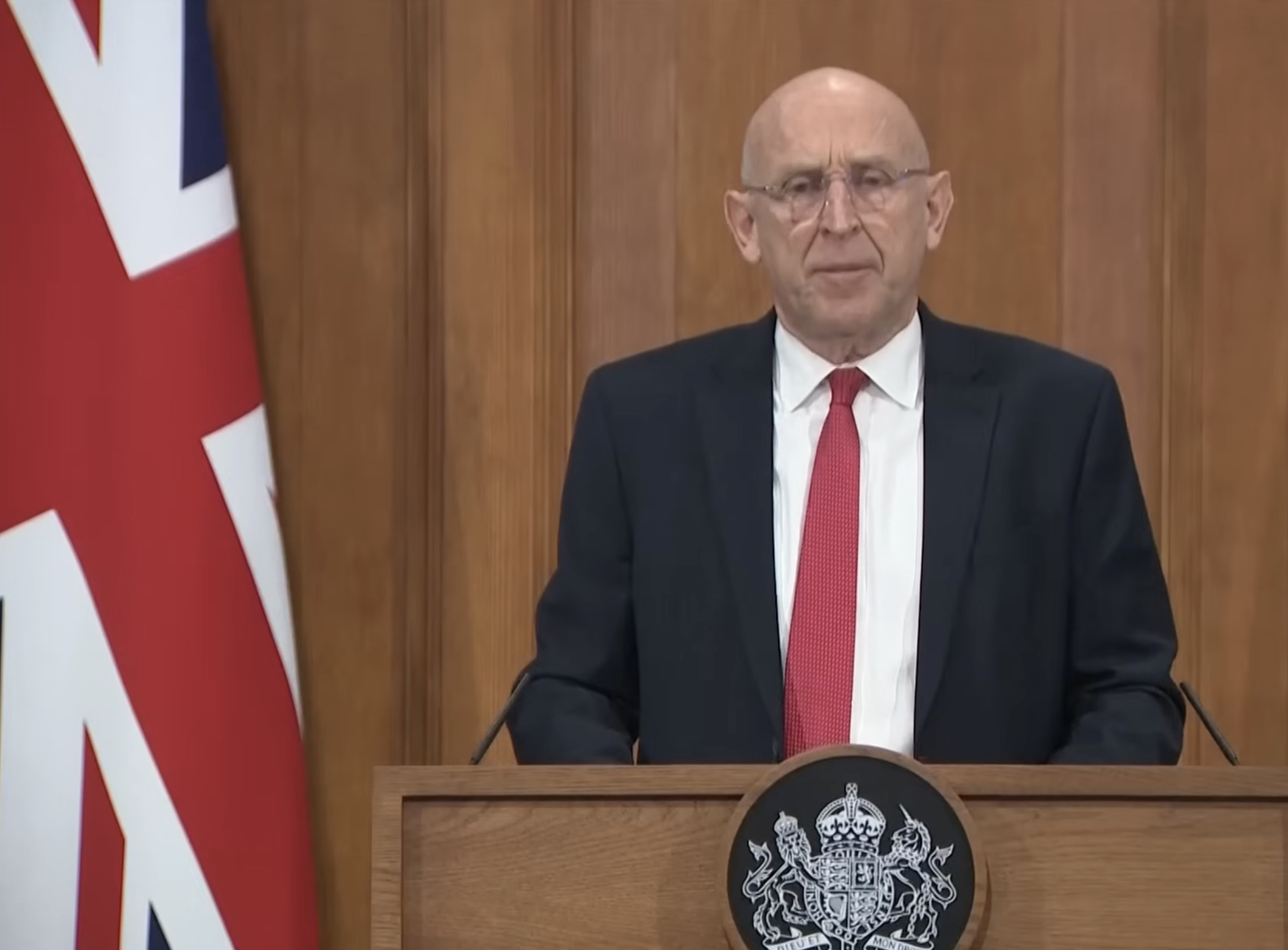
Defence Secretary, John Healey announced (serious face, Union Jack in background) that a Russian Akula-class nuclear-powered submarine and two deep-sea “research” vessels had been detected hovering over transatlantic cables in Britain’s “Exclusive Economic Zone”(Peter Walker, The Guardian 9th April 2026, “UK navy foiled Russian submarines surveying undersea cables” https://www.theguardian.com/uk-news/2026/apr/09/uk-navy-russian-submarines-undersea/-cables-north-atlantic).
Luckily, a Royal Navy warship of undisclosed type (bath toy perhaps?) and a P-8 Posiedon maritime patrol aircraft were able to track the Russian crafts and make them aware (?sonar buoys maybe?) that they had been noticed and tracked until the Russian craft left the area. This successful detection and monitoing episode does lead to a suspicion that other Russian forays in to British waters go undetected and undeterred.
This possibility was radically highlighted by HMS Mersey being tasked on three occasions between 29th March and 7th April to track the Russian frigate Admiral Grigorovich, landing ship Aleksandr Shabalin and the Kilo-class submarine Krasnodar through the Dover Straits, apparently escorting vessels from the Russian shadow fleet. (Navy Lookout, 9th April 2026, “Royal Navy monitors shadow fleet vessels but Russian naval escort complicates boarding dilemma.”)
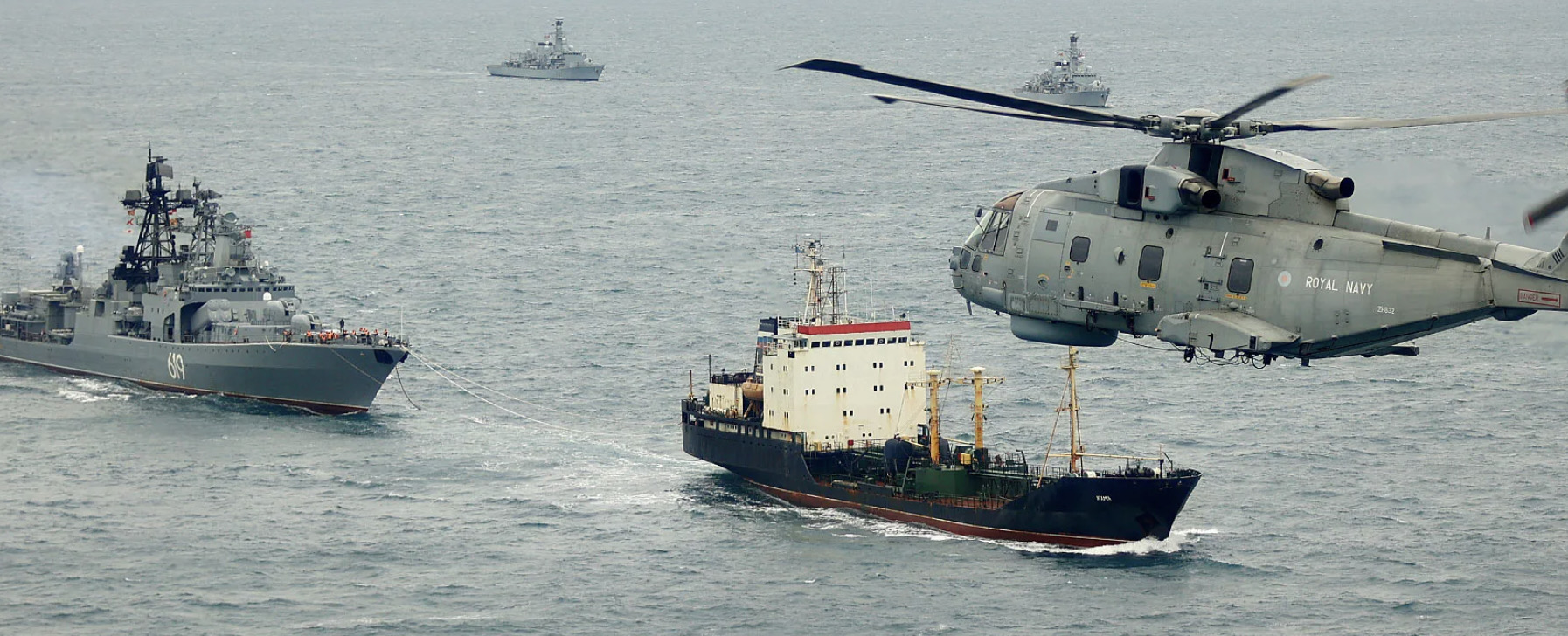
The appearance of RFS Admiral Grigorivich must itself be a response to the PM’s announcement on 25th March, just three weeks ago, that “UK Armed Forces and law enforcement officers will be able to interdict vessels that have been sanctioned by the UK while transiting through UK waters.” (HMG Press Release, 25th March 2026, “Shadow fleet set to be interdicted in UK waters in latest blow to Russia.”)
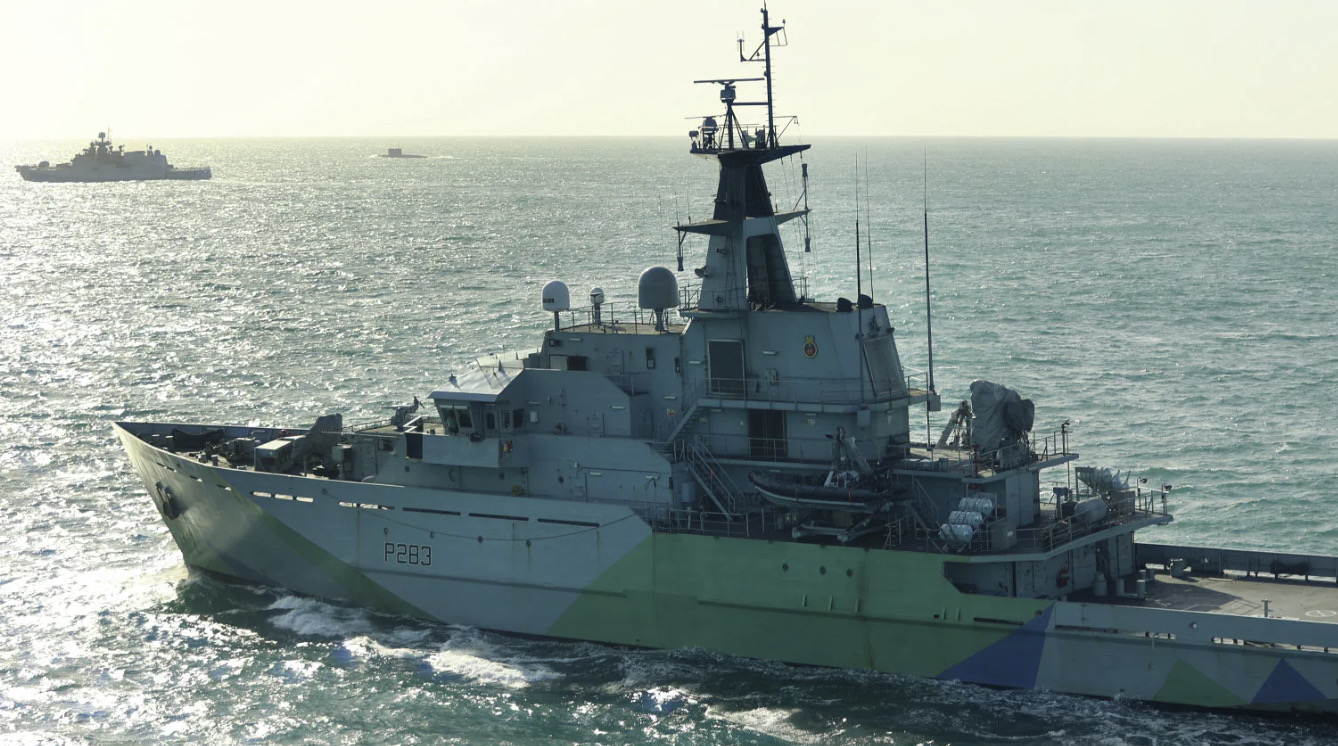
HMS Mersey is itself an aging (2003) fishery protection vessel armed with one Oerlikon 20mm cannon and two (yes, two!) “general purpose machine guns.”
One wonders if this show of force would be sufficient to discourage the 125m frigate RFS Admiral Grigorivich, replete with 100 mm A-190 naval gun, 8 Kalibr anti-ship missiles, 3S90M surface-to-air-missiles, double 533 mm torpedo tubes and RBU-6000 rocket launchers, from engaging the full might of the Royal Navy? One suspects not.
A further sign of Royal Navy readiness problems was the withdrawal of HMS Dragon from its Cyprus defence duties after its onboard water system failed, just 14 days after arriving on station.
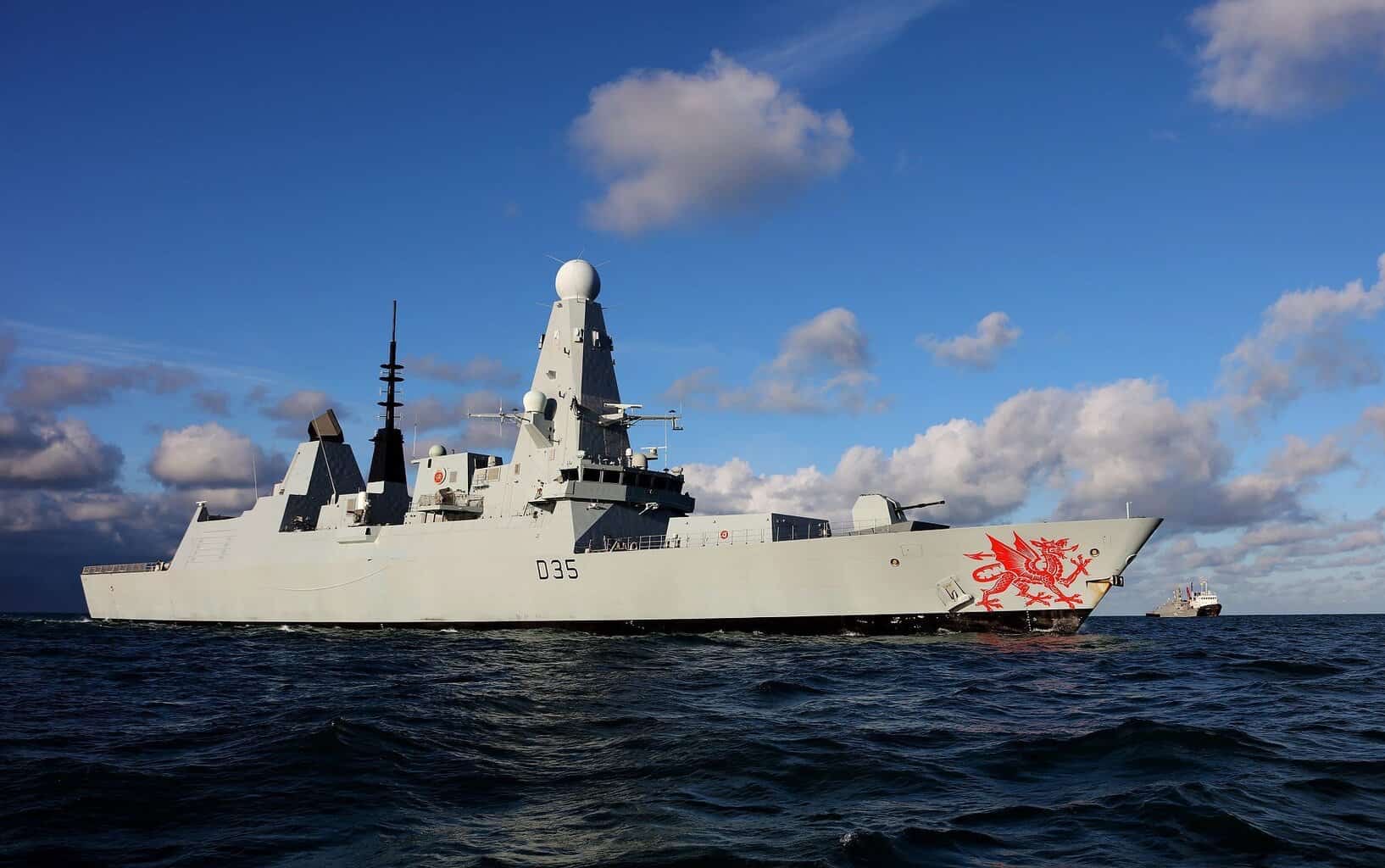
The water system failure is, however a less significant symptom of the readiness issues that have bedevilled this (6 only ever built) class of destroyer (Defence Express 9th April 2026 “HMS Dragon Breaks Down…” ) HMS Dragon, the fourth of the Daring Class destroyers was commissioned in April 2012 and has spent more time having its incorrectly specified powertrain replaced and miscellaneous faults repaired than it has spent at sea over the last 14 years.
The UK must do better. Britain still possesses global commitments, but increasingly operates with only regionally-scaled tools and many of those tools need sharpening.
The events of the past week did not demonstrate British weakness so much as British dependence. The Chagos reversal showed how quickly territorial policy can change when Washington changes its mind. The monitoring of Russian vessels showed how limited UK naval capacity has become. The diplomacy of the Iran ceasefire showed how far decision-making has shifted beyond London’s reach. None of these developments were dramatic on their own. Taken together, they delineate a country adjusting to a vastly reduced strategic role, that it has not yet even defined. The UK is in reputational freefall.
The UK is discovering the limits of its ability to shape events inside alliances it still depends upon.
Check us out on insta @theworldofukpolitics
Leave a Reply