Papers & Processes.
The week began with the next episode of the already boring Mandelson affair. After the drama of the Humble Address, the release of the files related to his errant Lordship’s appointment proved simultaneously more mundane and yet more revealing than expected. Meanwhile, the Iran war/ “special military operation” dominates the international agenda, forcing Starmer and HMG to look more decisive abroad than they seem at home, even as familiar domestic problems creep back into view from beneath the outsize shadow of Trumpian tomfoolery.
The Mandelson Papers: less scandal, more incompetence
The government released the first tranche of documents relating to Keir Starmer’s ill-fated December 2024 appointment of Lord Mandelson as HM Ambassador to Washington. The expectation had been that the files might produce a smoking gun. Predictably the papers, passed for Commons and public consumption by the Intelligence & Security Committee, confirmed a chain of incompetence sadly typical of modern British governance: hurried vetting, incomplete scrutiny and a Prime Minister prepared to accept reassurances conveyed by advisors with a dog already in the race that should probably have raised the PM’s spidey sense (he clearly has none.)
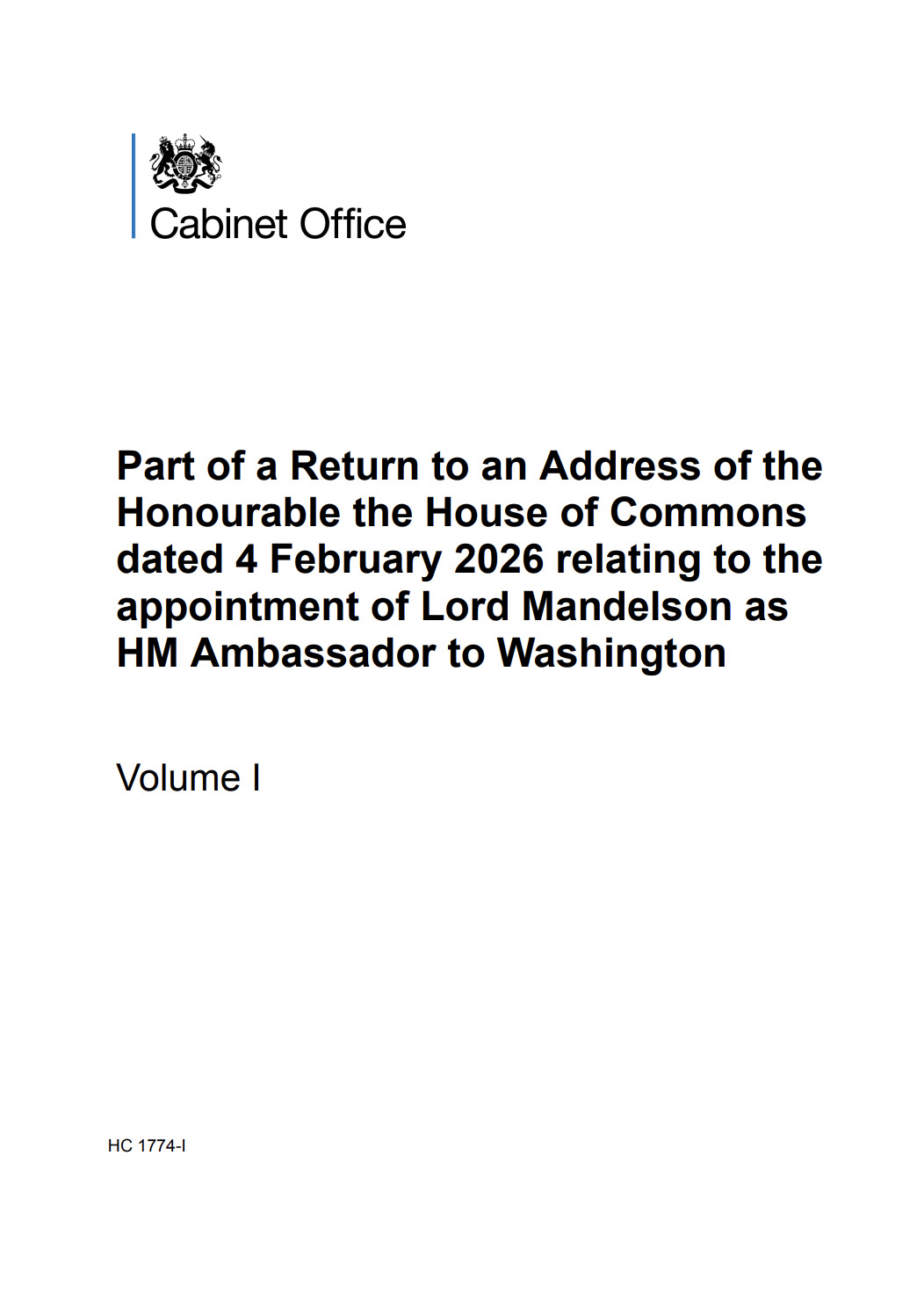
The government released the first tranche of documents relating to Keir Starmer’s ill-fated December 2024 appointment of Lord Mandelson as HM Ambassador to Washington. The expectation had been that the files might produce a smoking gun.
The Guardian reported that internal warnings about the “reputational risk” of Mandelson’s links to Jeffrey Epstein were circulated before the appointment, but Sir Keir’s beloved process just continued along its predestined path (Jessica Elgot, The Guardian, 11th March 2026, “Starmer overruled warning of ‘reputational risk’.”)
Other reporting noted that Mandelson received classified briefings before his vetting process had been completed, a sequence that critics argue inverted the normal order of caution (Elizabeth Piper, Andrew Macaskill & Alistair Smout, Reuters, 11th March 2026, “UK files reveal concerns on Mandelson’s appointment.”)
The documents released also shed light on the mechanics of the ambassador’s dismissal: Mandelson initially sought a large settlement of £547,000 for loss of office, but ultimately accepted £75,000 (ITV News, 11th March 2026, “Mandelson sought £500k payout after sacking over Epstein links – but got £75k,”) The documents seem to suggest only minimal involvement from the PM in the negotiation of this reduced package, but it does seem extraordinary that in the context of how upsetting Sir Keir reports that he had found Mandelson’s “betrayal”, the PM did not intervene to say “there will be no exit compensation!” The picture forming is of a Prime Minister who is simply uninterested in taking decisions, or understanding political implications – not usually unimportant abilities in a PM!
The “scandal” these files outline is not one of corruption, but of judgement. Firstly, Mandelson’s lack of judgement about the appropriateness of maintaining a relationship with a sex offender, but also Sir Keir’s judgement in relying on a flawed and superficially “matey” process to appoint someone who had been sacked from ministerial office not once, but twice already and with knowledge flagged up in that process of Mandelson’s continuation of his relationship with Epstein.

The only people who seem to exhibit any judgement in this sorry “process” are National Security Advisor Jonathan “weirdly rushed” Powell, previously Sir Tony Blair’s Chief of Staff and Sir Philip “reservations” Barton, GCMG OBE, formerly Head of the Diplomatic Service and previously Private Secretary to none other than Sir Tony Blair. There’s something of a theme emerging there.
The Epstein shadow will not quite disappear
The Mandelson story continues to echo through Labour’s internal politics. Allies of Angela Rayner pointed out that she warned privately against the appointment when it was first considered, a reminder that the controversy might have been avoided had internal scepticism been taken more seriously.
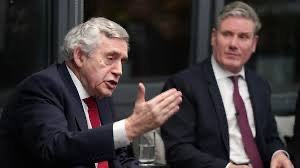
calling the relationship with Epstein a betrayal of public trust
and urging reforms to the way senior appointments are scrutinised.
Such interventions illustrate the strange afterlife of the affair: no longer the dominant political story, but still quietly eroding confidence in the government’s and very specifically the PM’s judgement.
Iran and the limits of cautious leadership
At the same time, international events continue to impose themselves on Westminster. The Israeli-American strikes on Iranian targets forced the UK government into a posture of reluctant support for its allies, while emphasising that it is not directly participating in offensive operations. (A note obviously went round from some hare-brained PR advisors telling all ministers to use the roundabout and weirdly unspecific phrase “British planes are in the sky today” rather than setting out any substantive UK military commitment. A very obvious piece of avoidance.

The political interest here lies less in the Middle East strategy itself than in what the episode reveals about the PM’s leadership style. The government has insisted that it had prepared for possible escalation by reinforcing British forces in Cyprus.
But the embarrassingly slow mobilisation of naval assets and the reactive tone of official briefings have raised questions about whether that preparation was as extensive as initially suggested and seems to have consisted of “Oh let’s send out some extra kit to Cyprus and pray the Americans don’t do it!” and clearly did not include “…and we had better get a ship or two ready to send out to the Gulf and the Eastern Med just in case.”

Foreign policy crises have a habit of compressing decision timelines. Governments that prefer procedural caution find themselves forced into unwanted clarity.
Parliament: assisted dying seems to be dying
While international news dominates headlines, Westminster continues its slower institutional battles. The Terminally Ill Adults (End of Life) Bill — commonly known as the assisted suicide dying bill — appears increasingly unlikely to pass in its current parliamentary session.
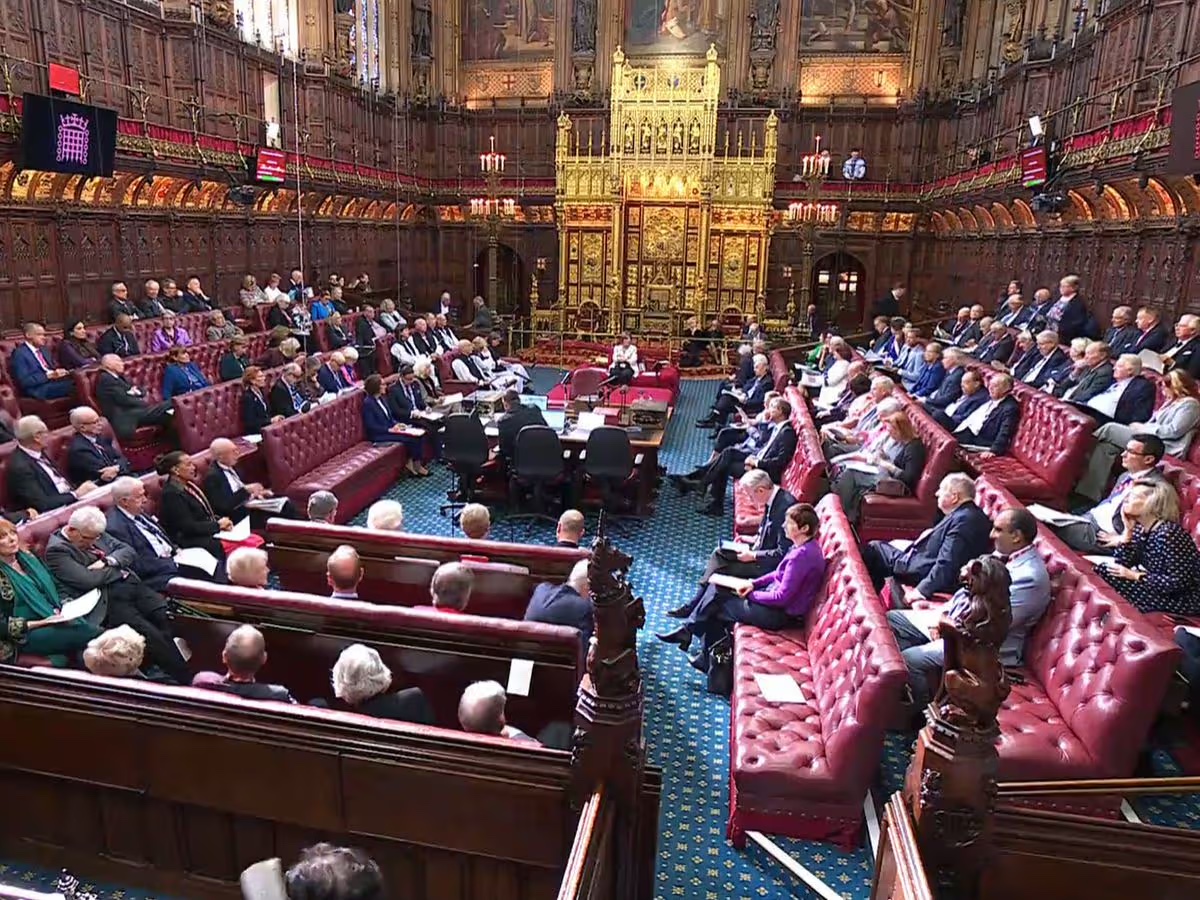
The legislation cleared the House of Commons, but has struggled to progress through the House of Lords, where lengthy committee scrutiny and hundreds of amendments have slowed its advance to the point where supporters fear it will simply run out of time (Rowena Mason, The Guardian, 26th February 2026, “Why have efforts to bring in assisted dying law been thwarted?”)
Although this legislation received significant public support and a Commons majority in its early passage, it was not picked up as government business and as a result has been derailed by a Lords process that absorbed the political momentum until failing procedurally. This therefore becomes another Starmer judgement issue: a Bill that the PM voted in favour of in the Commons and which could have been adopted as a government measure as a “conscience” vote has been left to flounder until failure, rather than subject the Government to the necessity of declaring a position and working for its success. Familiar?
The broader pattern
Taken together, the week’s events illustrate a recurring feature of 21st century British politics. Major crises, geopolitical conflict, reputational scandals and constitutional debates arrive quickly and dominate the headlines. However, the underlying issues that shape the UK’s long-term direction return inescapably to a familiar state of inertia in which decision-making is avoided until the point of irrelevance is reached.
The Mandelson files revealed administrative weakness more than political villainy. The Iran crisis demands decisive foreign policy positioning, but leaves little room for domestic reflection. The assisted dying debate risks being quietly buried in parliamentary procedure because the Government are unwilling to wager any political capital on a subject it reports its leader as positive about.
British governance is now dominated by “Drift, drift, drift!” rather than the ability to identify achievable goals, because that might risk sailing in to choppier waters: and this with a majority, as of March 2026, of 158. That is unimpressive.
Check us out on insta @theworldofukpolitics
Leave a Reply