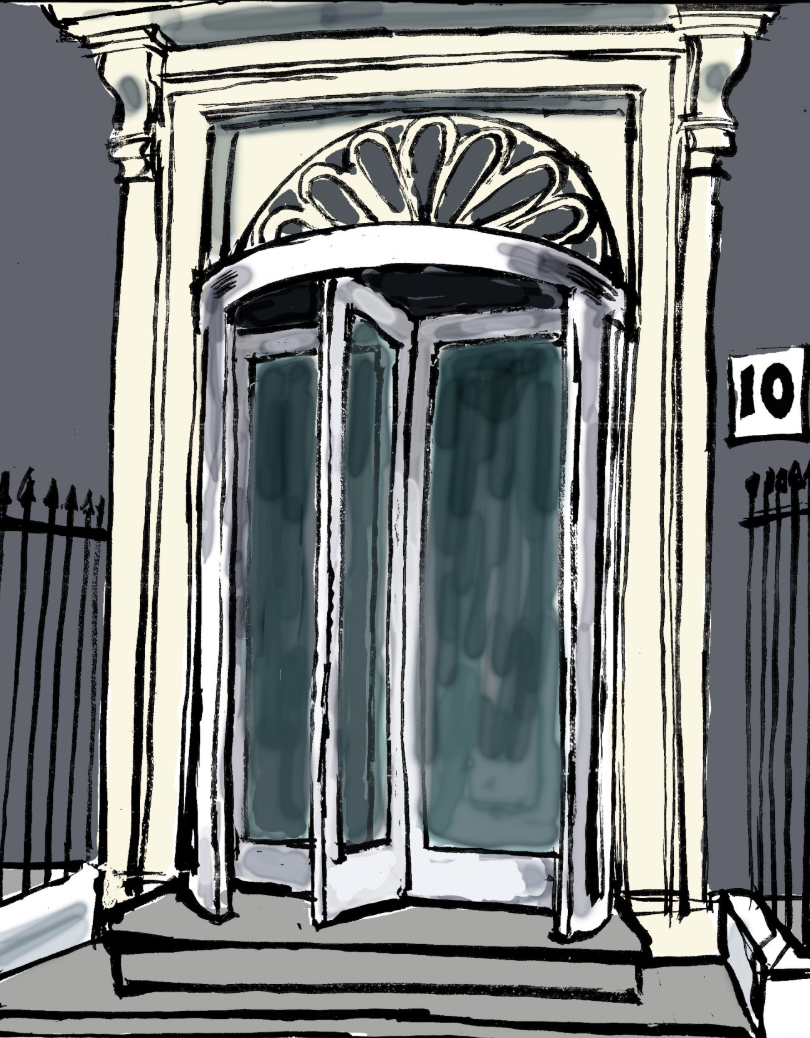
Succession is not a strategy!
Starmer does not seem to have even tried to stabilise the No. 10 operation, he merely changed the cast list. The resignation cycle that began with Morgan McSweeney continues to read less like renewal and more like a government discovering, in public, in real time, that it does not have a coherent theory of control.
Tim Allan’s departure as No 10’s Director of Communications presented a live symbol of government personnel churn, with the sense that No 10 is still rebuilding its own basic machinery while trying to look like it is running the country (Peter Walker & Pippa Crerar, The Guardian, 9th February 2026 “Keir Starmer’s director of communications, Tim Allan, steps down”)
Forced or not, it was startling that the resignaton of the Communications Supremo was itself rather poorly communicated.

The big set piece this week was the civil service leadership reset. Dame Antonia Romeo was appointed Cabinet Secretary, the first woman to hold the role, replacing Sir Chris Wormald after a remarkably short tenure (Jessica Elgot & Alexandra Topping, The Guardian, 19th February 2026, “Starmer appoints Antonia Romeo as head of civil service.”)
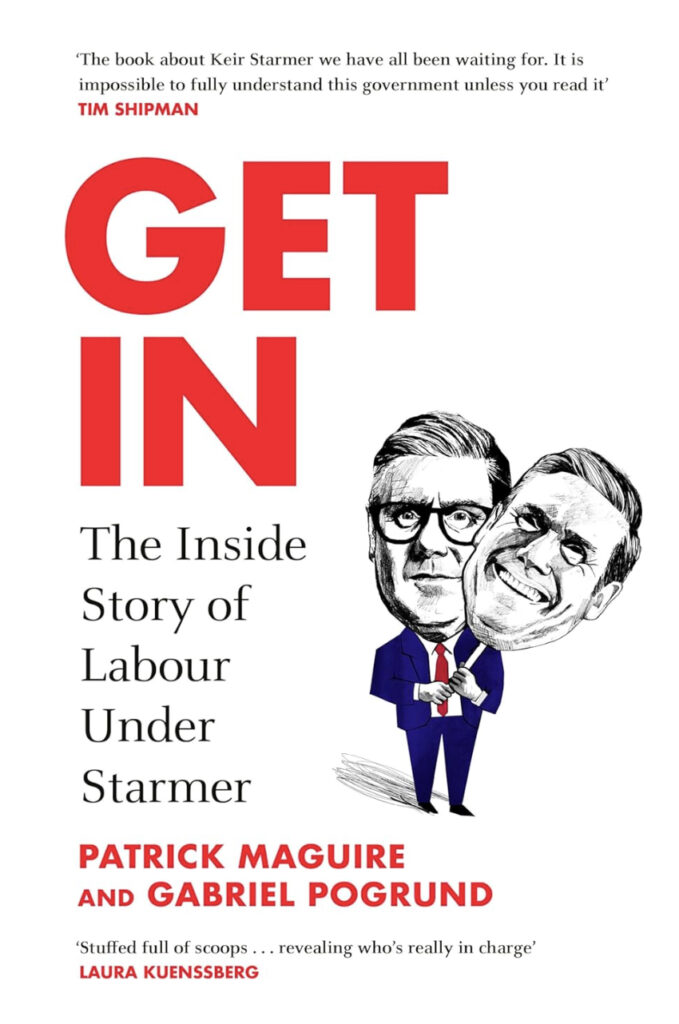
Patrick Maguire and Gabriel Pogrund, when not being investigated by Morgan McSweeney’s mates at Labour Together, set out some of the detail of Mandelson’s appointment in their book “Get In: The Inside Story of Labour Under Starmer”, Bodley Head, London, 2025. Suffice to say that their narrative does little to flatter Sir Keir for whom clearly no decision is ever final.
The sub-plot is payoff politics. Reporting on Wormald’s severance package, which required explicit prime ministerial sign-off because it exceeded normal thresholds, does not help the government’s aspirational branding as a ruthless reform machine (Beckie Smith, Civil Service World, 18th February 2026, “PM green lights six-figure payout for Chris Wormald.”)
The larger questions have not gone away. Westminster has shifted from survival to succession without pausing at strategy. Even when the cast changes, the script does not, even though most of the government’s bigger beasts seem to be only ad libbing anyway.
By-elections and the politics of curated anger
The Gorton & Denton by-election continues to act as a pressure cooker for wider disaffection. (Joe Pike, BBC News, 15th February 2026 “Labour face tough fight in Gorton and Denton by-election.”) But pollster Prof Rob Ford makes the most insightful summary of the problems of assessing this constituency’s likely vote: “… a tale of two Manchesters on opposite edges of Labour’s unravelling electoral coalition”. (Prof Rob Ford, UK in a Changing Europe, 17th February 2026 “Gorton and Denton: A three cornered fight in a seat of two halves.“) In this constituency that “unravelling” will turn mostly Green and should secure Zack Polanski a victory that the Greens will use as an effective cudgel to tear off more of the hard-left vote from Labour nationally.

The Sunday Guardian’s interactive on Prof Matt Goodwin set out a portrait of the modern Reform approach: high online presence, limited local visibility and a campaign designed to perform grievance rather than resolve anything, Jonathan Liew, The Sunday Guardian, 22nd February 2026, “Matt Goodwin is running: the search for Reform’s elusive byelection candidate.”) The article, dripping with disdain, confirms that The Guardian really don’t like Matt Goodwin, but there is a useful corrective on Goodwin’s own blog.
The Conservatives and Mrs Badenoch have been having a good Mandelson. It defies TWOP understanding that they should have chosen possibly the most dismal by-election candidate ever foisted on an unsuspecting constituency. To say that retired policewoman Charlotte Cadden is unlikely to connect with many voters in this Manchester seat is the understatement of the century: loss of deposit klaxon sounded. It is hard even for hardened political commentators to endure the whole of the Manchester Evening News’s hustings. (Energy 0; Sense 0.)
Broken Britain and institutional capacity
The most substantive institutional story this week has been the fallout from the High Court ruling on Yvette Cooper’s inspired proscription of Palestine Action. The judgement was delivered on 13th February, but still continues to reverberate as an embarrassing reminder that ministerial muscle requires procedural discipline. (Haroon Siddique, The Guardian, 13th February 2026 “UK Palestine Action ban ruled unlawful, in humiliating blow for ministers.”)

This matters not because Palestine Action make much sense, but because it is another example of a government that chases announcements and is then pulled back by basic governance tests. Broken Britain is not only infrastructure and services, the fundamental lack of decision-making calibre, the habit of doing the headline first and the homework later.

The latest U-Turn on allowing councils to opt out of the 7th May local elections is another good example of this. Simple legal advice, once consulted and only in the face of a Reform UK court case, suggested that the idea of cancelling elections because of future administrative redesign (and not at all to try to disguise Labour’s polling decline) was just basically unlawful. Cue ridiculous climb-down. No-one in the Labour “machine” thought of the politics of how this would look? Guys, this is just schtoooopid. (Joe Pike, BBC News, 17th February 2026 “The fallout from Labour’s local elections U-turn is not over yet“.)
No Direction
This week had lots of action, but very little direction. No 10 kept swapping personnel as if the problem is staffing rather than strategy. Reform continued to benefit from an electorate that can smell drift and has begun to treat all mainstream assurances as marketing.
HMG is still acting like it is trying to stabilise itself while the country is still waiting for it to govern. Ad-libbing will only take you so far in politics.
Check us out on insta @theworldofukpolitics
Leave a Reply