
REEVES CLINGS ON SHAKILY, Lammy shatters ancient constitutional protections casually, Badenoch shows signs of life superficially – the political climate feels very fragile.
Rachel Reeves remains in post, although with less authority than Downing Street would like to project. The aftershocks from the Office for Budget Responsibility leak continue, alongside accusations that she oversold the bleakness of Britain’s fiscal position to justify heavy tax rises.

Starmer’s unqualified support for his doomed Chancellor looks less like conviction and more like necessity. To dismiss the Chancellor now would focus attention on Labour’s economic strategy at a time that it has become clear that this amounts to “take from the workers by stealth and give to the workless with fanfare.” A historically bad look for a party with LABOUR in its name.
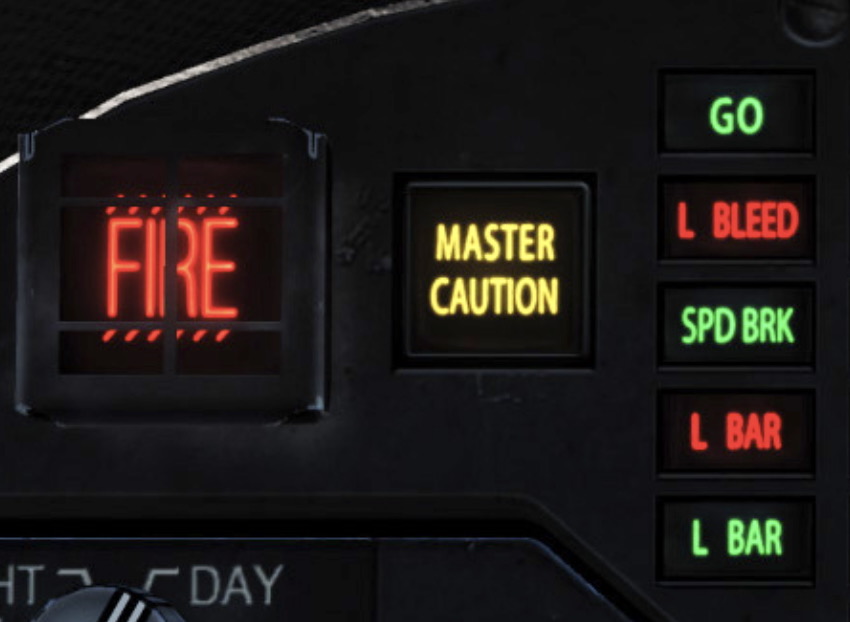
Reeves stays as financial pilot for now. The yoke remains in her hands, but she seems indifferent to the blinking warning light showing the country’s (economic) altitude in steep decline. Crash landing unlikely to be avoided.
Labour policy rewrites: quieter than last week, but deeper
Workers’ rights: flagship day-one unfair-dismissal protections now appear to be drifting towards a six-month threshold as ministers emphasise “balance” and “business confidence”. The unions note the discrepancy between Labout’s manifesto commitments and the government’s delivery.
Welfare: a new child-poverty strategy promises early-years investment, but the headline mechanism is conditionality. Young long-term Universal Credit claimants will be moved into subsidised work in construction or hospitaity or risk the loss of benefits. It is more moral guidance than structural reform.
Courts reform: “what the hell are they thinking?”
David Lammy confirmed the most sweeping change to jury trials in decades (?centuries?): cases carrying potential sentences of fewer than five years will be tried by a judge alone, with new “swift courts” handling offences likely to result in sentences of three years or less (Haroon Siddique, The Guardian, 2nd December 2025.)

Lammy argues that the Crown Court backlog demands radical intervention. Victims wait years, defendants wait years, the system is straining at every seam (Steve Hendrix, Washington Post, 3rd December 2025 – maybe behind paywall, if so, many apologies.)
Civil liberties groups, senior judges, and defence lawyers warn that the government is treating symptoms rather than causes. Chronic underfunding, staff shortages and collapsing court infrastructure are the disease. Curtailing jury trials is a constitutional shortcut (Jessica Elgot, The Guardian, 30th November 2025.)
TWOP is caught up on a more prosaic mathematical question. Ministerial pronouncements, MoJ releases (no, not prison releases, press releases) and the commentariat all suggest that the removal of juries from less serious Crown Court cases will affect just 3% of cases. If that’s true, how on Earth will this change make any difference to the 80,000+ case backlog? If so, why sacrifice a 1,000-year tradition with considerable (if unreasonable) support for the sake of 3% of anything? Asking for a friend.
The removal of juries is not a marginal tweak, but demonstrates a pivot to how the State proposes to administer “justice.” The quotation marks around “justice” seem necessary. Sadly.
Badenoch mini-bounce: the start of a resurgencE?
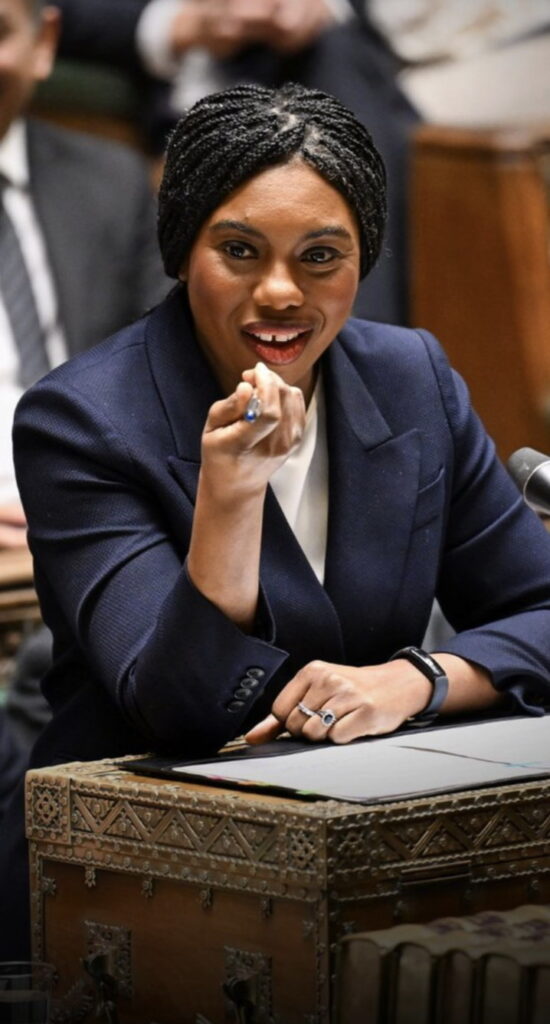
Kemi Badenoch had her strongest week in months. Her Budget response was both more disciplined and less improvisational than usual and her performance at PMQs was widely described in the Lobby as “solid” which represents significant progress over the recent run of “chaotic”, “unimpressive” and “missed an open goal again.”
This is not a comeback exactly (from what?), but it has been the first week in a while that Badenoch has looked like a credible Leader of the Opposition, rather than a caretaker considering her options.
There is also evidence of internal Tory stabilisation. A ConservativeHome members’ survey after conference (admittedly way back on 12th October) recorded a rise in confidence that she would lead the party into the next general election, from 56 per cent pre-conference to around 70 per cent afterwards. Outside party loyalists, Badenoch’s recognition remains low, but may now have risen from the 38% of the public who could identify her from a photograph in November (Rachel Cunliffe, New Statesman, 6th November 2025.)
Reform UK: strangely quiet, but not dead in the water
ReformUK was unusually subdued in public rhetoric. A Scottish former Tory peer defected (no-one had heard of him.) Nige went entertainingly bananas on the BBC after Emma Barnett tried to connect him to Hitler in an interview with Richard Tice, ReformUK’s Deputy Leader on BBCR4’s Today on Thursday 4th December (from 07:13:00, but with the toe-curlingly awful clip at 07:16:50).
By chance, TWOP caught this interview live (there’s a backstory about England’s woeful performance at The Gabba that explains what TWOP was doing listening to R4 at 07:13.) Even if making personal allowances for Emma Barnett, this was the most spine-chillingly awful demonstration of interviewer agenda-setting. It was then Damian Grammaticas who got it in the neck from Farage at a ReformUK press conference later in the day, but really drawing a direct link between someone not even being interviewed with Hitler represented a new journalistic low. Might as well have said “Farage is a Nazi” and have done with “balance” etc. Deeply embarrassing.

Nevertheless, speculation about a possible ReformUK merger with the Conservatives surfaced again, although this appears to have been driven more by Conservative despair than by ReformUK strategy, as YouGov polling suggested in April that neither party’s supporters are enthusiastic about the prospect and that does not seem to have altered materially yet.
ReformUK’s quietness looks either tactical: conserve energy, wait for Labour missteps, absorb defectors, keep options open, or, alternatively, something is brewing.
Europe: Starmer’s careful waltz continues

Starmer, slapping down David Lammy’s previous remarks about the possibility of joining a customs union with the EU, repeated his now-familiar line that cooperation with Europe will intensify, but membership of the customs union or single market remains firmly ruled out (Sky News, 5th December 2025.) Starmer must wonder what’s in Lammy’s cornflakes sometimes.
Nevertheless, into every still pond the occasional pebble must fall and it can’t have helped Starmer’s attempt to depict UK-EU relations as being on the “up and up” to have to announce that the UK will not pay the (absurd) £5bn “entrance fee” to participate in the EU’s re-armament “SAFE” process. (Philippe Jacqué & Cécile Ducourtieux, Le Monde, 30th November 2025.)
“Hey, Merzy, need any missiles or anything?”
“Oh Keir, danke schön, but Emmanuel is going to lose it if I buy any British kit.
I’d love to, but you know how tricky the snail-eaters can be.”
“Ah, Friederich, vollkommen! Manny won’t be with us for much longer though.”

However, TWOP is betting that this might only be German politeness, as Berlin must have heard that Britain’s beloved £6bn Ajax armoured personnel carriers are still so wobbly that everyone who cadges a ride in one spends their entire time throwing up. MoD may try to chalk this one up to the US as General Dynamics are responsible for the vom-vehicles. (Jerome Starkey, The Sun, 7th November 2025.) Really, you couldn’t make this stuff up!
IT’S ALL STILL FALLING APART
Labour holds the reins, but the reins are taut. Reeves remains in post, Lammy is reshaping breaking criminal justice at speed and Starmer is attempting quiet diplomacy abroad while ignoring the friction building at home “lalalala let’s do something with Volodymyr this week!” Badenoch has steadied herself, Reform has hushed itself, and the political weather feels unstable.
The government is trying to govern against all its inclinations of avoidance. In part because of those inclinations, however, how it is choosing to govern makes HMG seem ever indecisive and weak. Throwing darts at a distant board on which think tank recommendations from the last 10 years are pinned would be quite likely to produce more impressive results….
Leave a Reply